What an ancestral tablet service includes
An ancestral tablet service is the preparation and installation of a home tablet that carries an ancestor's name, title and dates, so that a family has one fixed place to make offerings. In a Taoist setting the work covers four things: confirming the lineage and the wording, choosing a date, inscribing and consecrating the tablet, and placing it correctly in the home. Families usually ask for it for one of two reasons — a parent has died and no one in the household knows the forms, or a tablet made decades ago has been lost, damaged, or left behind in a move.
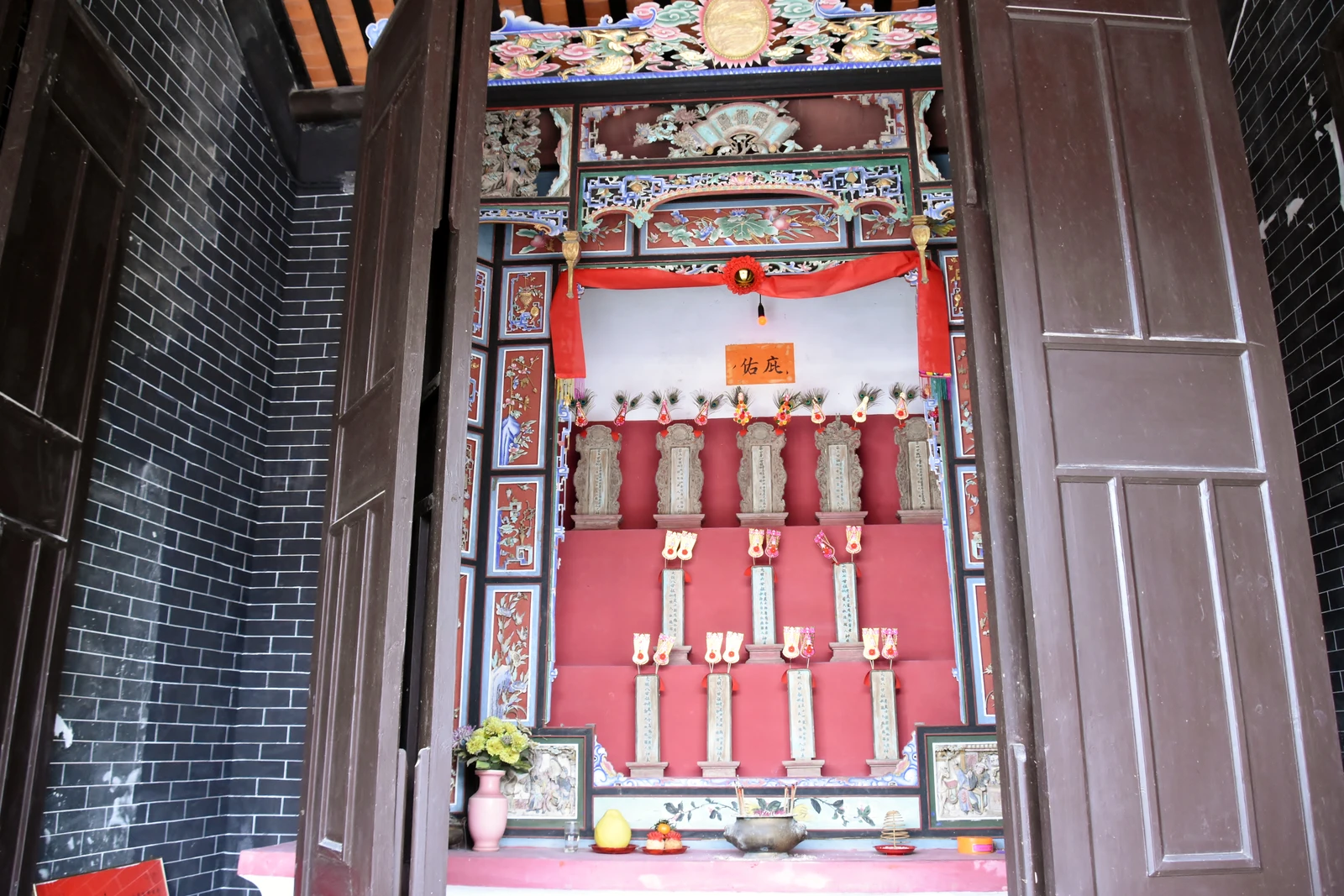
The tablet itself is called a spirit tablet, or in Chinese usage 神主牌 or 祖先牌位. It is not a portrait and not a memorial card. It is treated as a seat: the ancestor's presence is invited to rest at the tablet, and the family's offerings are addressed there. That is why the wording and the consecration matter more than the material, and why a badly worded tablet is a bigger problem than a plain one.
Preparing a tablet: names, dates, and consecration
Wording. A tablet carries a formal title and the personal name. The common pattern is a generational title followed by the surname and given name — 顯考 for a father, 顯妣 for a mother, with the family name and the personal name in the middle. Dates may be given in full, in year only, or omitted; practice differs by region and by the family's own tradition, and the safest course is to reproduce what the family already does on grave markers or on an older tablet.
Material and size. Wood is typical, camphor or nanmu being the usual choices, with stone used for tablets that stay in a temple hall. Size is decided by the niche or shelf where it will live, not by preference — a tablet that is 2 cm too tall will sit awkwardly forever.
Date. The installation day is selected against the birth years of the household, avoiding days that clash with them. Anniversaries of the ancestor's death are avoided as installation days.
Consecration. The tablet is set up with incense, lamp, water and the five offerings, and the officiant recites the appropriate scripture over it. In some lineages the dotting rite (點主) is performed with cinnabar; in others a simple seating rite (安座) is used. Either way, the point of the rite is to mark the object as a seat rather than a piece of joinery.
Where the tablet belongs in a modern home
- Not in a bedroom. The room where people sleep and dress is not a place for offerings.
- Not on a wall shared with a toilet, and not in or beside the kitchen.
- A living-room side wall or a study works well. Height should be at or above eye level, so that the family looks up to it rather than down at it.
- Keep a small table underneath for the incense burner, a water cup, and a lamp. This is where the daily offering happens.
- If the home already has a deity image, the deity's seat sits higher and more central, and the ancestral tablet sits below and to the side. Conventions for which side differ between lineages; the ranking does not.
Not every flat can carry a fixed shrine. Two workable compromises: a wall-mounted shelf with a cover that closes when the family is away, and temple hosting — the tablet is kept and served in a hall, and the family visits on the anniversaries. When someone is at home every day, hosting is optional; when the household is empty from morning to night, it is often the honest choice.
Requesting an ancestral tablet service from abroad
Most of the requests we receive come from families outside mainland China, Hong Kong, and Southeast Asia, and they follow the same shape.
- Gather the details. The ancestor's title, surname and personal name in Chinese characters; birth and death dates as far as they are known; and the birth years of the people who will keep the tablet, since those decide the installation date.
- Confirm the wording with a qualified officiant. This is the step where mistakes are expensive, because the tablet is inscribed before it ships.
- Choose the installation method. Either the consecration is performed here and the finished tablet is packed and shipped, or the tablet is made plain, shipped, and seated at home on an advised day with a short rite the family performs itself.
- Set the date and place. Send a photograph of the intended shelf or niche with rough measurements. A phone photo with a tape measure in frame is enough.
Start with a consultation booking if you are unsure which of the two installation routes suits your household. Members can raise the same questions inside a Pro reading, and if you only need help choosing a date, the free tools include a ba-zi chart that gives the birth-year data the officiant will ask for. For the festival side of ancestor practice — what is offered, and when — see Qingming and the ancestor ritual. The general booking route, including sacred objects, is described in how to book a consultation or request a sacred object.
Questions families ask before booking
Can we write the tablet ourselves? Yes, provided the wording follows your own family's convention. The service exists for the case where nobody knows what that convention is.
Is a consecration compulsory? It is what turns a marked board into a seat. Many families in the diaspora perform it at home with incense, a lamp and a recitation on the day the tablet arrives.
Can we put a photograph on it? Beside the tablet, yes. Instead of the tablet, no — the photograph has no name in it for the offerings to be addressed to.
Can several ancestors share one tablet? Yes, joint tablets are common, and the wording lists the ancestors in order of generation.
Do we have to offer incense every day? No. First and fifteenth of the lunar month, the death anniversary, and the major festivals are the ordinary minimum. A cup of clean water changed weekly keeps the seat in use when no one is at home to light anything.
Weekly wisdom, straight to your inbox
Essays, seasonal guidance, and energy insights - one letter a week, no noise.
DaoMind Pro
Read your own chart
Generate your full Ba Zi chart and elemental balance - the same data a practitioner opens with.
Open Destiny Atlas →