You walk into a room you have not tidied for weeks. The air feels heavy, your shoulders tighten, and you suddenly want to leave. That reaction is not imagination. In Taoist space practice, a cluttered room is a room where Qi has nowhere to go, and the body reads that blockage before the mind names it. Clutter and Qi are linked because stillness invites stillness, and a crowded corner teaches the whole room to hold its breath.
Why a cluttered room slows your Qi
Qi is the vital energy moving through the body, the land, and the home. When surfaces pile up and pathways block, Qi stalls the way water stalls behind a fallen tree. The fix is rarely a new object or a lucky trinket; it is removing what already crowds the space. Before you start moving things, it helps to understand what Qi actually is and why Taoists treat it as the common thread of health and place.
A stack of unfinished tasks on a chair is not just paper; it is a low hum of "not done" that the nervous system keeps rehearsing. Clear it, and the room exhales. The same holds for a counter buried in mail or a floor hidden under boxes. Each pile is a small dam in the flow, and clutter and Qi cannot share the same corner for long.
Clutter is also deferred decision. Every object on the floor is a choice you postponed: the clothes you will mend, the letter you will answer, the project you abandoned. Postponed choices do not disappear; they sit in the room as low-grade noise. Clearing is therefore not tidying, it is closing loops. When the loop closes, the Qi that was stuck holding the undecided thing is released.
Space as a living field
Feng Shui treats a home as a body of flowing energy rather than a storage box. Light, air, and clear sight-lines let Qi enter, circulate, and leave gently. A well-arranged room works like a good river; a blocked one stagnates and turns sour. The five simple fixes all begin with what you already own, not with what you buy.
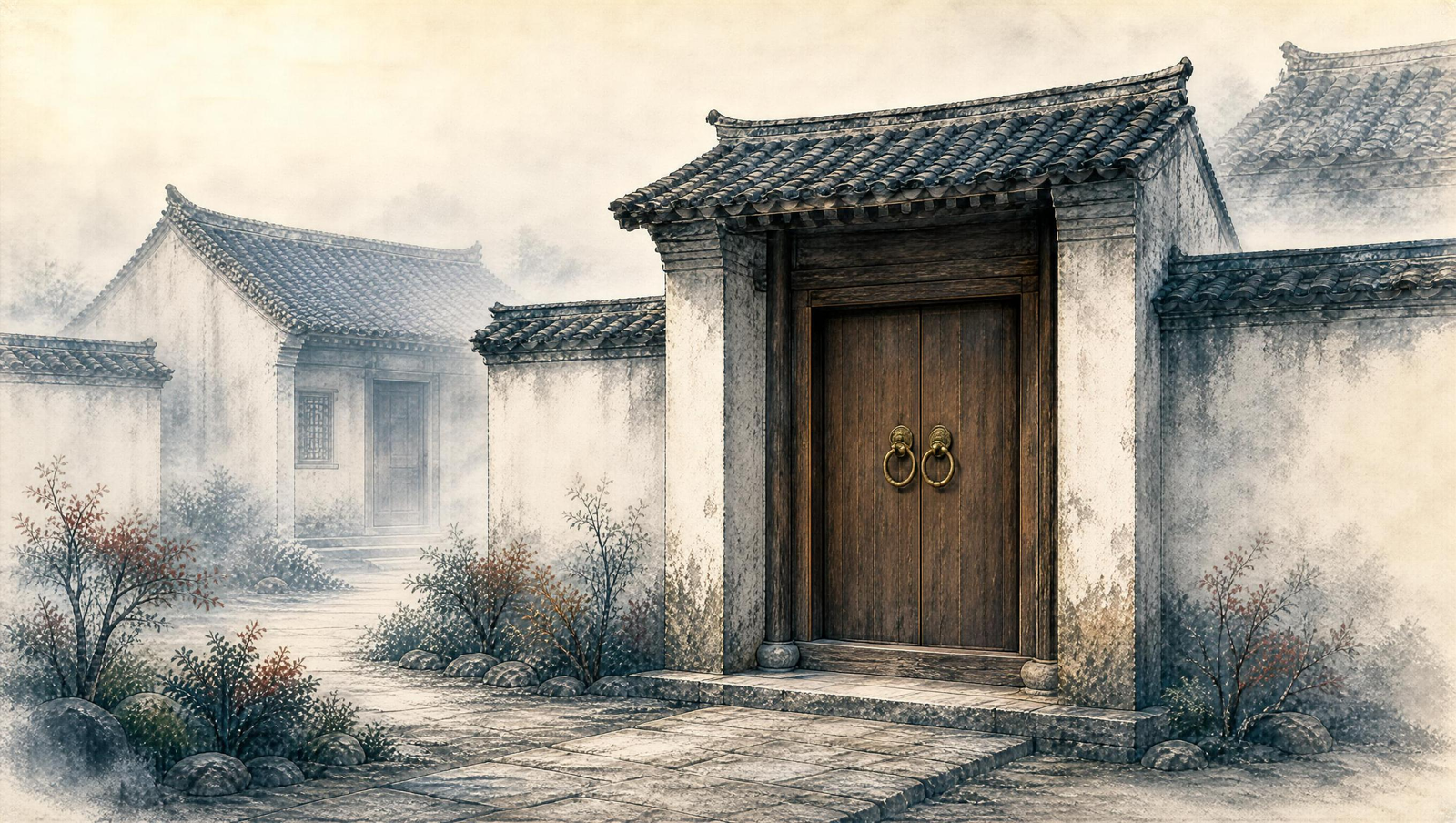
This is why Taoist teachers insist on the entry first. The front door is the mouth of the house. If shoes, mail, and bags pile there, the house is eating its own threshold. Qi that cannot enter cleanly never circulates cleanly, and the people inside feel it as a vague drag they cannot name. The same logic reaches digital clutter: a desktop of a hundred icons trains the eye to scan instead of rest, and Taoist practice has always been about the quality of attention.
Three resets to free the flow
- Clear the entry. Remove everything that is not in active use at the door. The goal is a sight-line you can breathe through.
- Open one surface. Pick the most cluttered table and leave it completely empty for a day. One empty plane resets the whole room's tone.
- Let the floor breathe. Store nothing on the floor below waist height. Lower Qi needs a clear lane to move.
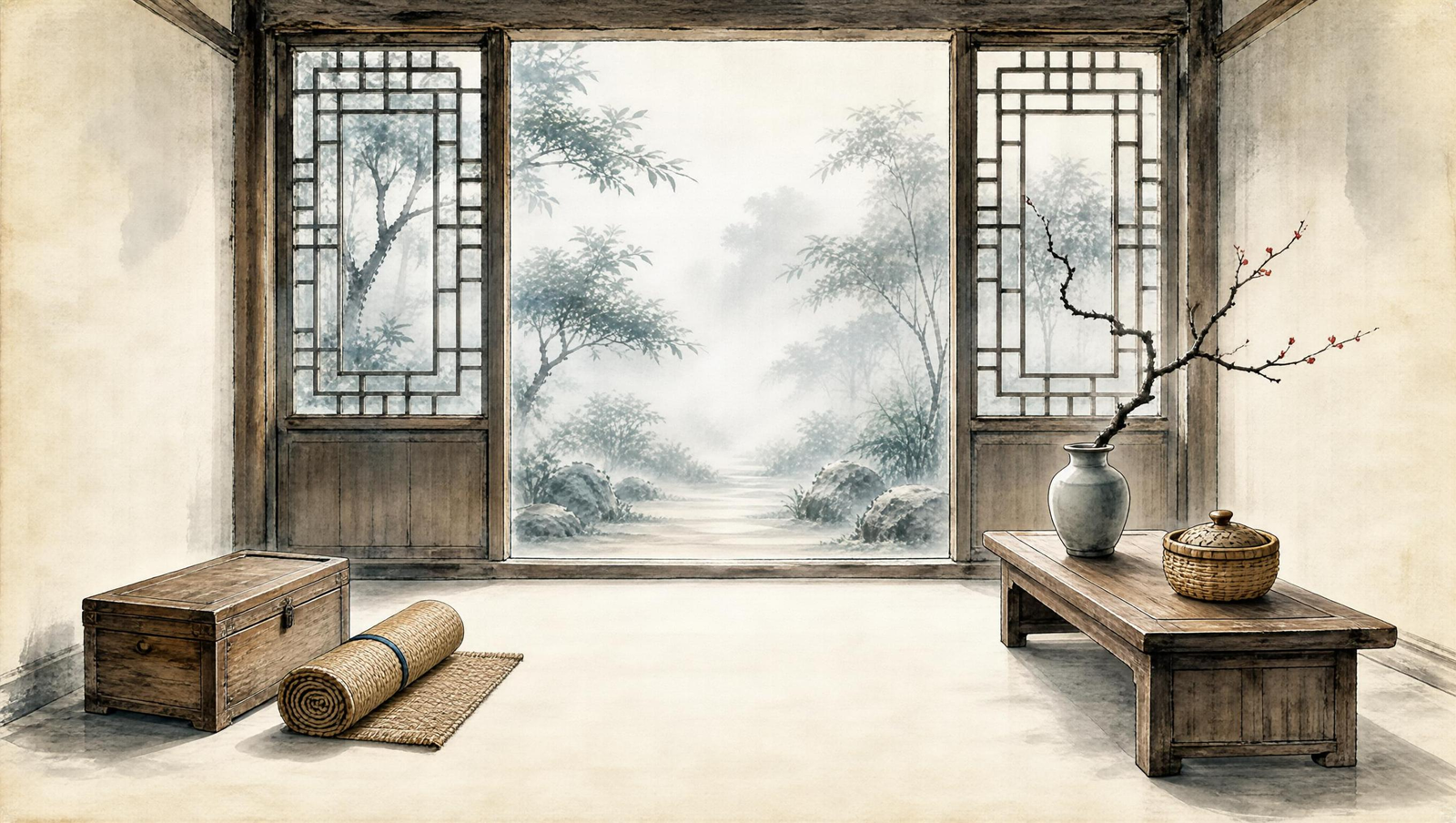
These are not decorating tips. They are small acts of permission: permission for energy, and for you, to move. Make the reset visible. After clearing the entry, leave a small empty space at the center of the room for a week. The eye lands there and rests, which is itself a form of practice.
When clearing is not enough
Clutter often returns because the underlying pattern is unresolved: a room that tries to do too many jobs, or objects kept from guilt rather than use. Taoist practice asks not only where to put things, but why they stay. If the heaviness persists after a real clear-out, a spatial reading can show which corner holds stagnant Qi and what in your life it mirrors.
A week, not a weekend
One deep clean will not hold if the habit behind it stays. Treat clutter and Qi as a weekly rhythm: ten minutes every Sunday to reset the entry and one surface. The goal is not a showroom but a room that breathes with you. Most people feel the shift within the first week; the heaviness lifts, and so does the urge to leave the room. Start with one surface today, and let the rest follow.
每週智慧,直送你的電郵
隨筆、時令指引與能量洞察——每週一信,絕無雜訊。