A friend once stood in a finished apartment and said it felt dead. The furniture was new, the light was fine, yet something was missing. We walked through the rooms and found the answer in minutes: every surface faced the same direction, every corner held the same element, and the space had no breathing rhythm. The Five Elements and the Bagua are the oldest tools Taoists use to read exactly that rhythm.
The Five Elements are not a superstition
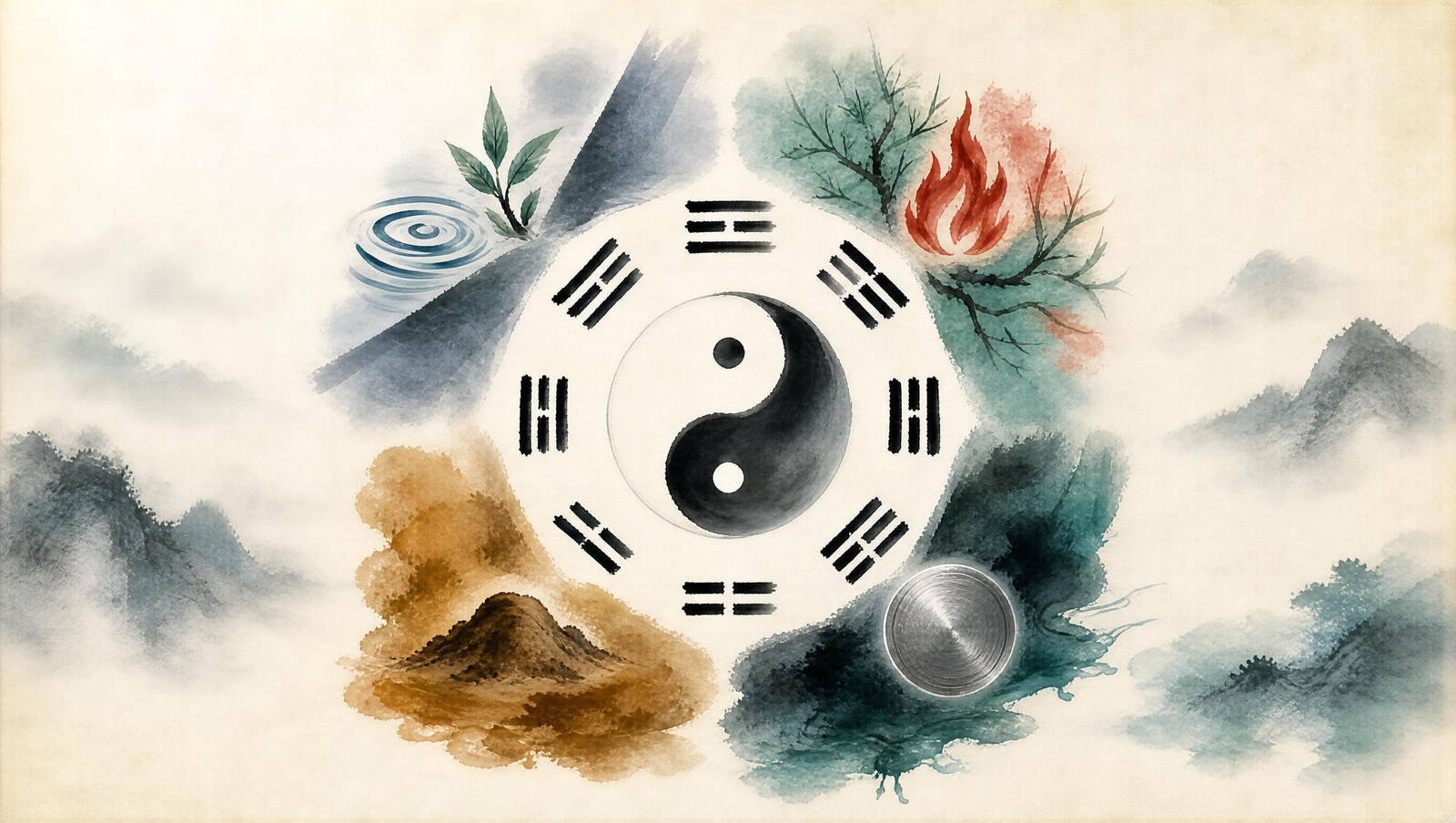
Wood, Fire, Earth, Metal, and Water describe how energy moves, not mystical labels. Wood is growth and upward push. Fire is expansion and warmth. Earth is settling and centering. Metal is gathering and refining. Water is storage and downward flow. In the body, in a season, and in a room, these five phases succeed one another in a predictable cycle. When one dominates, the space feels one-noted; when they balance, the room feels alive.
This is why the tradition treats Qi as the thread running through all of them. Qi is the vital energy moving through the body, the land, and the sky, and the Five Elements are the shapes Qi takes as it changes. A room heavy with Metal and empty of Wood can feel sharp and restless; a room all Water and no Fire can feel cold and sluggish. Reading the elements is reading where Qi has pooled or run dry. See what Qi actually is and what Feng Shui means in practice.
How the Bagua maps a space
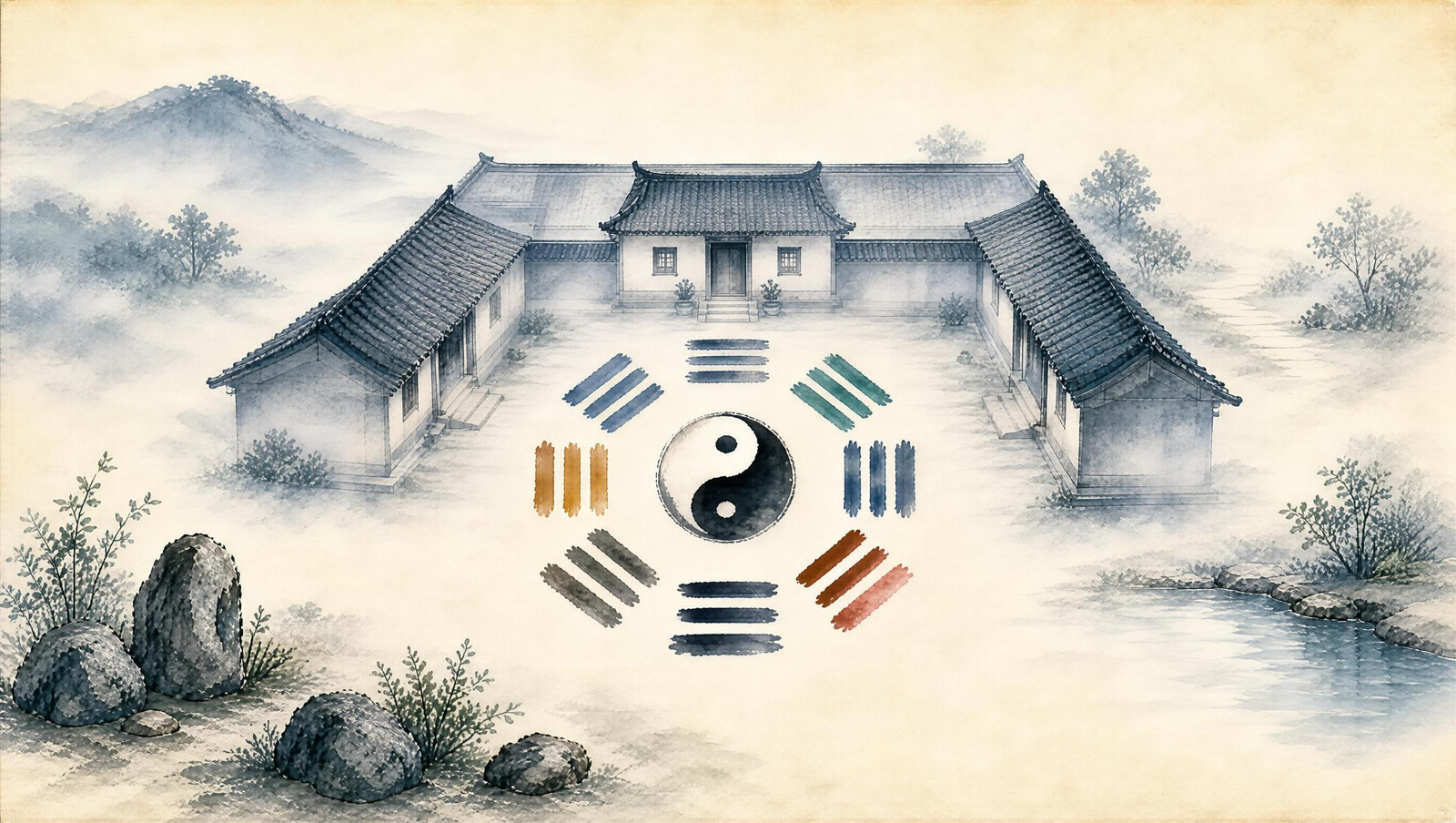
The Bagua is an eight-trigram map laid over a floor plan. Each trigram governs a sphere of life: family, wealth, reputation, relationships, children, knowledge, helpful people, and health. You place the map with the front door as the reference edge, then read which life area falls in which corner. A cluttered wealth corner is not a curse; it is a visible sign that that part of life has no clear channel.
The point is not to hang a coin in every corner. The point is to notice. When the relationship sector of a home is a storage dump, the arrangement is quietly saying something the occupants already feel. Feng Shui, at its core, is the art of arranging space so Qi enters, circulates, and leaves gently. The Bagua simply gives that art a vocabulary.
Reading a room with the five phases
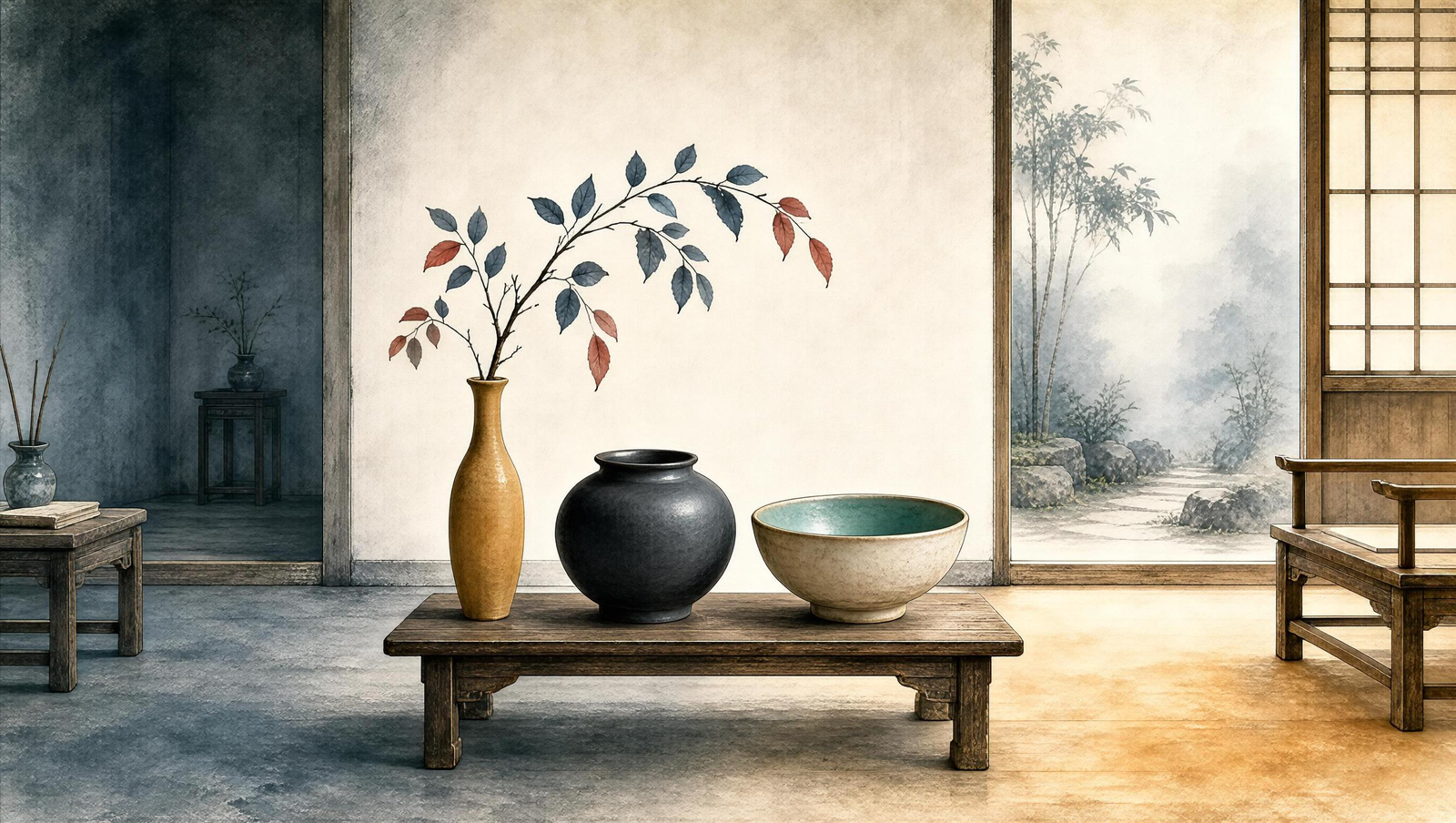
Start with one room. Stand at the door and name what you see. Is there green and living Wood, or only grey and hard Metal? Is there a single warm light (Fire) or a cold overhead panel? Earth shows up as stable, low furniture and natural stone; Water as mirrors, glass, and the view beyond the window. Most homes over-index on Metal and Water because modern building loves hard edges and glass.
The fix is rarely a purchase. Move a plant to the empty Wood corner. Lower one light. Clear the sight-line from the door so Qi is not stopped at the threshold. A well-arranged room works like a good river; a blocked one stagnates. You are not decorating, you are restoring flow.
A simple weekly check
Once a week, walk your home as if you were a guest. Open the front door and ask where your eye lands first. If it lands on a pile, a leak, or a broken object, that is the first thing to mend. Tradition holds that fixing what is broken does more for a home than any talisman. Then check the elements: is there at least one living thing, one warm light, one heavy earthy anchor, one clear water view, and one clean metal edge? Five small presences, five phases balanced.
This weekly habit also trains attention. After a month you stop needing the map because you can feel a room. That is the real goal of studying the elements and the trigrams: not to memorize rules, but to develop a settled sense of whether a space is helping you or quietly draining you.
The element cycle through the year
Each season carries an element: spring is Wood, summer Fire, late summer Earth, autumn Metal, winter Water. A home that ignores the season feels dated; one that echoes it feels current. In winter, add warm light and closed, cozy Earth anchors. In summer, open the Water of windows and cool the Metal edges. You are not following a fashion; you are keeping the house in step with the world outside.
Common mistakes beginners make
The first mistake is over-correcting: filling a room with five identical objects to "balance" it, which only adds clutter. The second is treating the map as fate: the Bagua shows tendency, not destiny. The third is neglecting the body — no arrangement helps if you never open the window. Balance is a practice, repeated, not a state achieved once.
Where to begin
Begin with the door. The mouth of Qi is the front entrance, and most homes neglect it. Sweep the step, fix the latch, let the light fall kindly. Then move to the corner you avoid. That corner is usually the one telling the truest story. You do not need a master for the first hundred small fixes; you need a willing afternoon and an honest eye.
For those who want a structural read rather than a feeling, our free Bagua and Five Elements tool maps your own space in minutes. And when a room keeps resisting every change, that is the moment to ask a practitioner, because some patterns sit deeper than furniture. The elements are a language; like any language, they reward the person who keeps speaking them.
每週智慧,直送你的電郵
隨筆、時令指引與能量洞察——每週一信,絕無雜訊。