A friend once described her rented flat as "fighting back every time she cooked." The stove sat across from the fridge, wedged into a corner where she could not see the door, and the extractor fan had long since died. Meals became rushed, the family ate in shifts, and sleep turned restless. When she shifted the cooktop a meter to the side and cleared the clutter above it, the mood in that kitchen changed within a week. Kitchen feng shui is not magic; it is the quiet grammar of how a space makes people feel, and the stove is its loudest sentence.
Why the stove anchors household fortune
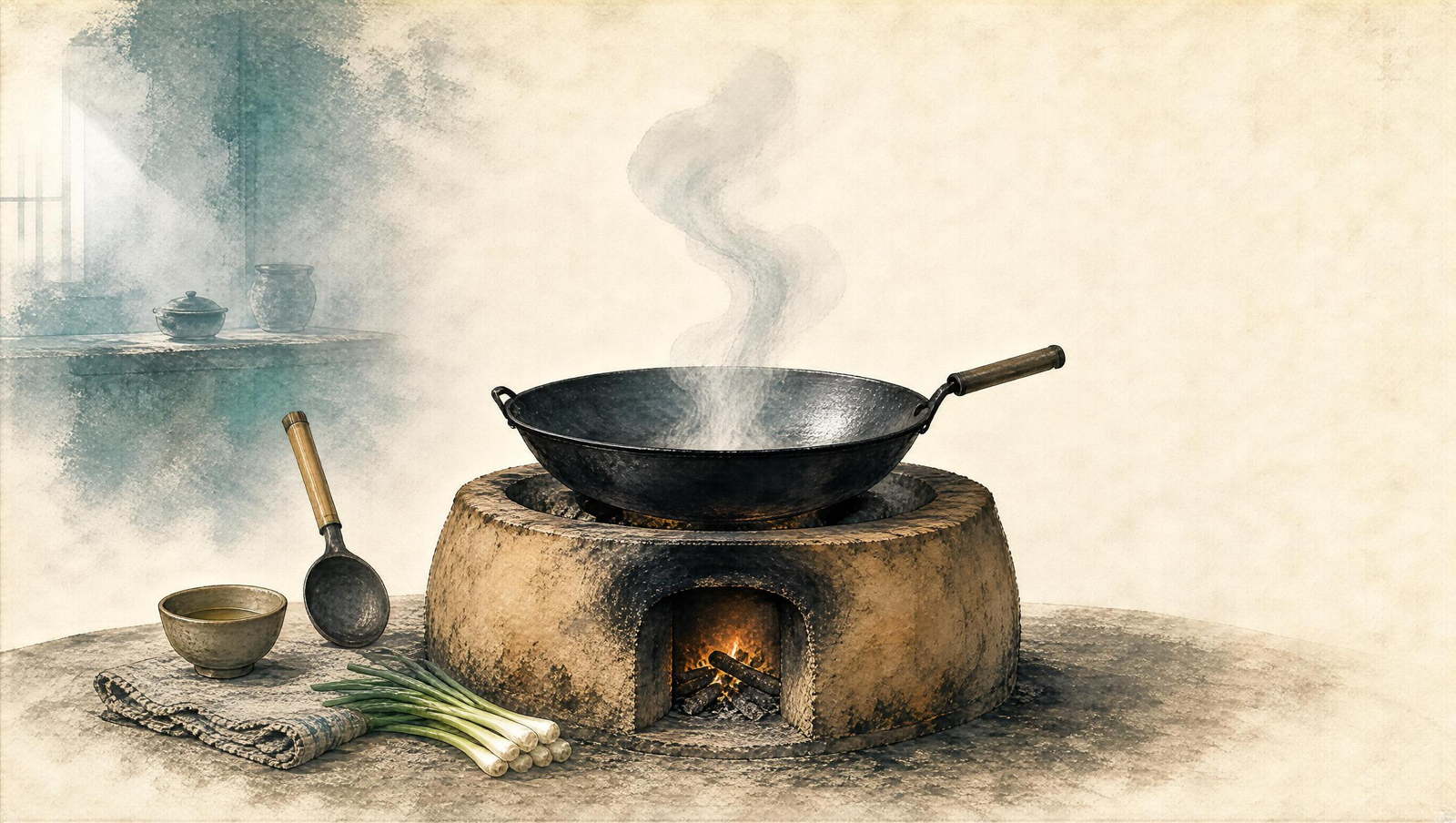
In the classical Chinese home, the hearth was the one place fire met daily life. Taoist spatial thinking reads the stove as the center of both nourishment and prosperity: it is where raw ingredients become a meal, and where the family's vitality is cooked into being. When we speak of kitchen feng shui, we are really asking a simple question—does energy move through this room with ease, or does it jam at the point of the flame?
The answer shapes more than dinner. A stove that is blocked, dirty, or confrontational reflects a life that feels blocked, hurried, or contested. The remedy is rarely a purchase; it is almost always a rearrangement.
The classical stove-placement rules
These guidelines come from generations of Chinese households, not from a catalogue of objects. Treat them as principles to adapt, not laws to fear.
Keep the stove in command of the room
Position the cooktop so the person cooking can see the kitchen entrance without turning their back fully. This "command position" reduces the subtle stress of not knowing who enters. If a wall blocks the sightline, a mirrored tile or reflective backsplash can restore it. The goal is psychological ease, which is itself a form of good Qi.
Shield the stove from overhead beams
A heavy beam or exposed duct directly above the burner presses a kind of weight onto the act of cooking. Traditional practice advises moving the stove or softening the ceiling line with a gentle covering. The point is to remove the feeling of being crushed while you feed the people you love.
Respect the water-fire axis
The stove is fire; the sink is water. Placing them on the same run of counter is fine, but setting the burner directly beside or opposite the sink sets water and fire in daily conflict. A small strip of preparation space—a chopping board, a tray—between them restores balance. This is the same logic behind the Five Elements, where water checks fire and fire checks metal.
Reading Qi in your own kitchen
Before rearranging anything, stand in the doorway and watch. Where does your eye land first—the mess, the stove, or the window? Do you feel a narrowing in the chest, or a small exhale? Qi is not mystic vapor; it is the measurable atmosphere of light, air, and order. A kitchen that smells of last night's oil and hides its surfaces will always read as stagnant.
Clear the space above the stove. Remove the dead magnets, the leaning spice jars, the single burnt utensil. Wipe the hood. Let the burners shine. Then cook something simple and notice whether the act feels lighter. Most people report the difference before they can explain it. That, in the plainest terms, is kitchen feng shui at work.
If you want the broader framework, our five simple Feng Shui fixes cover the whole home, not just the kitchen.
When arrangement is not enough
Feng shui adjusts the container; it does not replace the contents. A kitchen rearranged around a marriage in open conflict will still carry that conflict. Taoist practice is honest about this: space clearing prepares the ground, but the relationships and habits that live in the space do the growing.
That is also why the stove rule about cleanliness matters so much. A dirty burner is not a moral failing; it is a stuck point in the home's circulation. Restore the flow, and you give the household one less thing to fight about.
A small practice to begin
Tonight, before you cook, spend two minutes clearing the stove zone. Wipe the surface, straighten the utensils, and open a window for sixty seconds. Then cook with attention. You are not performing a ritual for luck; you are removing friction from the most repeated act in domestic life.
To go deeper, read what Feng Shui actually is, or explore why Qi matters in daily practice. And if your home still feels heavy after you have done the work, a Taoist spiritual diagnosis can read which layer—physical, psychological, or spiritual—holds the leverage point.
The stove will not solve your life. But a hearth that breathes makes everything else a little easier to face.
Weekly wisdom, straight to your inbox
Essays, seasonal guidance, and energy insights - one letter a week, no noise.
DaoMind Pro
Read your own chart
Generate your full Ba Zi chart and elemental balance - the same data a practitioner opens with.
Open Destiny Atlas →