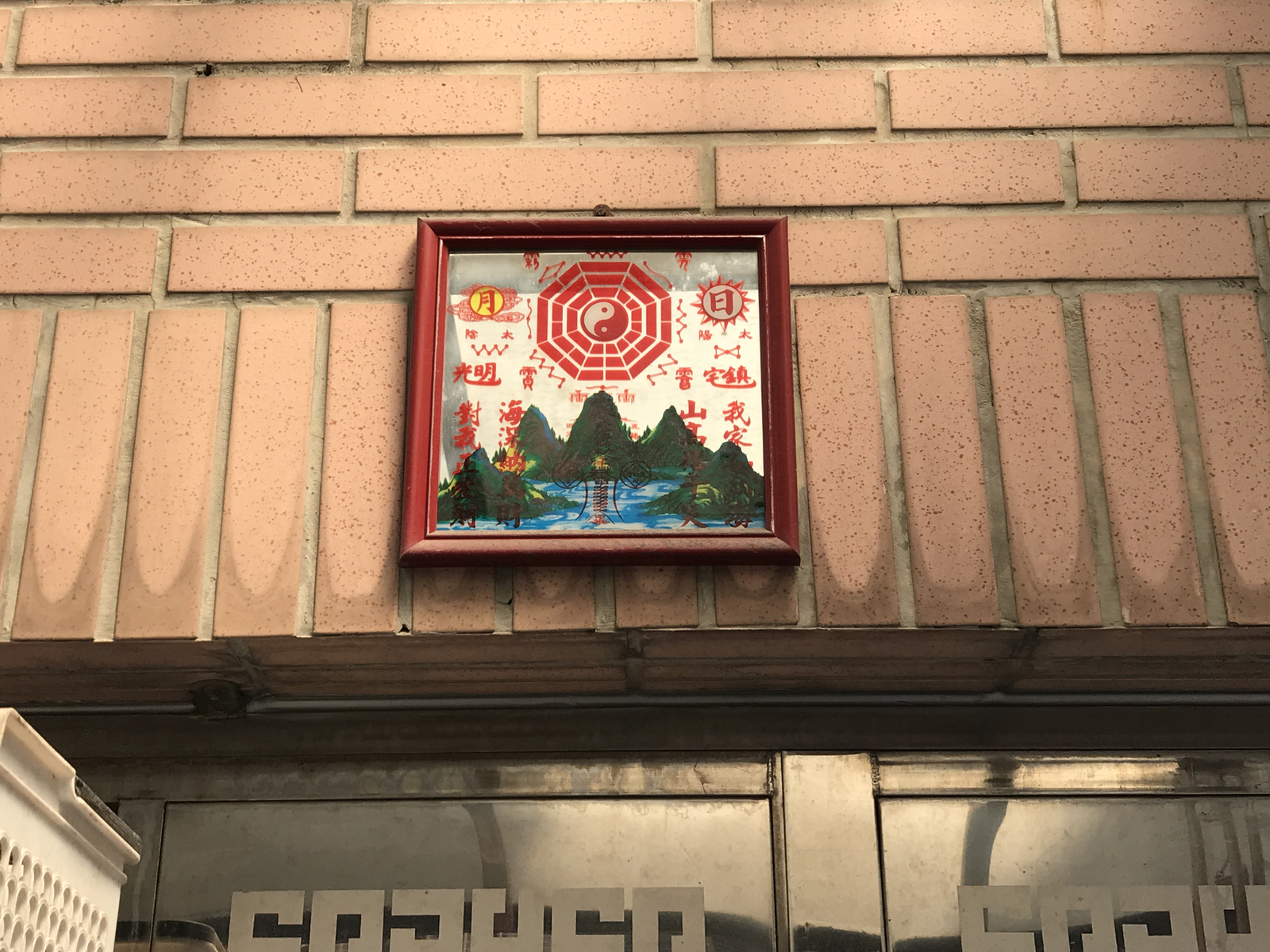

A pilgrim in our hall once held up a small yellow slip covered in crimson strokes and asked, who first thought to write a prayer like this? The answer reaches back nearly two thousand years, to a time when writing itself was believed to carry power over the unseen. Across China and the wider Chinese world, the yellow slip remains a quiet constant - pinned at thresholds, folded into wallets, burned at graves. Its familiarity hides a long genealogy that this essay traces.
The talisman - fu - is a written charm: characters, diagrams, and seals inscribed on paper, cloth, or wood, then carried, displayed, or burned. To outsiders it looks like calligraphy with a job. To practitioners it is a condensed instruction to the spirits, authorized by a lineage.
The earliest registers of spirits
Long before Taoism as a religion, the Han court kept registers listing the names of spirits a master could summon. The Celestial Masters tradition, founded by Zhang Daoling in 142 CE, turned this into a system: a talisman was valid only when backed by a register and a transmitted method. The strokes were not decoration; they were a sealed order, and the seal made it lawful.
This is why a talisman from an untrained hand is, in the traditional view, only paper. Authority travels through transmission, not invention.
From command to comfort
In the early texts, fu were largely commands - orders to demons, warrants to disease, passes for the soul through the underworld. Over centuries the forms softened into the charms familiar today: protective slips for the home, health petitions, and talismans blessed and given during rites. The red ink on yellow paper became a visual signature of the tradition itself.
Yet the logic held: the charm works because a legitimate line of transmission stands behind it. The writing is the visible half; the authorization is the invisible half.
How a talisman is made and used
A proper talisman is inscribed in a set state of mind, often with fasting and recitation, then sealed with a master's stamp. Some are burnt so the smoke carries the request upward; some are folded and carried; some are pasted at a gate or hearth. The medium varies, but the act is consistent - a written intention, properly authorized, released into the world.
Talismans in daily Taoist life
Far from a museum piece, the fu remains ordinary in living temples. A household might receive a protective slip at the new year, paste it by the door, and replace it the next. A devotee undertaking a retreat may carry a talisman sealed for that purpose. In rites of passage - a cleansing, a dedication - charms are written, blessed, and released. The form is ancient, yet the rhythm is domestic: a written wish, properly authorized, returned to the world at the right moment. That continuity is the point; the talisman is a living line drawn from a very old hand to a present need.
Why the lineage matters
Talismans sit inside a living tradition, not a museum. Our own house is twentieth-generation Zhengyi, rooted at Wuliang Guan on Longhu Mountain, and what we offer is transmitted practice rather than borrowed theory. That root is exactly why the charm means what it claims to mean; without it, the strokes are only ink.
For the broader frame of who we are and where the practice comes from, see which lineage DaoMind belongs to, and meet the deities the talismans address in the Pantheon. A talisman is a short letter in a very old language - worth understanding before you carry one.
每週智慧,直送你的電郵
隨筆、時令指引與能量洞察——每週一信,絕無雜訊。