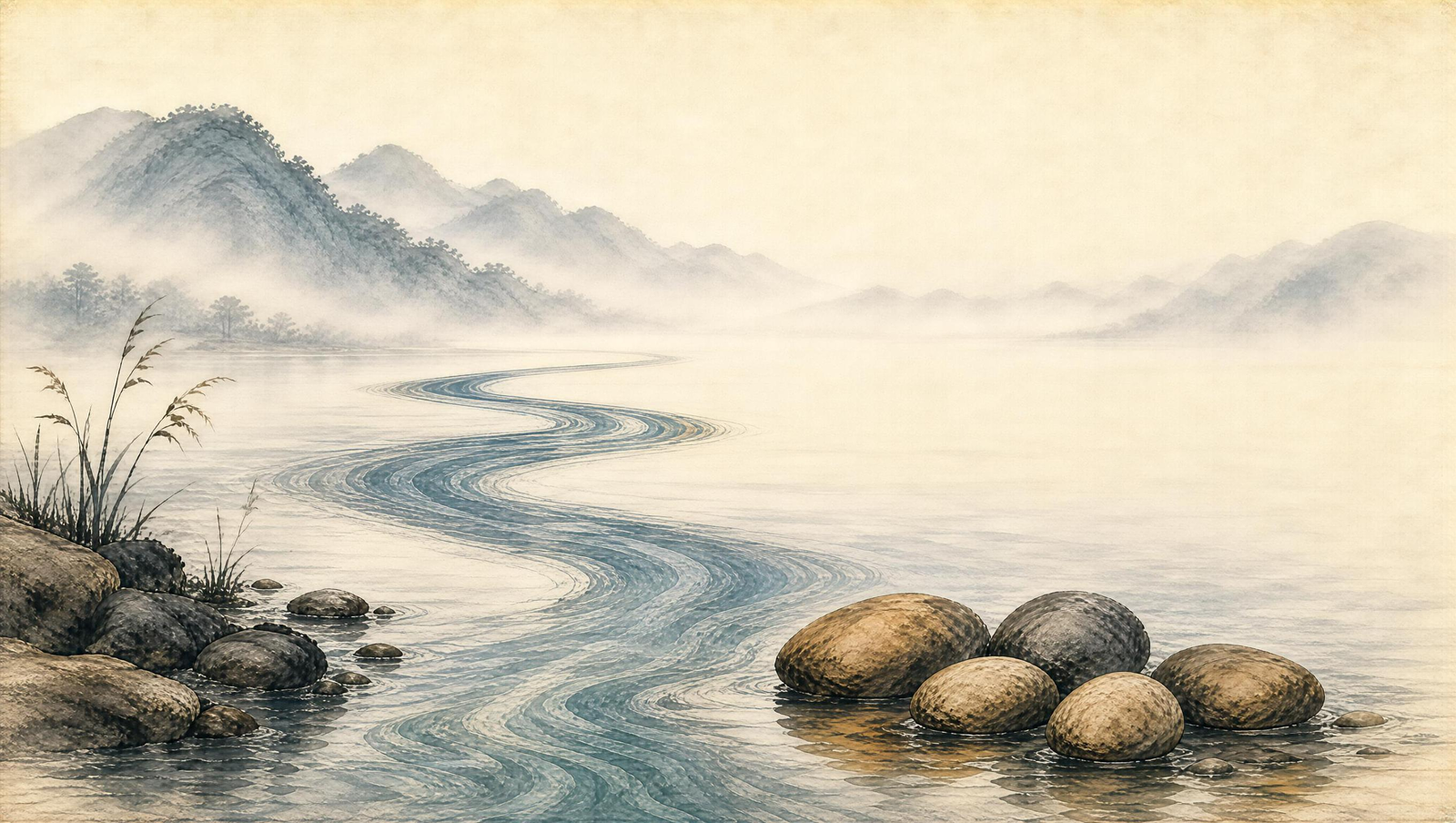
A student once asked his teacher how to be useful without burning out. The teacher poured water from a tall bottle into a low cup and said nothing. The student watched the water find the cup's shape, fill it without effort, and stop exactly at the rim. That silence was a small reading of Tao Te Ching chapter 8.
The chapter is only a few lines, but it carries one of the most quoted images in the whole text: the good person is like water. Below we read Tao Te Ching chapter 8 closely and turn its ancient lines into something a normal Tuesday can use.
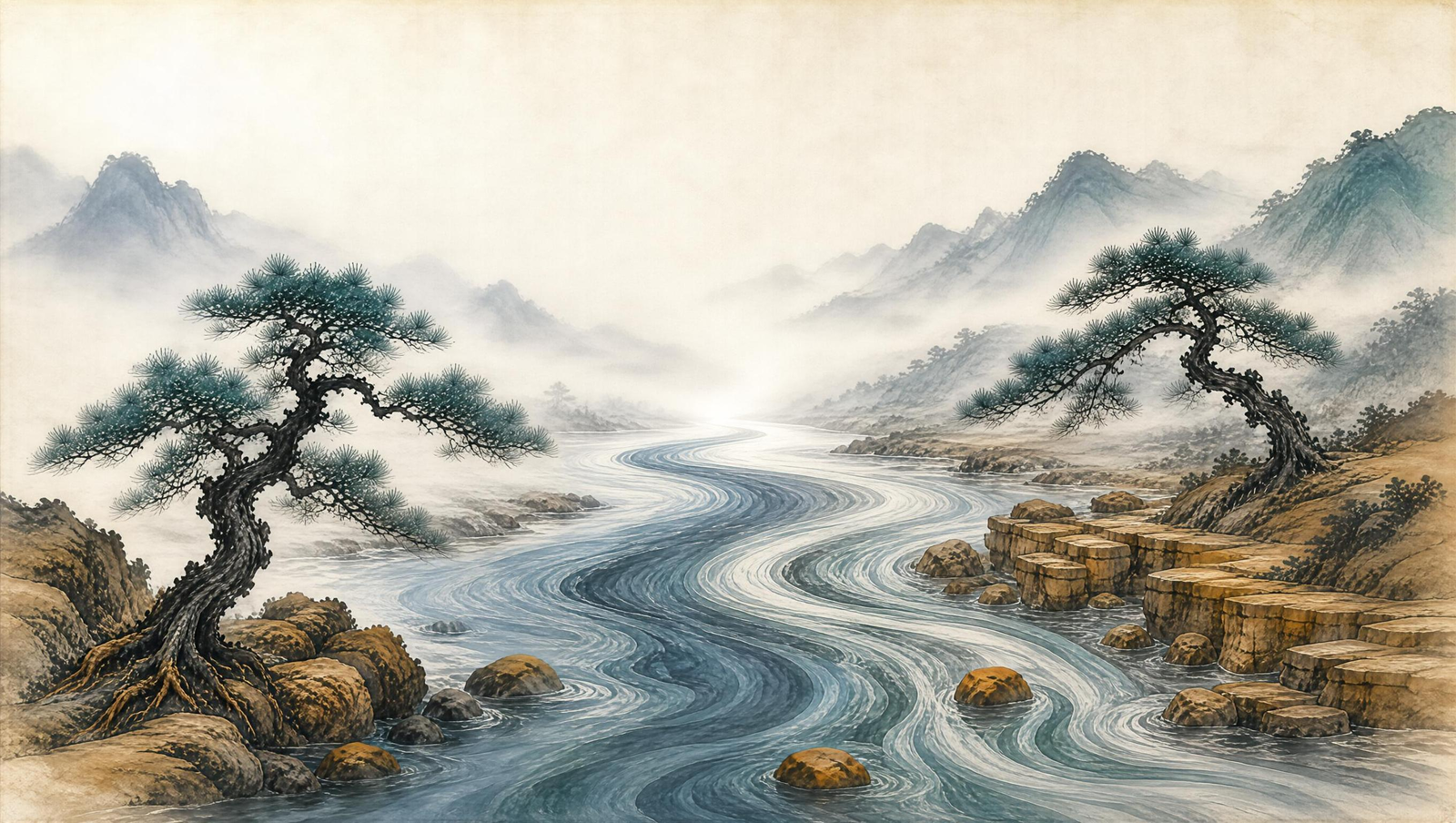
The water image
"Shang shan ru shui" — upper goodness is like water. Water benefits the ten thousand things and does not contend. It rests in places people dislike, so it is close to the Tao. The opening line sets the standard: the highest good helps without competing for credit.
Water does not push. It moves to the lowest open space and fills it. The lesson is not passivity; it is precision. Water goes exactly where the shape allows, and in going there it nourishes everything it touches.
What "upper goodness" means
The word shang is "upper" or "highest," not "good" in the moral sense of rules. It points to a quality of action: effective, quiet, uncontending. A person of upper goodness solves the problem in front of them and steps back. They do not plant a flag.
This connects directly to the Tao itself. The Tao is the pattern beneath all things, approached through practice rather than forced. Water is the chapter's picture of what moving with that pattern looks like.
The seven likenesses
Later in the chapter the text lists where water excels: in dwelling it loves the low, in heart it loves what is deep, in giving it loves what is even, in speech it loves what is true, in order it loves what is good, in work it loves what is able, in movement it loves what is timely. In all seven, it does not contend, and so it is without blame.
Read slowly, the list is a portrait of a person who has stopped performing. They live low, think deep, give fairly, speak true, govern well, work capably, and act on time. None of it is loud.
Water in a crowded office
Bring the image to work. Help a colleague without copying them on the reply. Take the task no one wants and do it cleanly. Speak the true status in a meeting instead of the flattering one. Move when the moment is right rather than when the calendar demands. That is water in a building full of contention.
The scriptures frame the wider path. The Tao Te Ching and the Zhuangzi teach that effortless action is a skill, built by removing force, one small choice at a time.
Why water, not fire
The text could have chosen fire — bright, commanding, impossible to ignore. It chose water instead, precisely because water does not announce itself. Fire transforms by force; water transforms by persistence. A life built on upper goodness moves the same way: slower, softer, and far harder to resist in the end. The chapter is not telling you to be weak. It is pointing you toward the kind of strength that does not need an audience.
A practice for the week
Each morning pick one of the seven likenesses and aim it at a single situation. On Monday, speak true. On Tuesday, give evenly. By Friday you will have lived the chapter briefly, seven times, without quoting a word of it. That, the text suggests, is the point.
每週智慧,直送你的電郵
隨筆、時令指引與能量洞察——每週一信,絕無雜訊。