丘處機 長春真人

Qiu Chuji, the Patriarch Who Crossed the Desert

Patriarch of the Dragon Gate

Era · 1148–1227 CE, Quanzhen Dragon Gate

Qiu Chuji, the Patriarch Who Crossed the Desert (丘處機 長春真人)

Patriarch of the Dragon Gate

Overview · 概览

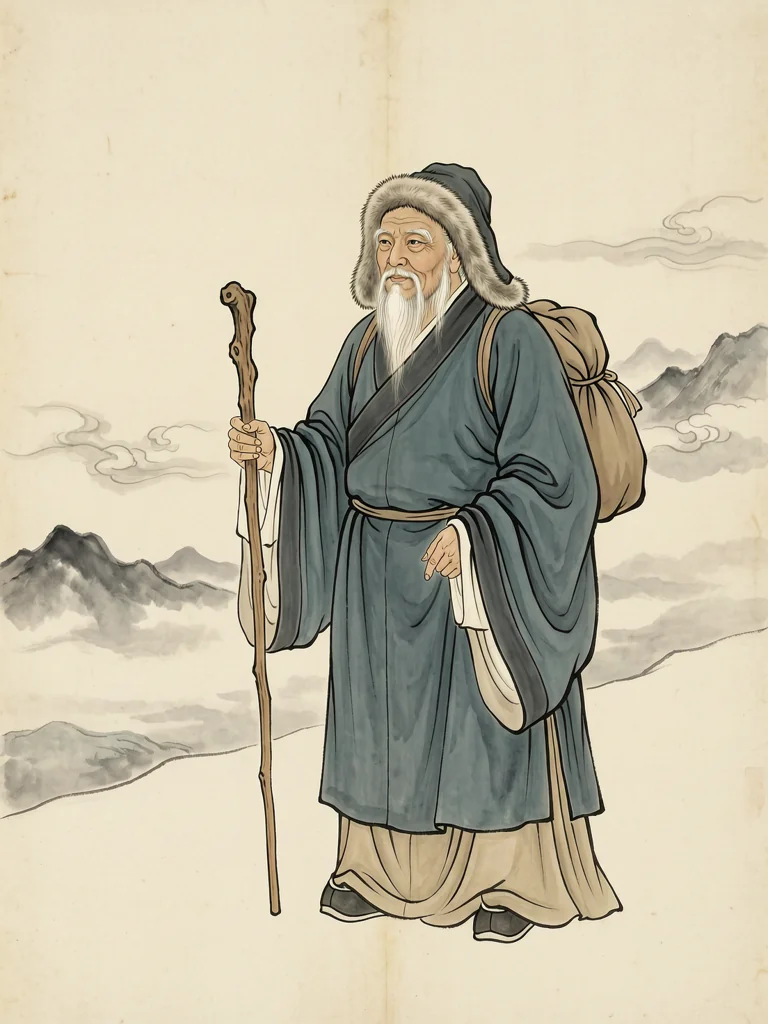
At seventy-three he crossed the Gobi desert to meet Genghis Khan, persuading him to curb slaughter and win hearts instead. In return the Khan granted Quanzhen authority over the empire's religions — a patronage remembered at Beijing's White Cloud Temple to this day.

Symbols · 象征

  • The journey to the snowy mountains
  • The 'Record of the Westward Journey'
  • White Cloud Temple, Beijing

Era · 1148–1227 CE, Quanzhen Dragon Gate

History · 史记

Historical Record

Qiu Chuji (1148–1227), styled Master Changchun, was Wang Chongyang's most politically consequential disciple — and one of the few Taoists who changed history directly. The Travels of the Perfect Man Changchun, written by his disciple Li Zhichang, records his greatest act: in 1220, at seventy-four, he rode west for two years to the Hindu Kush to meet Genghis Khan, who had summoned him seeking the secret of immortality.

His answer: there is no pill of immortality; there is only preserving life — and the way to preserve life is to stop killing. The Khan accepted his teaching, granted amnesty to the multitudes under his protection, and entrusted to him the administration of all Taoists of the empire. He returned to Yanjing and presided over the teaching at the palace that is now Beijing's White Cloud Temple; his tomb is there to this day.

Legends · 典故

Stories of the Divine

雪山問道

Seeking the Way at the Snowy Mountains

Genghis Khan asked the secret of immortality; Qiu Chuji answered with the way of preserving life and not killing. The Khan called him divine immortal, issued edicts protecting those he spared, and the slaughter of northern China was measurably restrained. One old man's ten-thousand-li journey.

白雲掌教

Presiding at the White Cloud Temple

He presided over Quanzhen from Yanjing until his death in 1227; his tomb-shrine stands inside today's White Cloud Temple, and the temple remains the headquarters of the Quanzhen order.

Sources · 典籍来源

Classical Sources

  1. 01

    長春真人西遊記

    Changchun Zhenren Xiyou Ji

    The travel account by his disciple Li Zhichang — one of the great documents of medieval Central Asia.

  2. 02

    元史·丘處機傳

    Yuan Shi, Biography of Qiu Chuji

    The official history recording his audience with Genghis Khan and his administration of Taoism.