The Southern Star Appears, Longevity Comes
Court astronomers watched for Canopus low in the southern sky; its clear bright rising foretold long reigns and peaceful years. The star itself became the god of longevity.

南極長生大帝
Bestower of Years
Festival · 1st day of the 5th lunar month
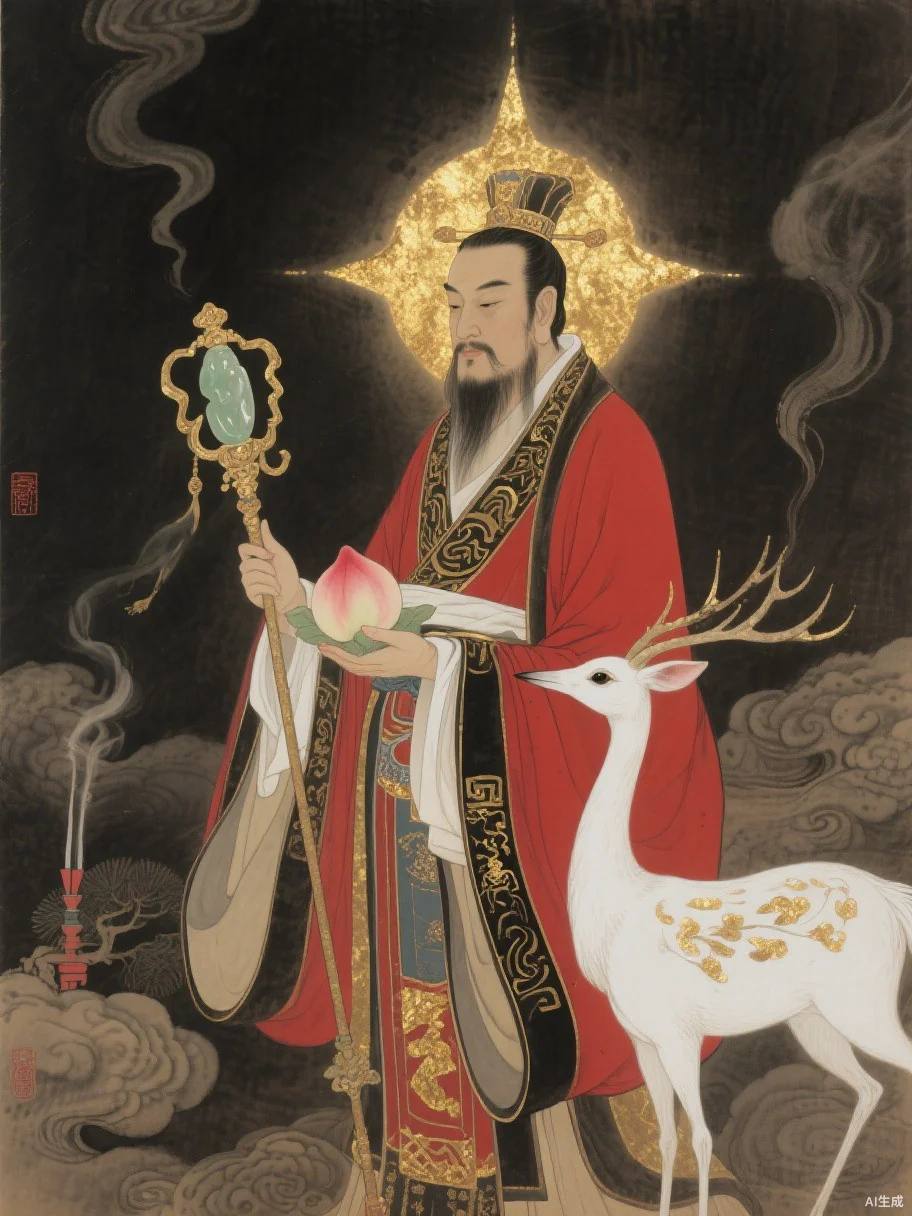
Bestower of Years
Sovereign of the southern pole and master of the registers of human lifespan. In folk devotion he blends with the star of Longevity — the high-browed old man of birthday scrolls — granting years to the virtuous.
Festival · 1st day of the 5th lunar month
History · 史记
Nanji Changsheng Dadi — the Great Emperor of the Southern Star of Longevity — is rooted in the worship of Canopus, the bright southern star whose appearance was read as an omen of peace and long life. The Shiji records that the Qin established shrines to the Southern Star, and Han emperors included it in their suburban sacrifices: when the Southern Star appears, peace reigns.
In the Taoist pantheon he presides over the Southern Palace, where the registers of life are kept — as the Northern Dipper keeps the registers of death. To pray to him is to ask that one's name remain long in the book of the living.
Court astronomers watched for Canopus low in the southern sky; its clear bright rising foretold long reigns and peaceful years. The star itself became the god of longevity.
The liturgical formula that pairs him with the Dipper: the Southern Palace writes men into life, the Northern Palace erases them at death. Nanji Changsheng presides over the writing.
史記·封禪書
Records the early state shrines and sacrifices to the Southern Star.
史記·天官書
Maps the southern stars and the lore that made Canopus a star of longevity.
雲笈七籤
Preserves longevity liturgies addressed to the Southern Palace.