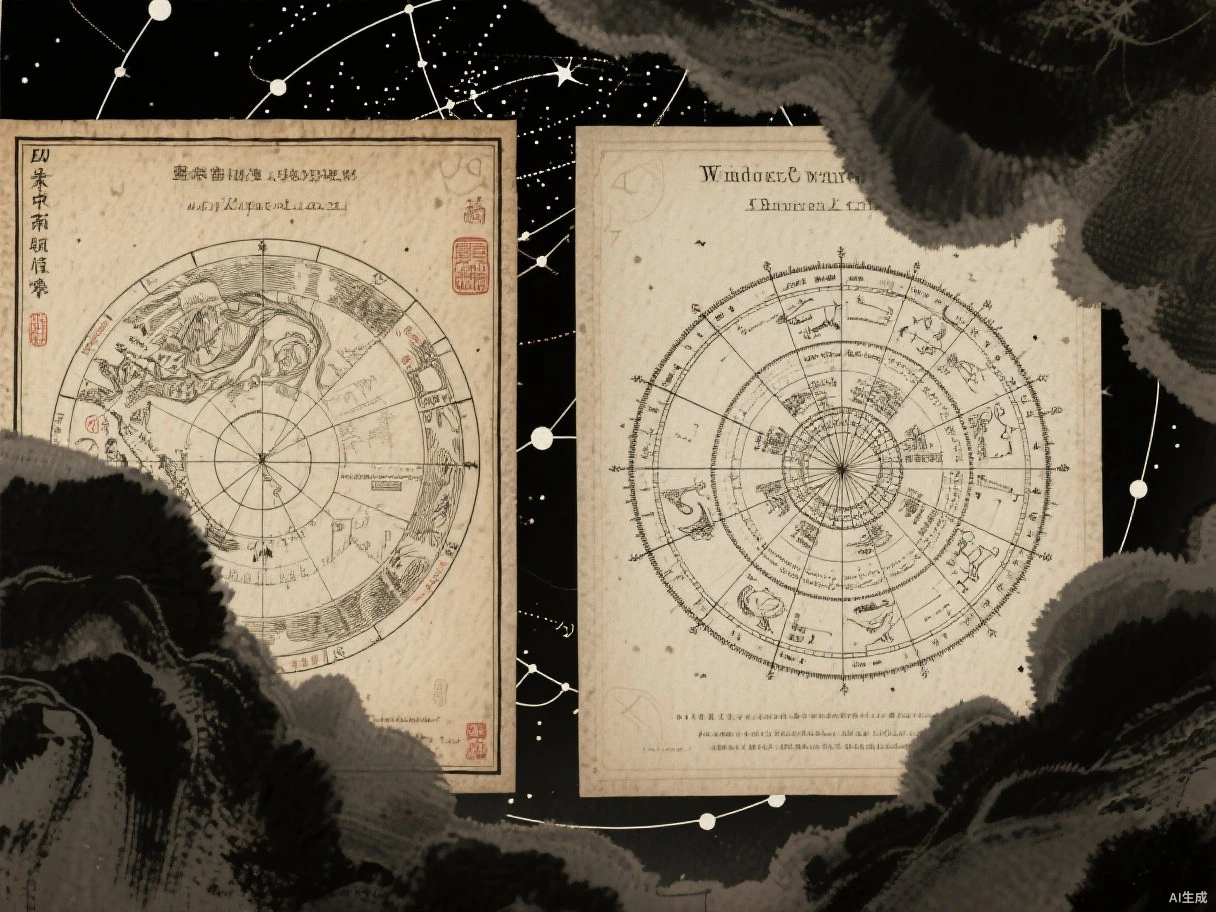

Ba Zi, the Four Pillars of Destiny (ba zi four pillars), is a Taoist system that reads your character and life timing from the exact moment you were born. It converts your birth year, month, day, and hour into eight Chinese characters — four pairs of heavenly stems and earthly branches — and uses the Five Elements to describe the strengths, shortages, and turning points written into that pattern.
What Ba Zi actually measures
Ba Zi (八字, "Eight Characters") is not fortune-telling in the Western sense of fixed prediction. The National Library Board Singapore's Infopedia describes it as a traditional Chinese method of reading a person's destiny through the lunar birth date and birth hour, a practice woven into everyday cultural life across the Chinese-speaking world source. Rather than announcing a fixed fate, it maps the elemental weather you were born into so you can work with it.
The system rests on the same Five Elements — wood, fire, earth, metal, water — that organise Taoist medicine, Feng Shui, and cultivation. Your chart shows which elements are plentiful and which are thin, and that balance is read as a portrait of temperament, health tendency, and the seasons of your life.
The four pillars and the eight characters
The "four pillars" are year, month, day, and hour. Each pillar pairs one heavenly stem (ten stems, the Heavenly Stems or 天干) with one earthly branch (twelve branches, the Earthly Branches or 地支). Ten stems and twelve branches combine in a sexagesimal cycle, so the same full set of eight characters recurs only once every sixty years.
Scholars at the Centre for Chinese Religious Studies at National Chengchi University place Ba Zi among the Chinese "temporal arts" — a family of practices, alongside the I Ching and calendar astrology, that treat time itself as a structured, readable field source. The day pillar matters most, because its stem is your Day Master.
Reading the elements and your Day Master
The Day Master (日主, ri zhu) is the heavenly stem of your day pillar, and it stands for you. Every other character is read against it: an element that feeds your Day Master is support, one that drains it is cost, one that controls it is pressure. A balanced chart is not "all good" — it is dynamic, with enough friction to grow and enough support to stand.
This is why a single element can mean opposite things in two charts. A strong wood Day Master welcomes fire to express its energy; a weak wood Day Master is scorched by the same fire. The art is in the relationship, not the ingredient.
How Ba Zi guides timing and decisions
Ba Zi is most useful for timing. Each year, month, and day carries its own stems and branches that flow into or clash with your chart. Academics at Academia Sinica's Institute of Ethnology note that the method matured during the Song dynasty as part of a sophisticated Chinese cosmological calendar, and that its logic is less about doom than about reading favourable and unfavourable windows source.
Practitioners use this to choose when to begin, marry, move, or rest — not to surrender choice, but to spend it where the current helps. For a deeper look at the anchor of the chart, see our guide to your Ba Zi Day Master, and for how this differs from the Western zodiac read Chinese vs. Western astrology.
Where Ba Zi fits in Taoist life
Ba Zi is one instrument in a larger Taoist toolkit that includes Feng Shui, Qigong, and ritual. It shares with them a single conviction: that human life moves inside natural cycles, and that harmony comes from reading those cycles instead of fighting them. For the quick, direct answer to what a Day Master is, visit our FAQ on the Ba Zi Day Master, and for how Eastern and Western systems compare, see our FAQ on Chinese vs. Western astrology.
You do not need to believe anything to benefit. A Ba Zi reading is a map, not a verdict — a way to see your own pattern clearly enough to row with the river rather than against it.
每週智慧,直送你的電郵
隨筆、時令指引與能量洞察——每週一信,絕無雜訊。