The short answer
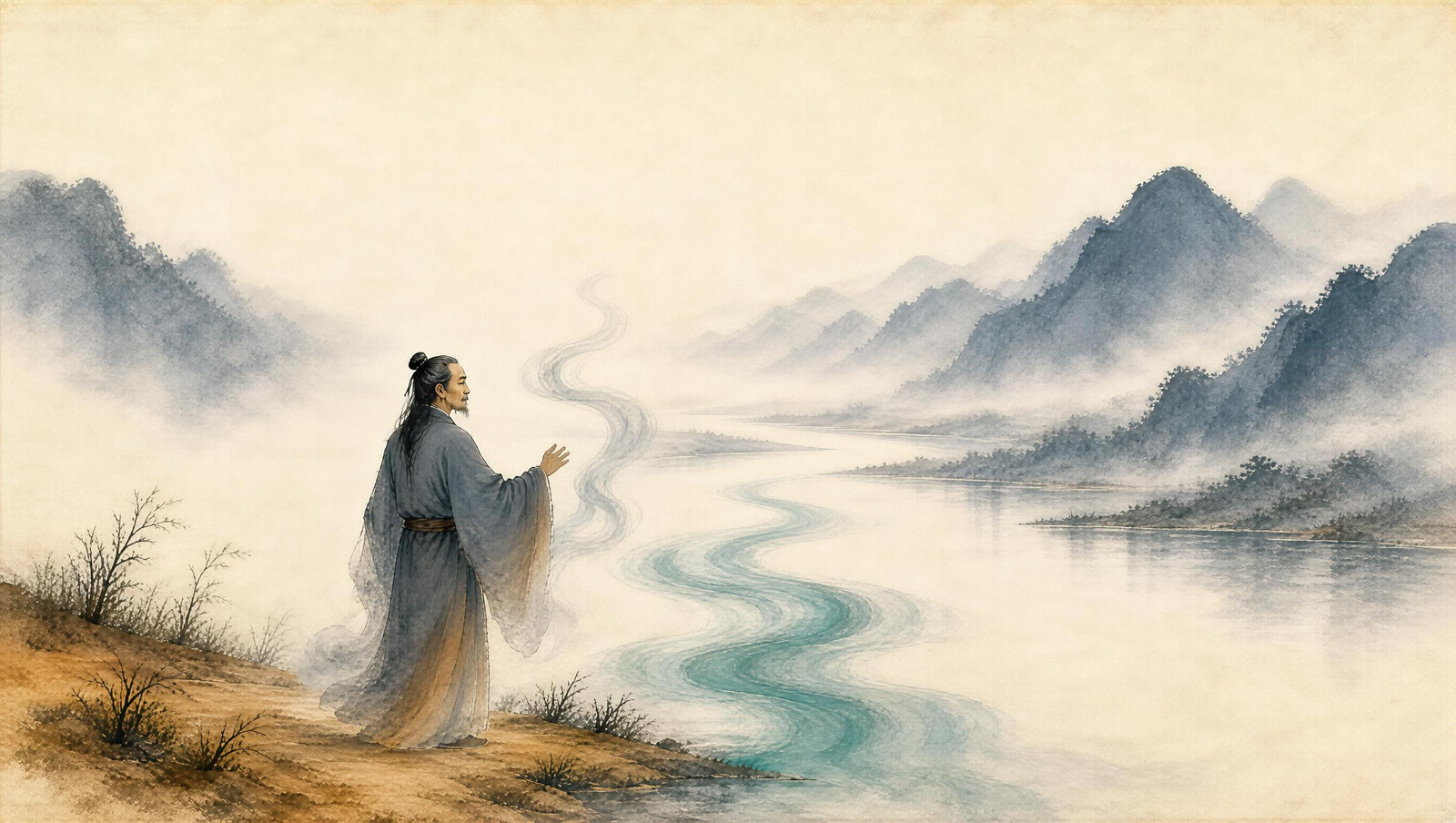
The Dao (道) is the formless source and pattern behind everything that exists; Qi (气) is the living breath-energy that moves through the body, the land, and the sky because of the Dao. You cannot really separate them in practice — the Dao is the map, and Qi is the current you learn to feel, gather, and guide. Taoist meditation, Qigong, and internal alchemy are all methods for aligning your own Qi with the larger movement of the Dao.
What the Dao actually is
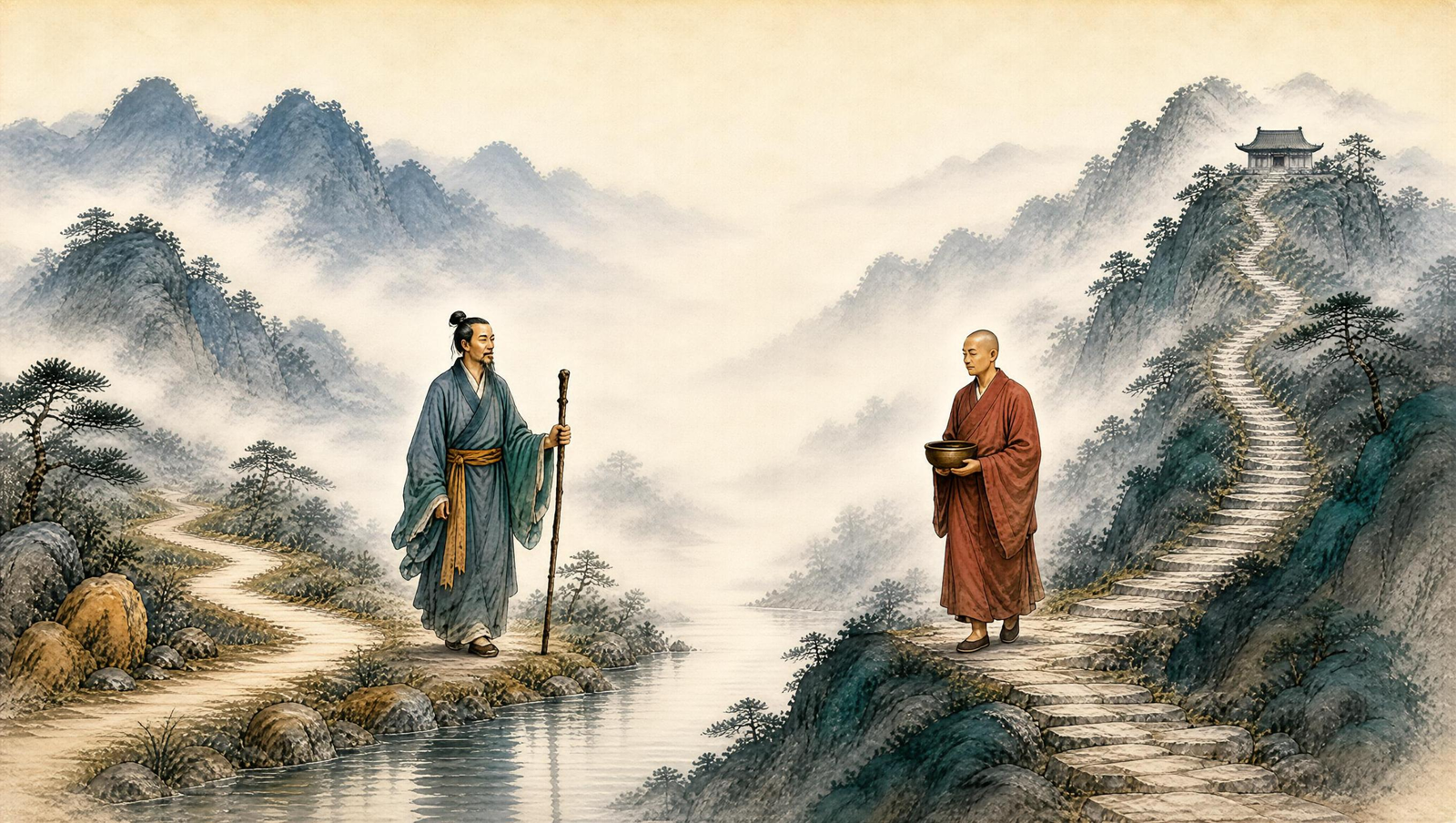
The Tao Te Ching opens with a famous warning: "The Tao that can be spoken is not the eternal Tao." The point is that the Dao cannot be pinned down by a definition. Think of it as the silent ground beneath all things — the reason there is something rather than nothing, and the logic by which mountains, rivers, and people arise and return. As the Internet Encyclopedia of Philosophy notes, the Dao is described in early texts both as the ultimate source of the cosmos and as the "way" things naturally move (IEP, Taoism). It is not a god who sits above the world; it is the world's own hidden order.
What Qi is and how it moves
If the Dao is the pattern, Qi is what flows along it. Qi is the warm current you feel after good sleep, the tension that gathers in your shoulders under stress, the freshness of a room with an open window. In Taoist physiology Qi circulates through channels (meridians) and is refined through the three treasures: essence (jing), breath (qi), and spirit (shen). Golden Elixir, a dedicated Neidan studies resource, describes Qi as the subtle substance cultivated and transformed in internal-alchemy practice (Golden Elixir). Where Qi flows smoothly there is health and clarity; where it stagnates there is fatigue and friction.
How the Dao and Qi meet in practice
Practice is where the two stop being abstract. In sitting meditation you quiet the noise so the Dao's rhythm becomes perceptible, then use slow breathing to gather Qi in the lower abdomen. In Qigong you move the body so Qi circulates instead of pooling. In Neidan (internal alchemy) you refine jing into qi, qi into shen, and shen into emptiness — literally turning the body's raw materials back toward the source. Each method assumes the same thing: your personal Qi is a strand of the universal Dao, and training one trains the other. Our deeper guide to Neidan walks through the three-stage refinement.
Why the distinction matters in daily life
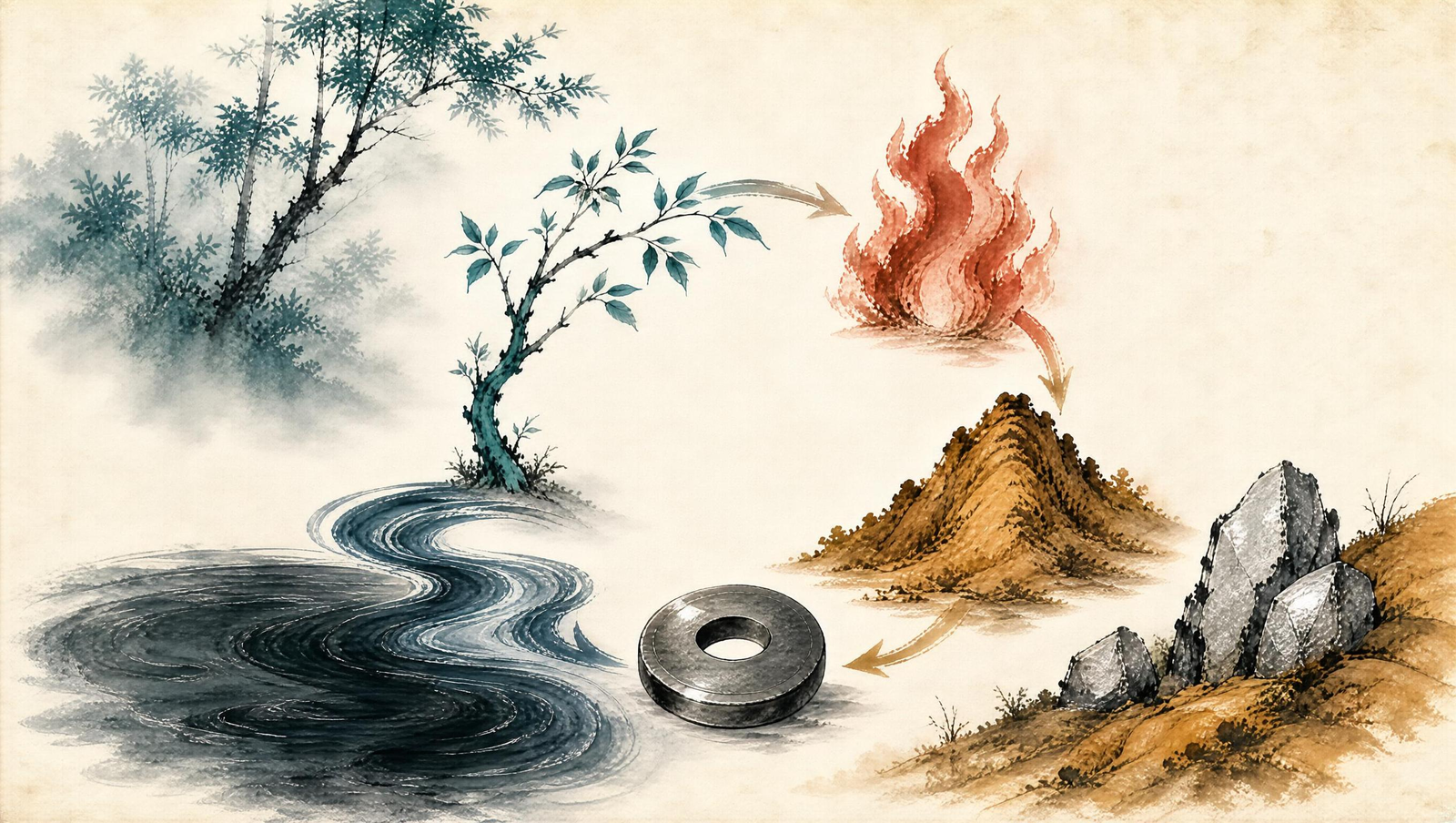
Knowing the difference keeps you from two common mistakes. Chasing "the Dao" as a concept alone turns Taoism into bookish philosophy with no body. Chasing "Qi" as a sensation alone turns it into a wellness fad with no root. Held together, they answer the question every beginner asks: what do I actually do? You align with the Dao by removing what forces, and you build Qi by breathing, moving, and resting in season. The Five Elements show how Qi expresses itself through wood, fire, earth, metal, and water, giving you a practical map of your own balance.
Common questions about the Dao and Qi
- Is Qi scientific? Modern science does not measure Qi as a single substance, but the experiences it names — circulation, relaxation, regulated breath — are real and studied. Taoism treats Qi as an operational description of vitality, not a claim about particles.
- Can I feel the Dao directly? Not as an object. You feel it as the settled clarity that remains when striving stops — which is why stillness is the front door.
Closing takeaway
The Dao is the source; Qi is its moving life. Learn to feel your Qi and you are already standing in the Dao. For the foundational concept, read What is the Tao (the Dao)?, and for the energy side see What is Qi, and why does it matter?.
每週智慧,直送你的電郵
隨筆、時令指引與能量洞察——每週一信,絕無雜訊。