The Three Caves Classification
He divided all Taoist scriptures into three caves — Dongzhen for Shangqing, Dongxuan for Lingbao, Dongshen for the Celestial Master — a scheme so durable that the Ming-dynasty Taoist Canon still opens with it.

陸修靜
Orderer of Scriptures & Rites
Era · 406–477 CE, Liu Song
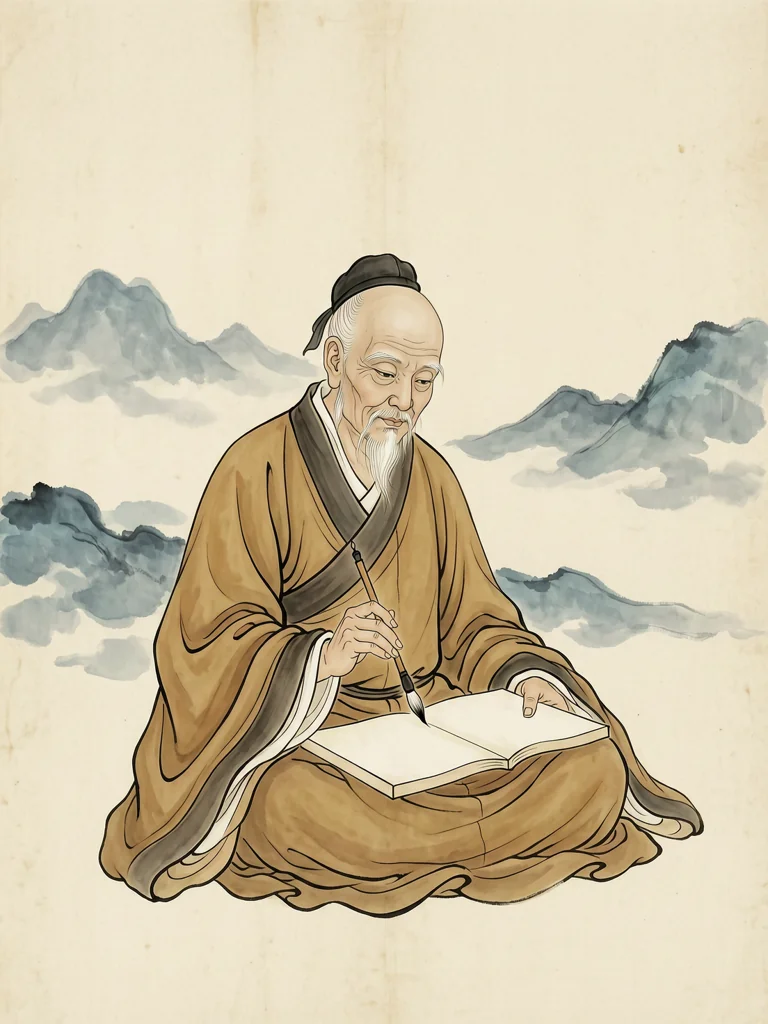
Orderer of Scriptures & Rites
He organized the scriptures of the southern traditions into the Three Caves classification still used for the Taoist canon today, and composed the ritual codes that turned temple worship into a formal art.
Era · 406–477 CE, Liu Song
史記 · History
Lu Xiujing (406–477) did for Taoist scriptures what Kou Qianzhi did for rites: he ordered them. In 437 he compiled the Sandong Jingshu Mulu — the first catalogue of Taoist scriptures — and established the Three Caves classification that still structures the Taoist Canon. No single editorial act shaped the canon more.
He was also the great codifier of southern liturgy: he systematized the fasting rites and petition formats, wrote the codes that standardized how a rite is performed, and advised the Liu-Song court. With him, southern Celestial Master Taoism became a religion of books and ceremonies.
He divided all Taoist scriptures into three caves — Dongzhen for Shangqing, Dongxuan for Lingbao, Dongshen for the Celestial Master — a scheme so durable that the Ming-dynasty Taoist Canon still opens with it.
Lu Xiujing wrote the liturgical codes of his age: the fasting rites, the petition formats, the altar protocols. Later ritual masters based their practice on his compilations.
三洞經書目錄
The first catalogue of Taoist scriptures, compiled in 437 — its preface survives.
歷世真仙體道通鑑
Preserves his biography and his role in codifying southern Taoism.