What "blocked qi" actually means
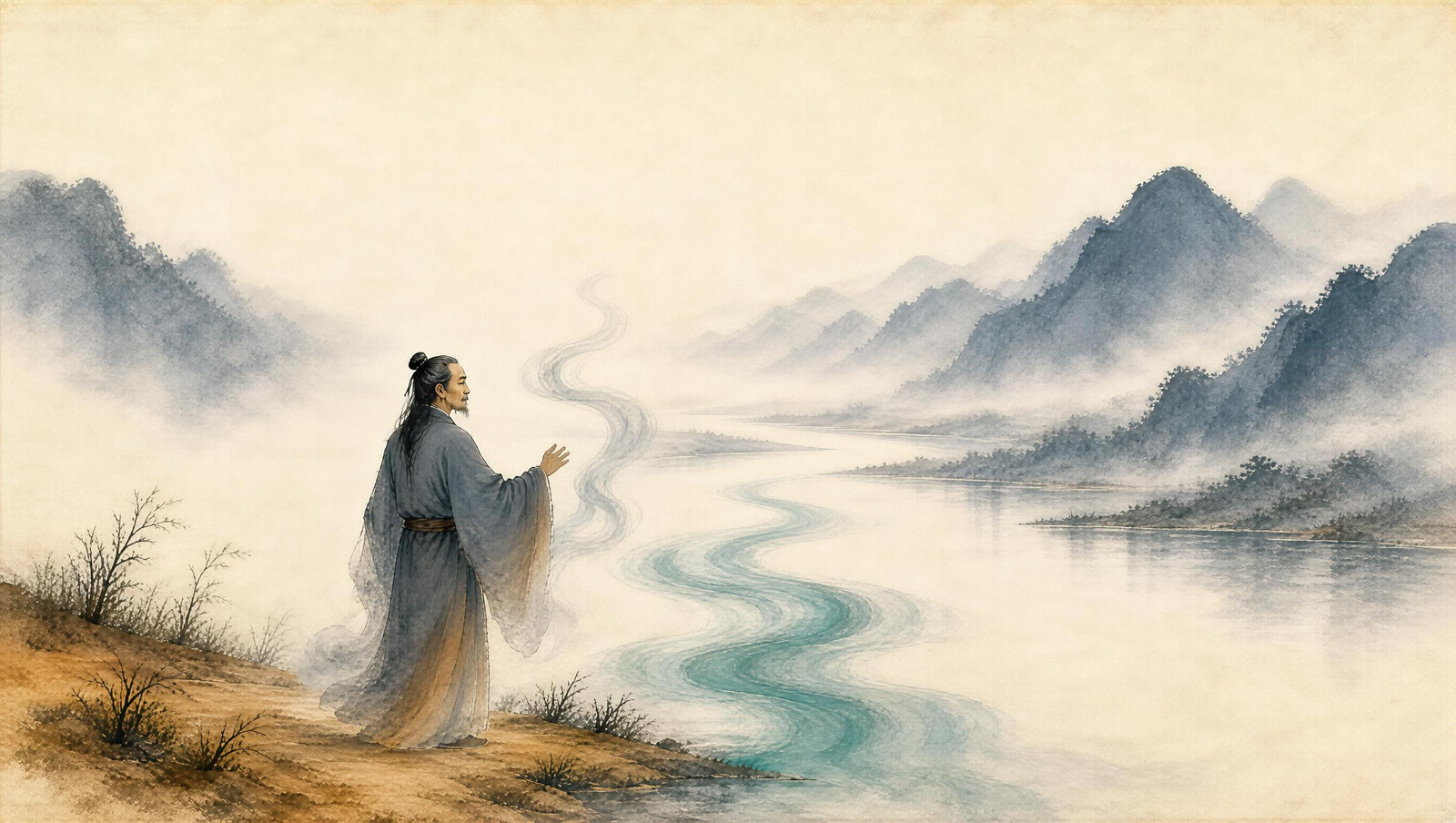
In Chinese medicine and Taoist practice, qi (气) is the functional energy that moves the body, the mind, and the emotions. It runs along channels called meridians, supplies the organs, defends the surface, and animates thought. When qi moves freely, a person feels responsive, recoverable, and clear. When qi is blocked - shi (stuck, stagnating) - the same person feels dense, irritable, or oddly flattened. (Not sure what qi is in the first place? The Qi FAQ has the plain answer.)
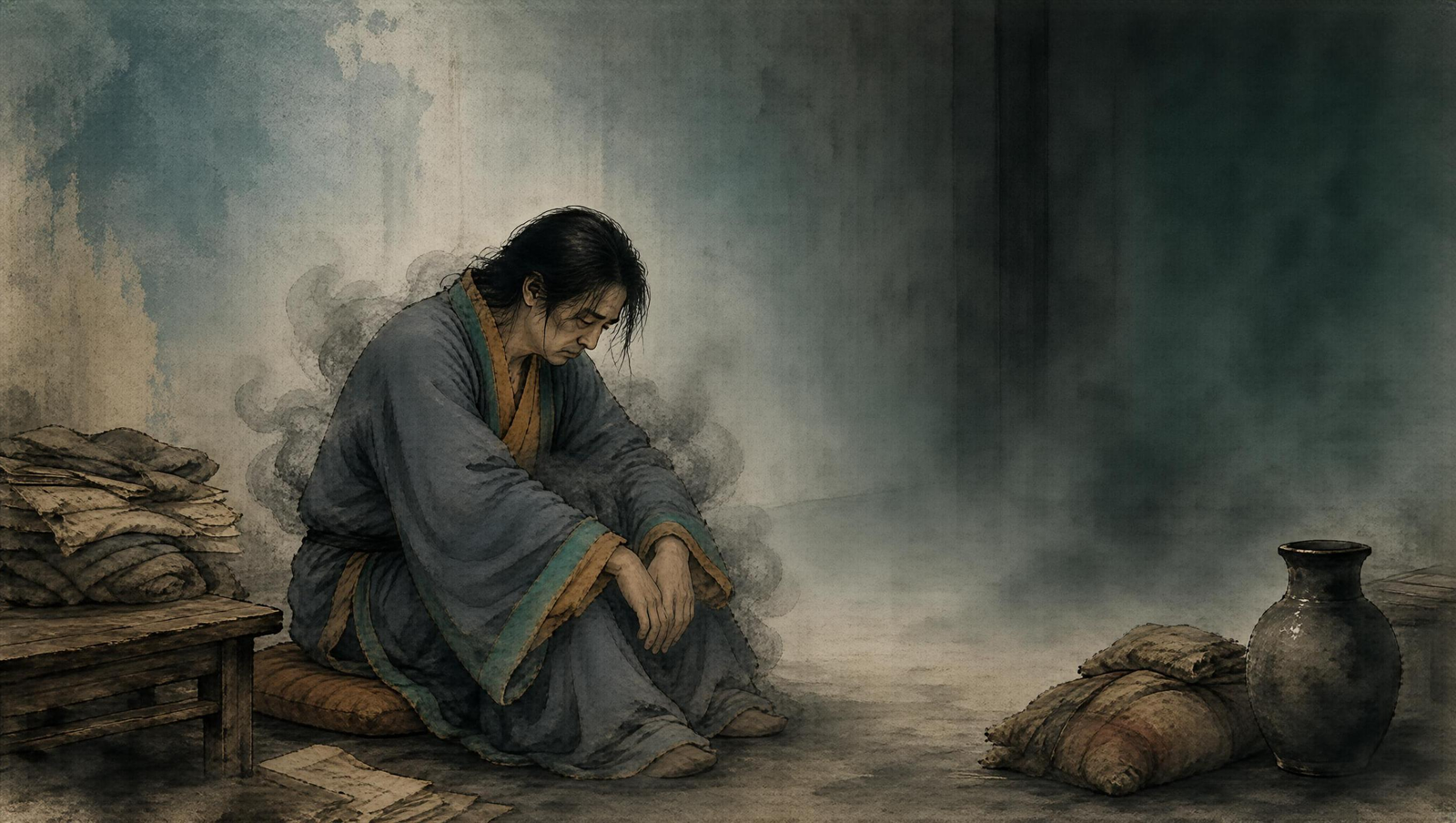
A blockage is not a metaphor. It is a pattern: the energy cannot complete its natural circuit, so it accumulates somewhere it should pass through and is absent somewhere it should reach. The symptoms below are the common signals that pattern is happening. Most people recognize one or two immediately when they read the list.
Seven signs of blocked qi
-
Chronic tension in a fixed location - usually the shoulders, jaw, lower back, or the area between the eyebrows. The same spot, the same time, for weeks or months.
-
Emotional cycling without resolution - the same irritation, the same sadness, the same loop of thinking, with no movement to a new feeling. Blockage produces stasis, and stasis feels like "the same feeling, over and over."
-
Digestive sluggishness - the spleen and stomach are the central earth of the qi cycle. When the middle is stuck, food does not transform cleanly: bloating, heavy after eating, irregular appetite, or a coated tongue in the morning.
-
Sleep without rest - falling asleep but waking heavy. Qi should settle at night; a blockage keeps a layer of charge active and the body never fully descends.
-
Circumstances repeating - the same kind of conflict at work, the same kind of relationship, the same money pattern. The Taoist view treats outer patterns and inner patterns as one fabric: stuck inside, stuck outside.
-
Loss of clear direction - not knowing what you want, or knowing but not being able to act on it. The will (yi, 意) is governed by the spleen-earth; when earth is dampened, the will becomes foggy.
-
Aversion to being touched in a specific place - when someone (a partner, a massage therapist) touches a blocked meridian, the body flinches. Listen for that flinch; it tells you where the block lives.
Where the block usually is
Most chronic blockages settle in one of three places:
- The diaphragm - from held breath, unprocessed emotion, posture. The hinge between upper and lower body.
- The shoulders and neck - from carrying, controlling, bracing against input.
- The lower abdomen (dan tian) - from a life that does not move enough, from fear, from years of not being grounded.
The diaphragm is the most common and the most consequential, because every meridian passes through it. Free the diaphragm, and much else follows.
Practices that move qi
Three-part breath (for the diaphragm)
Inhale slowly into the belly for four counts, let the breath rise to the ribs for four, then to the upper chest for two. Exhale in reverse - chest, ribs, belly - for six counts. Do this for five minutes, lying down, twice a day. Within a week, most diaphragm blockages start to soften.
The inner smile (for emotional qi)
Sit quietly. Bring a soft smile to your face - not performative, just the inner sense of warmth. Direct that warmth, slowly, through the body: first to the eyes, then down through the tongue, throat, heart, lungs, liver, spleen, kidneys, and finally to the dan tian below the navel. This is a classical Taoist practice (xiao xiao, the inner smile) for releasing emotional qi held in the organs.
Walking with the ground (for the lower body)
Walk outside for twenty minutes. Each step lands on the heel and rolls forward, but the attention is on the contact with the ground, not on speed or distance. This is the simplest version of xing qi (行气, walking the qi) and it draws stuck energy down and out of the upper body.
Acupressure at the four gates
Two pairs of points are called the "four gates" because they together open the entire circuit:
- Large Intestine 4 (Hegu) - on the back of the hand, between thumb and index finger, at the highest point of the muscle bulge when you press thumb and finger together.
- Liver 3 (Taichong) - on the top of the foot, between the big toe and second toe, in the depression before the bones meet.
Press each point firmly for one minute per point, both sides. If you have done the three-part breath first, the relief is usually immediate.
When to look deeper
These practices handle most everyday blockage. But if the same pattern returns for months despite regular practice, the root is usually in the elemental balance of your constitution - a chart where the day-master is overwhelmed by a controlling element, for instance, will keep generating the same emotional blockage until the pattern is recognized and balanced.
The Destiny Atlas is built for exactly this question: it reads the elemental balance of your Ba Zi and identifies the specific controlling or generating relationship that produces chronic patterns. For most people, that is the difference between treating the symptom and seeing the underlying shape.
Qi moves. The work is to let it.
Weekly wisdom, straight to your inbox
Essays, seasonal guidance, and energy insights - one letter a week, no noise.
DaoMind Pro
Read your own chart
Generate your full Ba Zi chart and elemental balance - the same data a practitioner opens with.
Open Destiny Atlas →