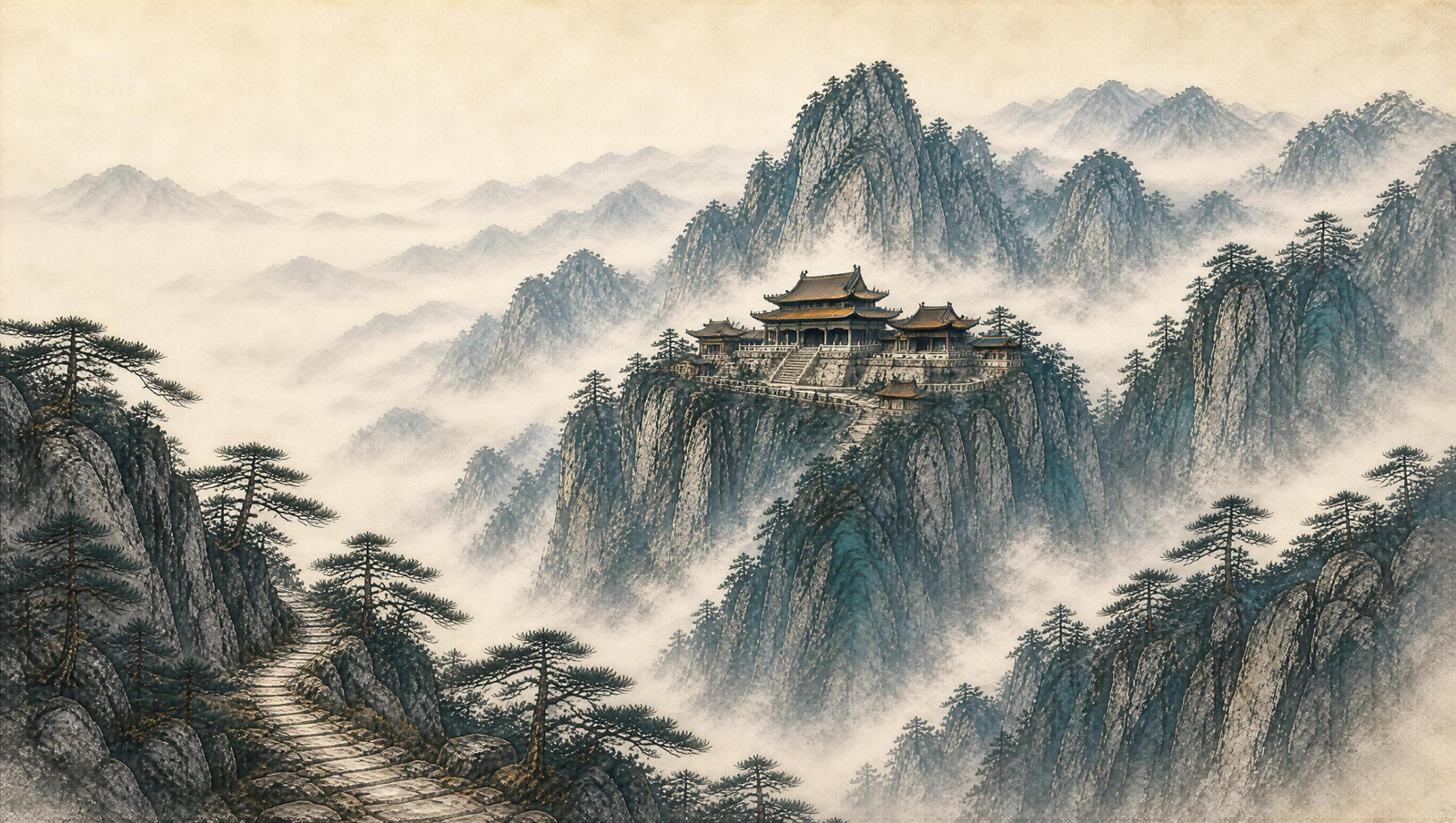
What and where is Wudang Mountain?
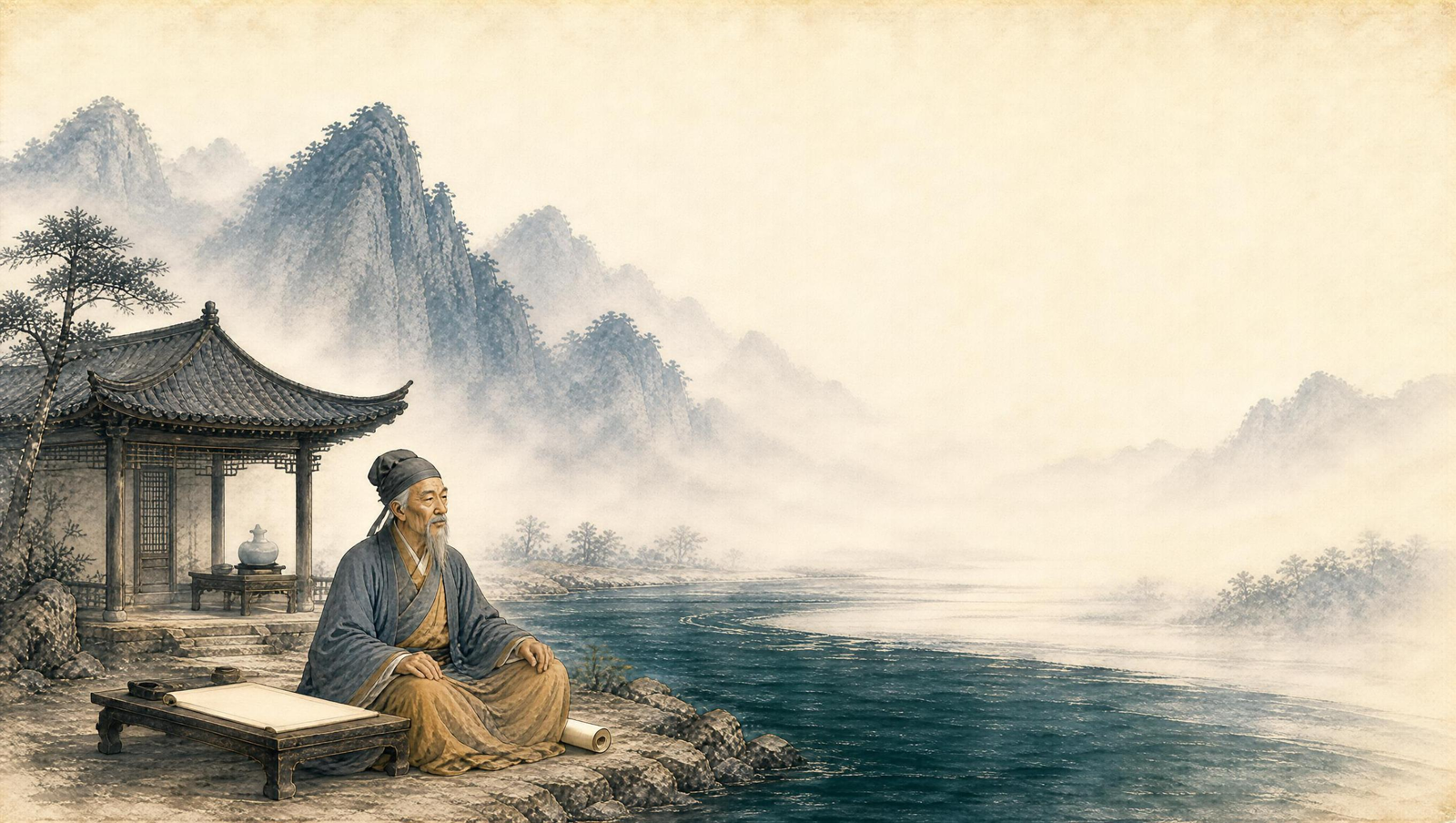
Wudang Mountain (武當山) is a sacred Taoist range in northwestern Hubei province, China, revered for over a thousand years as a center of cultivation, imperial patronage, and the birthplace of Tai Chi (Taijiquan) and the internal martial arts. Its peaks, temples, and cloud-sea scenery have made it both a UNESCO-recognized heritage landscape and a living spiritual site.
The mountain rose to prominence under the Ming dynasty emperor Yongle, who sponsored a massive building program in the early 1400s, erecting the Purple Heaven Palace and other temples to honor the deity Zhenwu. China's intangible cultural heritage portal documents Wudang's martial and ritual traditions as living heritage transmitted across generations source. In 1994 the Wudang Mountains were inscribed on the UNESCO World Heritage List, recognizing both their natural scenery and their cultural weight as a Taoist sacred landscape source.
The legend of Zhang Sanfeng
Wudang's martial fame is tied to the semi-legendary monk Zhang Sanfeng, said to have lived through the Yuan and Ming periods. Legend holds that he watched a bird attack a snake, noticed how the snake's relaxed, circular defense exhausted the bird, and from that insight distilled the principles of softness overcoming hardness that define Tai Chi. Whether historical or mythical, Zhang Sanfeng became the patron figure linking Wudang's spirituality to its physical art.
Tai Chi and the internal arts
Wudang is most famous in popular culture as the cradle of Tai Chi, the slow, flowing art practiced by millions for health and meditation. Alongside Tai Chi sit Wudang Sword and a family of "internal" (neijing) arts that cultivate qi rather than brute force. Sixth Tone has reported on how the mountain's monasteries still train disciples in these arts alongside the classical Taoist curriculum source.
The internal arts connect directly to Taoist cultivation theory. They treat the body as a field of qi to be refined — the same logic behind neidan, or internal alchemy. To go deeper into that framework, see our FAQ on what Neidan is.
Architecture and the sacred landscape
The Wudang complex is a masterpiece of feng shui and imperial architecture, with temples distributed across the peaks according to cosmic geography. The sitting of each hall reflects Taoist cosmology as much as engineering. Readers interested in how Taoist spaces are arranged can explore our essay on Taoist temple architecture.
The South Rock Palace, the Golden Summit, and the Nanyan Temple cling to cliffs and ridges, designed so that the pilgrimage itself becomes a spiritual ascent. SCMP's religion desk has covered the site's ongoing restoration and its role in contemporary Chinese religious life source.
Wudang in the Taoist canon
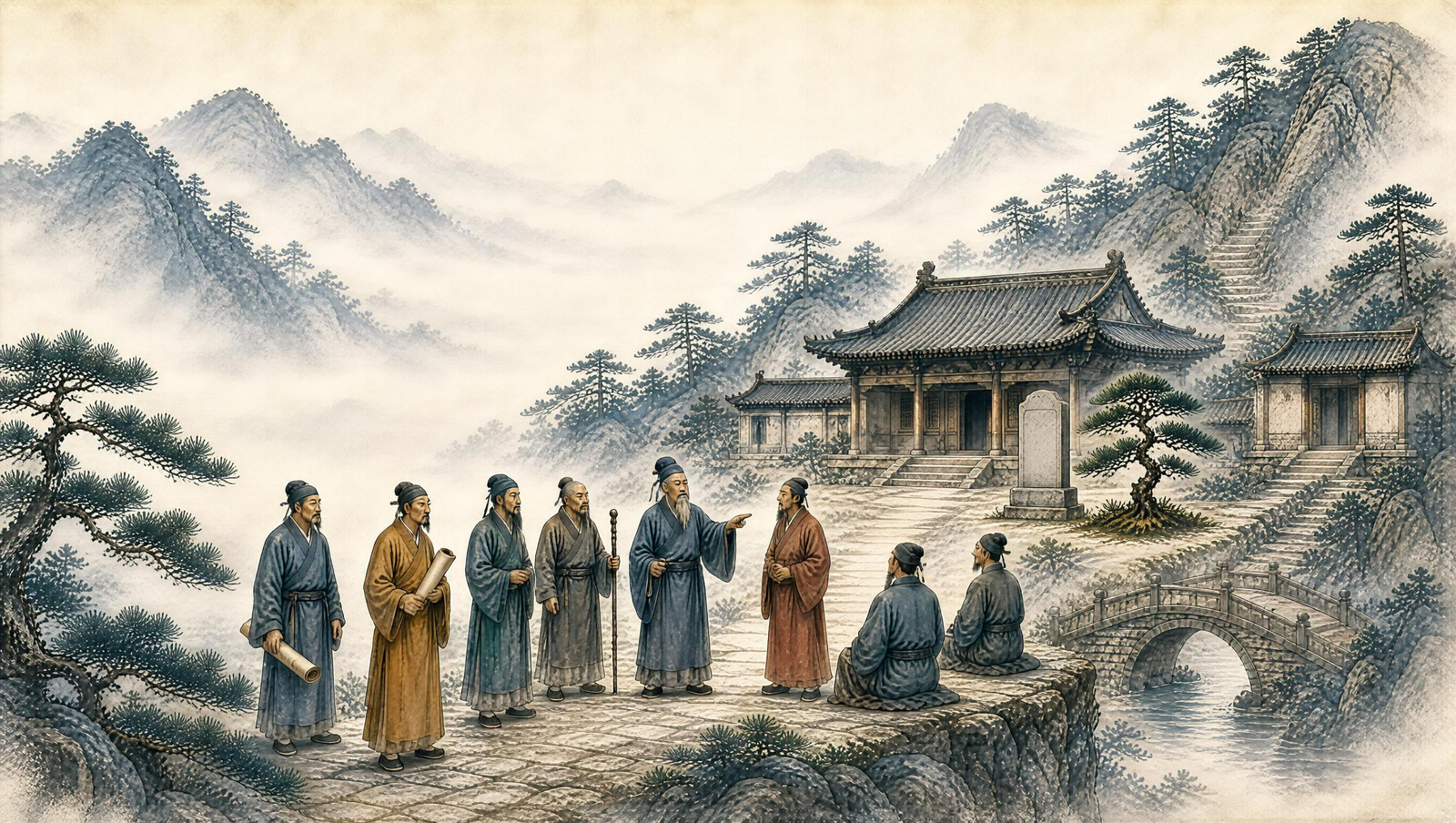
Beyond martial arts, Wudang was a center of scriptural study and meditation, home to generations of priests who copied, commented on, and transmitted the Taoist Canon (道藏). The mountain thus bridges two faces of the tradition: the contemplative search for longevity and the disciplined body that Tai Chi trains. This duality is why Wudang, more than almost any other site, embodies the Taoist ideal of uniting stillness and movement.
Wudang today
Today Wudang balances two lives: a UNESCO World Heritage tourism destination and a working sacred mountain where Taoist priests still keep the liturgy, medicine, and martial lineage alive. For visitors, the draw is both the scenery and the chance to train with holders of an unbroken tradition.
Closing takeaway
Wudang reminds us that in Taoism, the body is a temple and movement a form of prayer. Whether you practice Tai Chi in a city park or climb the Golden Summit, you are touching a current that has flowed for six centuries.
每週智慧,直送你的電郵
隨筆、時令指引與能量洞察——每週一信,絕無雜訊。