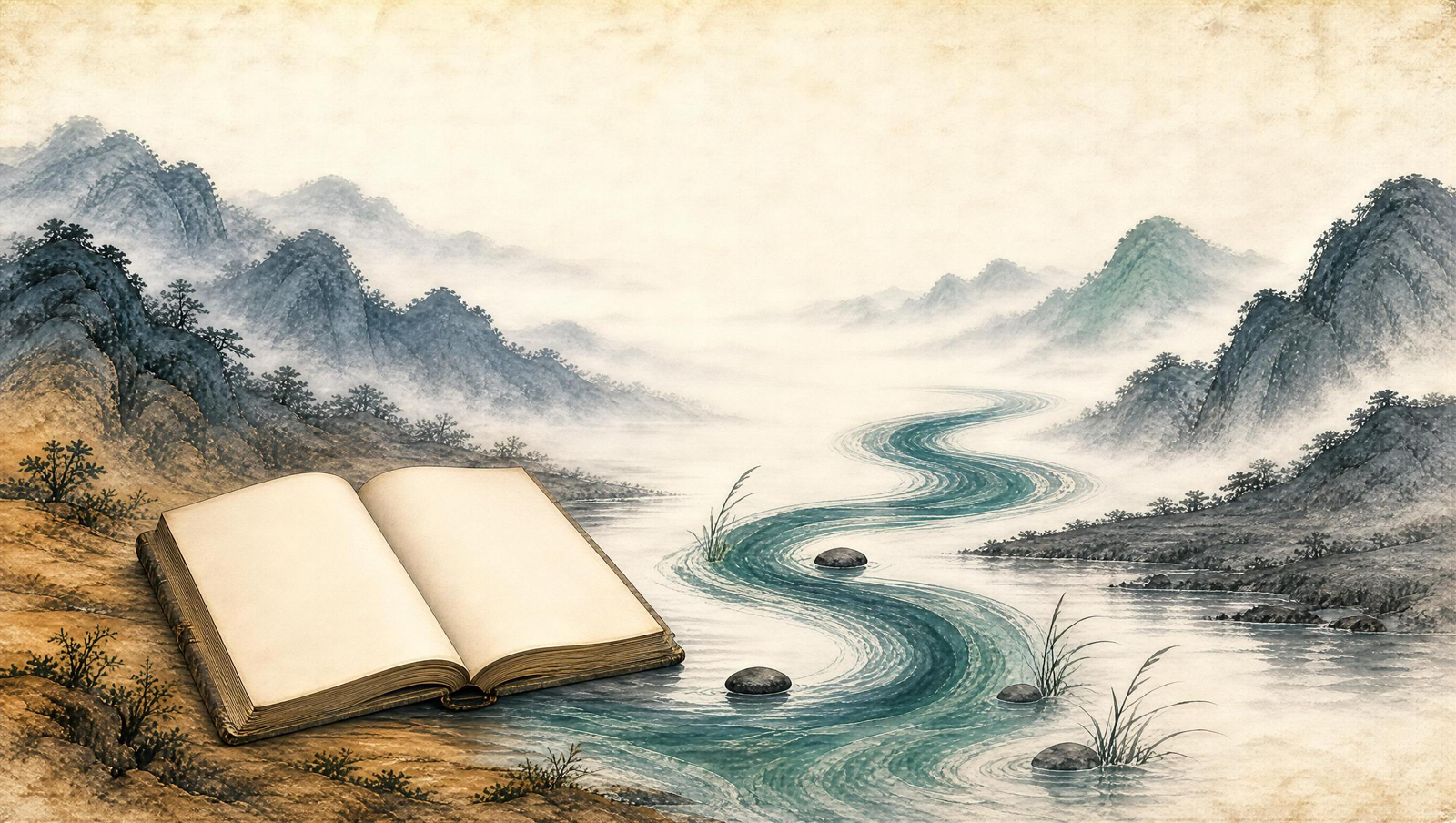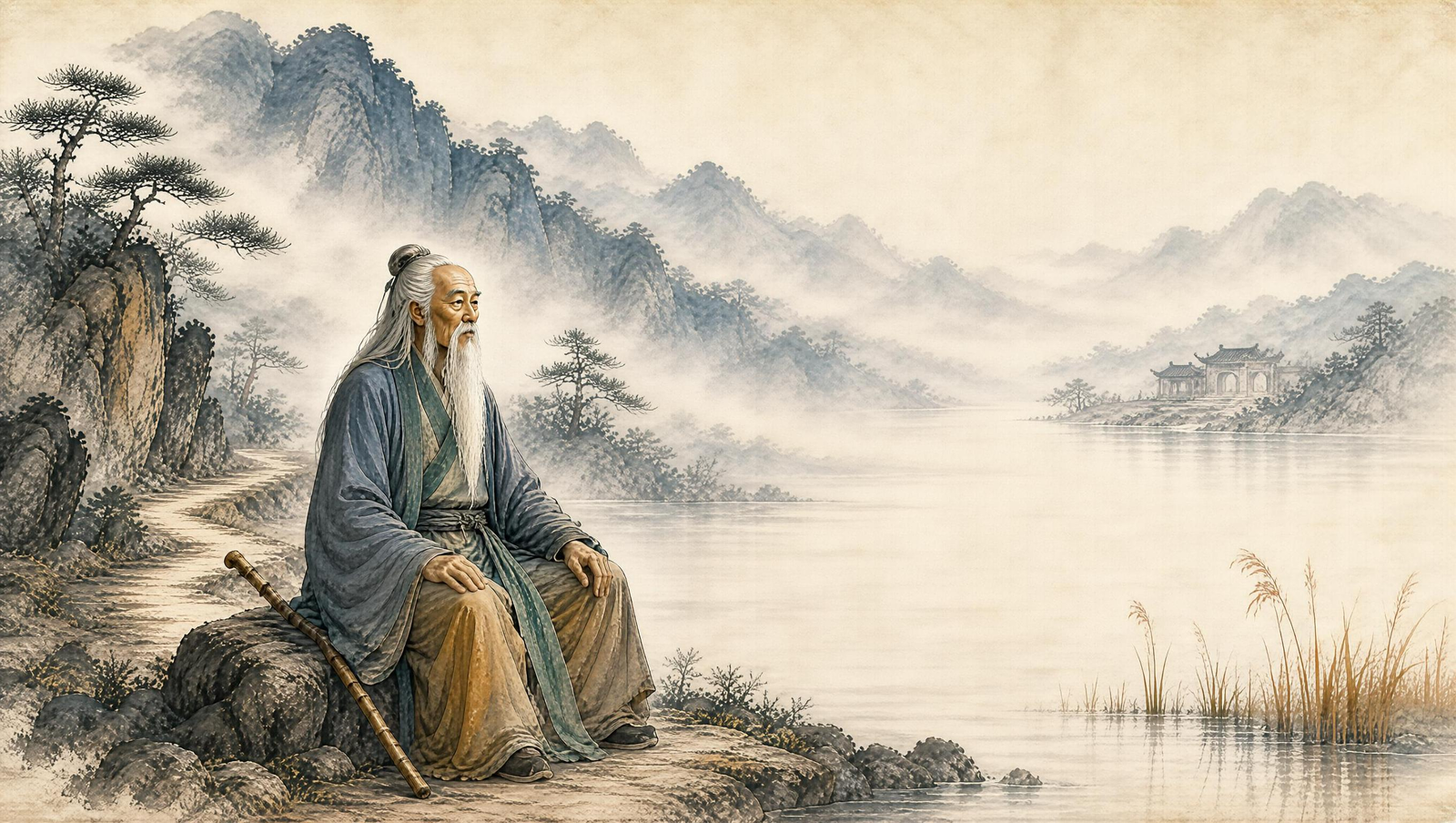

The Dao and the I Ching (易經, the Book of Changes) are not competitors for the same truth. The Dao is the name for the current beneath all things - the silent source and pattern the Tao Te Ching says cannot be spoken. The I Ching is the map of how that current moves through change, in sixty-four hexagrams that read the moment like weather. To study both is to see one reality from two angles: the still root, and its never-still expression (source, the classical texts remain the two most-cited foundations of the Taoist curriculum).
The Dao as the unchanging ground
The Tao Te Ching opens by warning that the Dao which can be named is not the eternal Dao. It is the womb before form, the flow before any single event. The Chinese Text Project's editions of the classical corpus place the Dao at the center of the whole tradition: not a god, not a law, but the living movement everything shares. This is the half that does not change - or rather, the half whose changing is so total it appears as stillness.
The I Ching as the grammar of change
Where the Dao is the root, the I Ching is the branches. Built from broken and unbroken lines - yin and yang in combination - its sixty-four hexagrams describe every basic situation the current can take. The Chinese Text Project's Book of Changes and digital libraries such as CBETA preserve the received text and its commentaries, letting readers trace how each hexagram turns into the next. Change here is not chaos but a structured dance with recognizable steps.
Why Taoism does not fear flux
A tradition anchored in an unchanging ground yet fluent in change has a peculiar calm. Because the Dao is beneath the flux, no single turn of fortune touches the source; because the I Ching maps the flux, the wise can read the weather and trim their sail. This is Wu Wei in practice: not resisting change, but moving with its grain. The Taoist meets upheaval the way a river meets a rock - by flowing, not by bracing.
Reading the two together
Practically, the pairing trains attention. The Dao teaches you to hold lightly; the I Ching teaches you to look closely. Consult the oracle, and you are not predicting a fixed future but listening for the shape of the present moment - which line is rising, which is falling, where the situation is heading. Our own free I Ching tool follows this same logic: it is a mirror for decision, not a cage for destiny.
What this means for daily life
You do not need to master the hexagrams to live the lesson. Notice what is rising and what is falling in your own week. Hold the unchanging part of yourself steady, and let the changing part move. The Dao and the I Ching, held together, dissolve the panic that flux usually triggers - they replace it with participation.
When a plan collapses, the Dao reminds you the ground remains; the I Ching shows you the next line already turning. A disagreement, a lost opportunity, a sudden move - each is a hexagram you can read rather than fear. The two lenses do not remove uncertainty; they change your posture toward it. This is the everyday use of Dao and I Ching: not escape from change, but company through it. Practiced daily, the habit is quietly revolutionary - it turns anxiety into attention.
Read what the Dao is, explore the I Ching in depth, and find the direct answer in our FAQ on the Tao.
每週智慧,直送你的電郵
隨筆、時令指引與能量洞察——每週一信,絕無雜訊。