Who was Laozi?
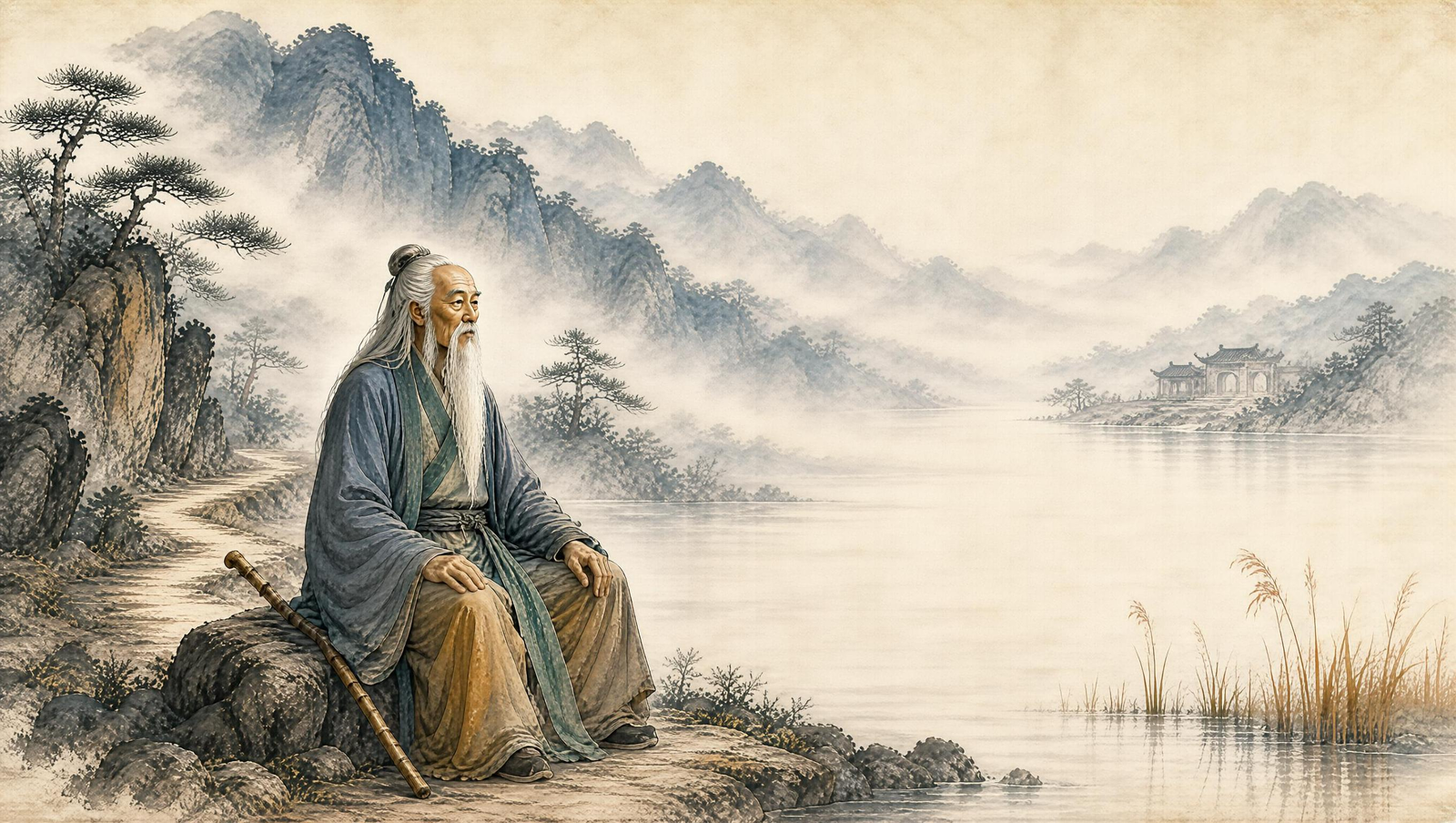
Laozi is the legendary Chinese sage traditionally credited with writing the Tao Te Ching (道德经), the foundational scripture of Taoism, and is honored as the tradition's philosophical founder. Historical details about his life are scarce and partly mythical, but his influence on Chinese thought is impossible to overstate. The Stanford Encyclopedia of Philosophy notes that Laozi is traditionally placed in the sixth century BCE, though the text bearing his name likely took shape later source.
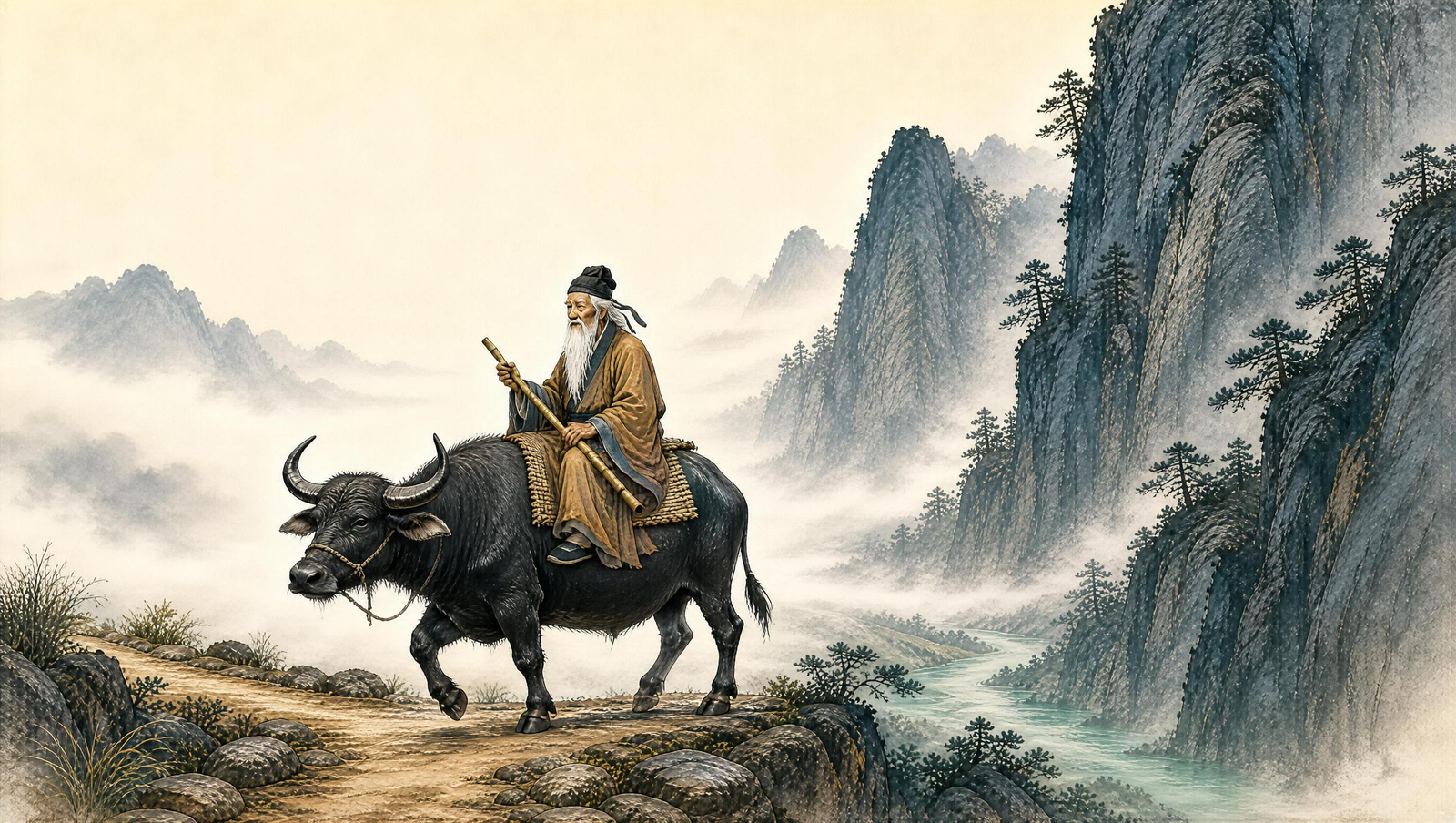
Most accounts describe him as an archivist at the Zhou court who, disillusioned with the dynasty's decline, rode west on a water buffalo and composed the Tao Te Ching at the request of a border guardian. The Internet Encyclopedia of Philosophy observes that the work we call the Tao Te Ching was probably assembled from earlier sayings around the third century BCE, well after the figure of Laozi had already entered legend source.
Sima Qian, the Han dynasty historian, devoted a chapter of the Records of the Grand Historian to Laozi, naming him Li Er (or Lao Dan) and placing him at the Zhou archive. Sima Qian even records a meeting in which the old sage admonishes the young Confucius to abandon pride and posturing — a story that became a favorite motif in later painting and drama source.
The Tao Te Ching and his teaching
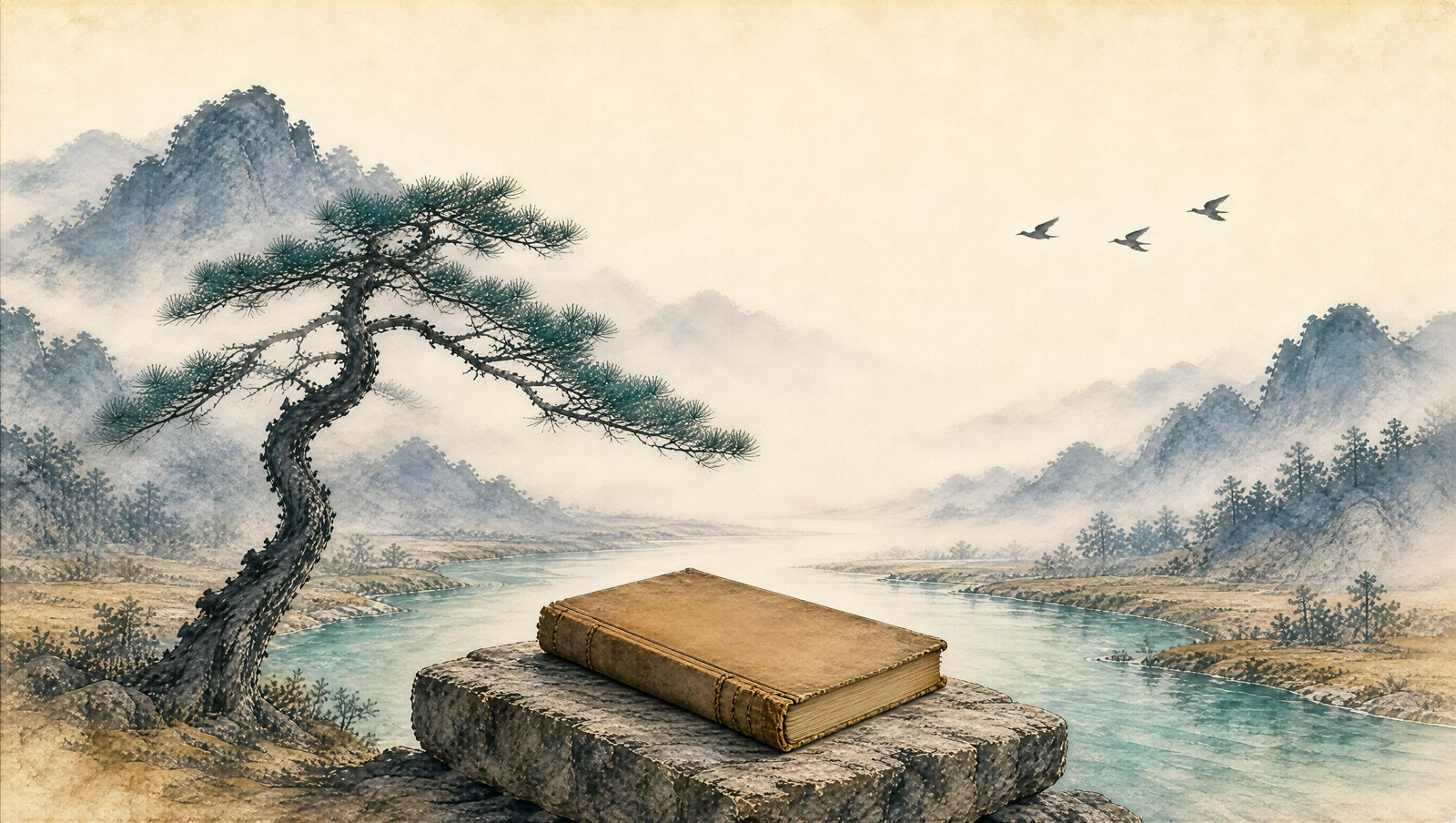
The Tao Te Ching is a slim book of roughly eighty-one short chapters written in poetry and paradox. Its central message is that the Tao — the unnameable source and pattern of all things — cannot be captured by words, only approached through stillness and alignment with nature. This is the verse every student meets first: "The Tao that can be told is not the eternal Tao."
Laozi's teaching stresses wu wei (non-forcing), simplicity, and yielding like water. Rather than commanding, the sage acts without striving and lets things find their own balance. The Chinese Text Project preserves the classical Chinese text and its many commentaries, letting readers trace how each generation reinterpreted the same lines source.
Three ideas recur throughout the book. De (power or virtue) is the Tao expressed in individual things; ziran (naturalness) is the state of acting from one's own nature without coercion; and the "reversal" principle holds that fortune and misfortune continually turn into one another. Together they form a practical ethics of moderation rather than a rigid metaphysical system.
Laozi in religious Taoism
Philosophy and religion diverge here. While philosophical Taoism (Daojia) treats Laozi as a thinker, religious Taoism (Daojiao) deified him as Taishang Laojun (the "Most High Lord Lao"), one of the highest divine emanations. From the Han dynasty onward, Laozi was woven into a pantheon and a lineage of revealed scripture.
Tang dynasty emperors, claiming descent from Laozi, elevated his cult to state religion and commissioned commentaries such as the Xiang'er commentary used by the early Celestial Masters. Over centuries the sage was assimilated into the higher divinity of the Three Pure Ones while remaining, in popular devotion, the kindly "Old Lord" who refines the elixir of immortality.
Our own temple belongs to the Zhengyi (Orthodox Unity) tradition, whose lineage traces back to the Celestial Masters of the second century CE. To understand how the sage became a god, see our FAQ on who founded Taoism, and for the scripture's wider reception read our essay Laozi and the Tao Te Ching.
Laozi's paradoxes and why they work
The Tao Te Ching teaches by reversal: "Great straightness seems crooked; great skill seems clumsy." These are not riddles for their own sake but instructions for a mind that has learned to wait. The leader who does not flaunt power, the warrior who wins without fighting, the scholar who "knows without knowing" — each models wu wei in a concrete role.
The point is timing and proportion. A river does not hurry yet reaches the sea; a tree does not strain yet stands for centuries. Laozi's paradoxes nudge the reader out of the habit of forcing, toward a confidence that is quiet enough to notice what is already moving.
Laozi's influence today
Two thousand five hundred years after his supposed lifetime, Laozi speaks to pressures modern life has not solved: overload, contention, and the cost of forcing outcomes. His counsel to do less, yet accomplish more, sits behind practices from meditation to leadership and even ecology.
The Academia Sinica's digital archives hold a vast corpus of pre-modern Chinese texts, including commentaries on the Tao Te Ching that show how deeply the sage shaped literati culture source. The book entered Western letters in the nineteenth century and surged in popularity during the 1960s; today it informs environmental ethics, leadership theory, and mindfulness, its refusal to define the ultimate in fixed terms keeping it strangely modern.
Closing takeaway
Laozi may be more symbol than biography, but the question he poses is concrete: what would change if you stopped pushing against the current and moved with it? Begin with the Tao Te Ching, and let the Old Master's silence do the teaching.
每週智慧,直送你的電郵
隨筆、時令指引與能量洞察——每週一信,絕無雜訊。