
The Tao Te Ching (道德經, "Classic of the Way and Virtue") is the foundational scripture of Taoism, traditionally attributed to the sage Laozi. In one sentence: it is an 81-chapter poem-prose manual on living in harmony with the Dao — brief, paradoxical, and endlessly quoted. This explainer walks through its structure, its core ideas, and how it is still practiced, with facts from the China and Macao Taoist Associations source.
What is the Tao Te Ching?
The text is short — about 5,000 Chinese characters across 81 chapters, split into two parts: the Dao Jing (道經, chapters 1–37) on the Way, and the De Jing (德經, chapters 38–81) on virtue or power. Its brevity is deceptive. Archaeological finds — the Guodian bamboo slips (c. 300 BCE) and the Mawangdui silk manuscripts (c. 168 BCE) — show the text was already circulating in multiple versions very early, and the received edition has stayed remarkably stable for two millennia. Despite its age, it remains active in community life. In 2025 the Macao Taoist Association ran student essay, calligraphy, and song-writing contests built around the Tao Te Ching, confirming it as a living cultural text, not a museum piece (macaotaoist.org, 2025).
Who was Laozi?
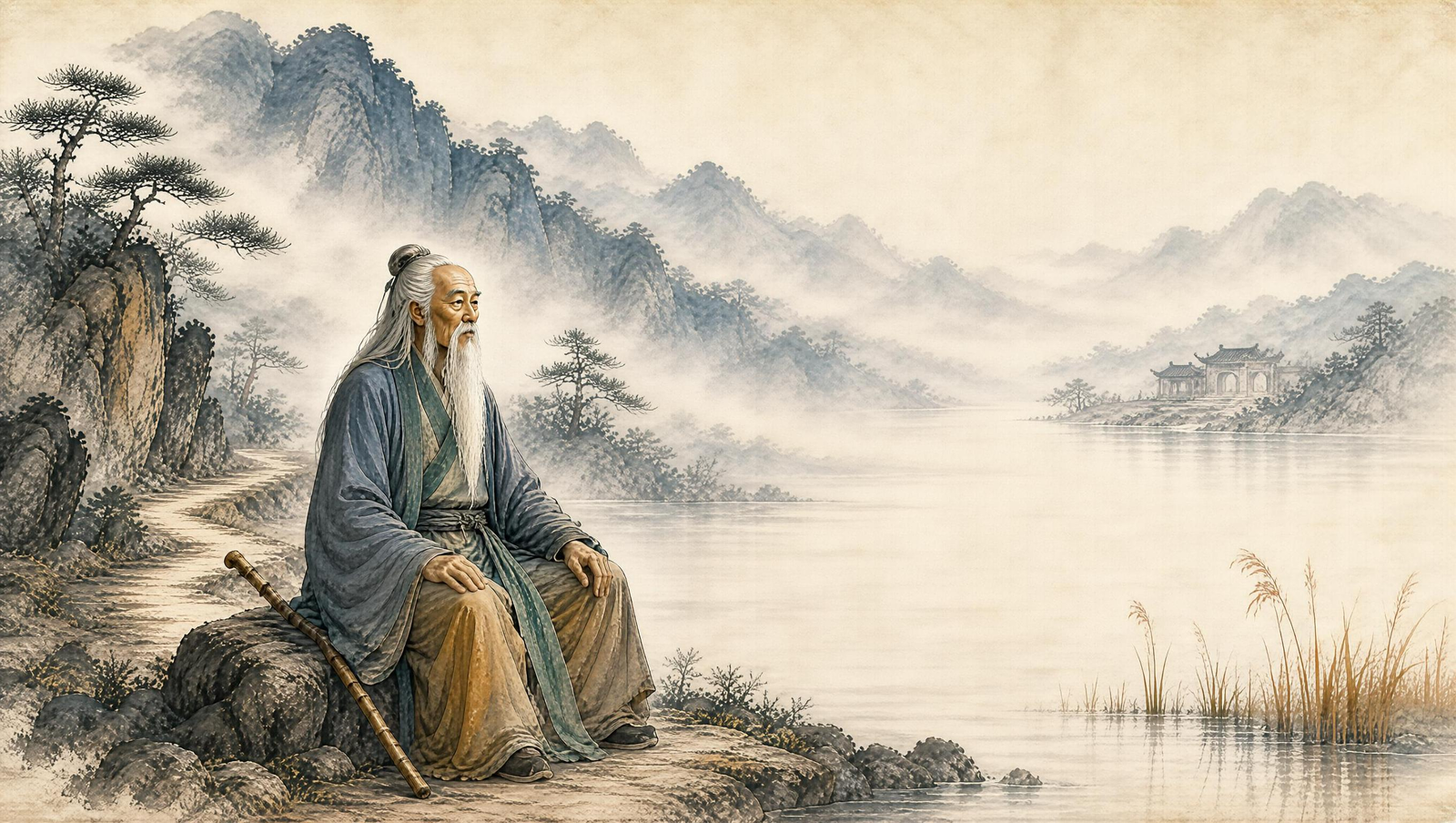
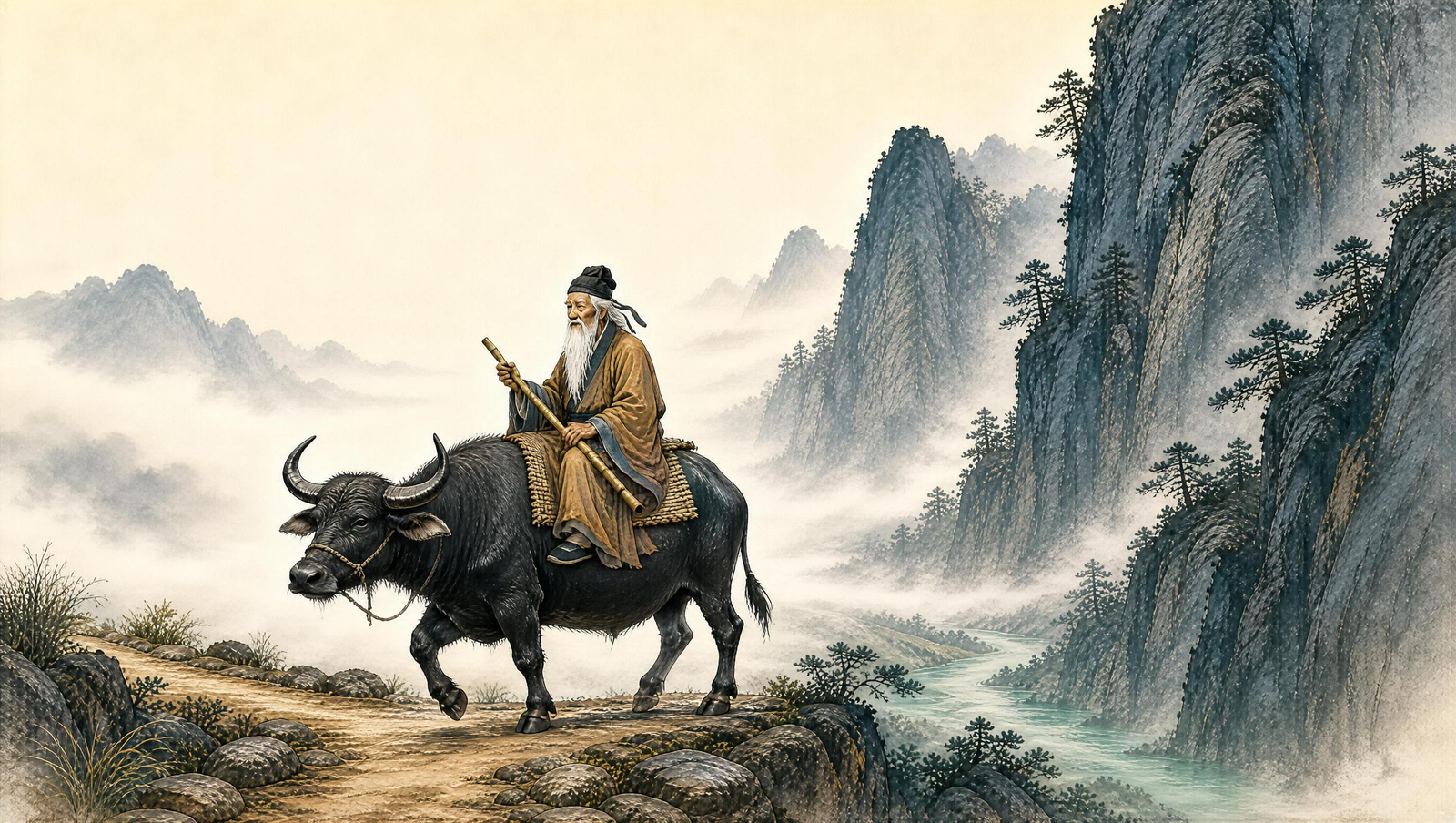
Laozi (老子, "Old Master") is the traditional author. Historical details are thin — the historian Sima Qian, writing centuries later, himself offered several versions of Laozi's life — but his figure anchors the text. Legend says he was a court archivist who, departing westward on an ox, dictated the book at a border gate. Taoism later honored him as Taishang Laojun (太上老君), the venerable deified Laozi. For the relationship between the man and the book, see our piece on Laozi and the Tao Te Ching, and for the tradition's founding figures see the FAQ on Taoism's founders.
Core ideas
- Wu wei (無為): effortless action, acting in tune with circumstance rather than against it. Not laziness — the skill of applying exactly the force needed, no more.
- Simplicity (樸): valuing plainness over excess. The uncarved block is Laozi's image for the mind before complication.
- Softness over force: water, the softest thing, wears down the hardest stone. Chapter 78 makes this the model for effective action.
- Reversal (反者道之動): extremes turn into their opposites — a thoroughly Taoist insight that also grounds divination and timing practice.
These ideas connect to the broader Taoist worldview of the five elements and the Longmen mind-method meditation tradition.
Five chapters to start with
New readers often ask where to begin. Five chapters reward a first pass: chapter 1, on the Dao that cannot be named; chapter 8, on being like water; chapter 16, on stillness and returning; chapter 64, on the journey of a thousand miles; and chapter 76, on the soft overcoming the stiff. Each is short enough to read aloud in under a minute — which is exactly how the tradition recommends reading them.
Why it matters in practice
The Tao Te Ching is not only read; it is performed. The China Taoist Association's 2026 "Xuanmen Jiangjing" (玄門講經, "Scripture Lecture") program — the eighteenth edition — trains clergy and laypeople to explain classic texts publicly, keeping the Tao Te Ching central to teaching (taoist.org.cn, 2026). Its emphasis on health and balance also feeds Taoist health and longevity practice, and its chapter on governing appears in leadership seminars far outside temples.
How to start reading it
Begin with chapter 1, sit with one chapter per day, and pair it with a simple daily routine. Don't rush to "understand" — the text is built to be revisited. Reading the same chapter in different translations, or alongside the Zhuangzi, gradually loosens the paradoxes into sense.
Key takeaways
- The Tao Te Ching is the 81-chapter root scripture of Taoism, about 5,000 characters long.
- Laozi is its traditional author, later honored as Taishang Laojun.
- Its themes — wu wei, simplicity, softness, reversal — are practical, not abstract.
- It is still taught, lectured, and celebrated in Taoist communities today.
If you want the Chinese original alongside explanation, our Traditional-Chinese edition of this guide is also available, and the FAQ on Taoist scriptures answers the most common reader questions.
每週智慧,直送你的電郵
隨筆、時令指引與能量洞察——每週一信,絕無雜訊。