Who Tudigong is
Tudigong (土地公, "Earth God" or "Local Ground Lord"), also called Fude Zhengshen (福德正神), is one of Chinese religion's most beloved local deities. He is the gentle guardian of a specific patch of land — a village, a street, a field, sometimes a single tree or shop. Where the Jade Emperor rules heaven and the City God administers a walled town, Tudigong tends the soil beneath your feet.
His character and symbols
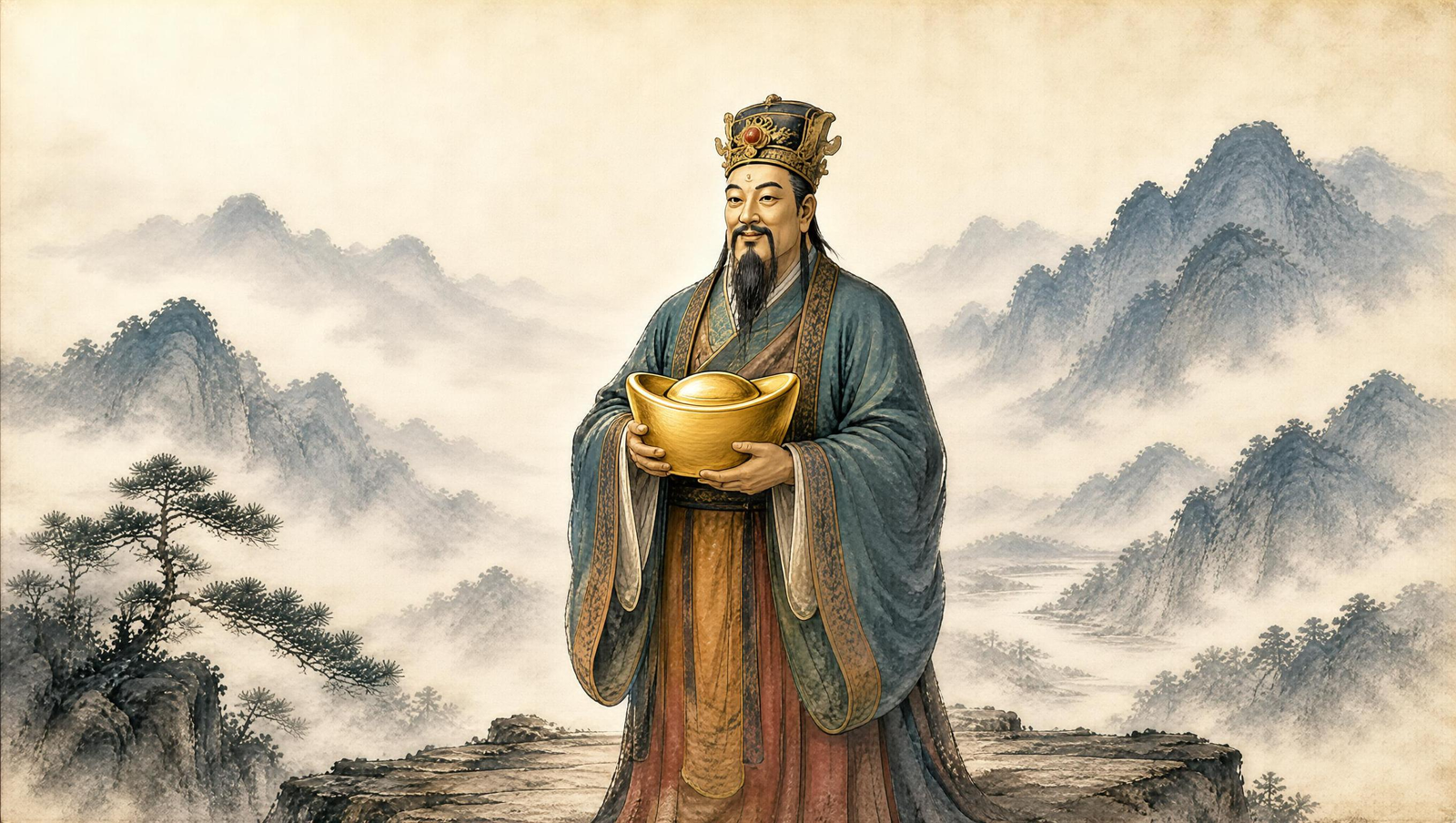
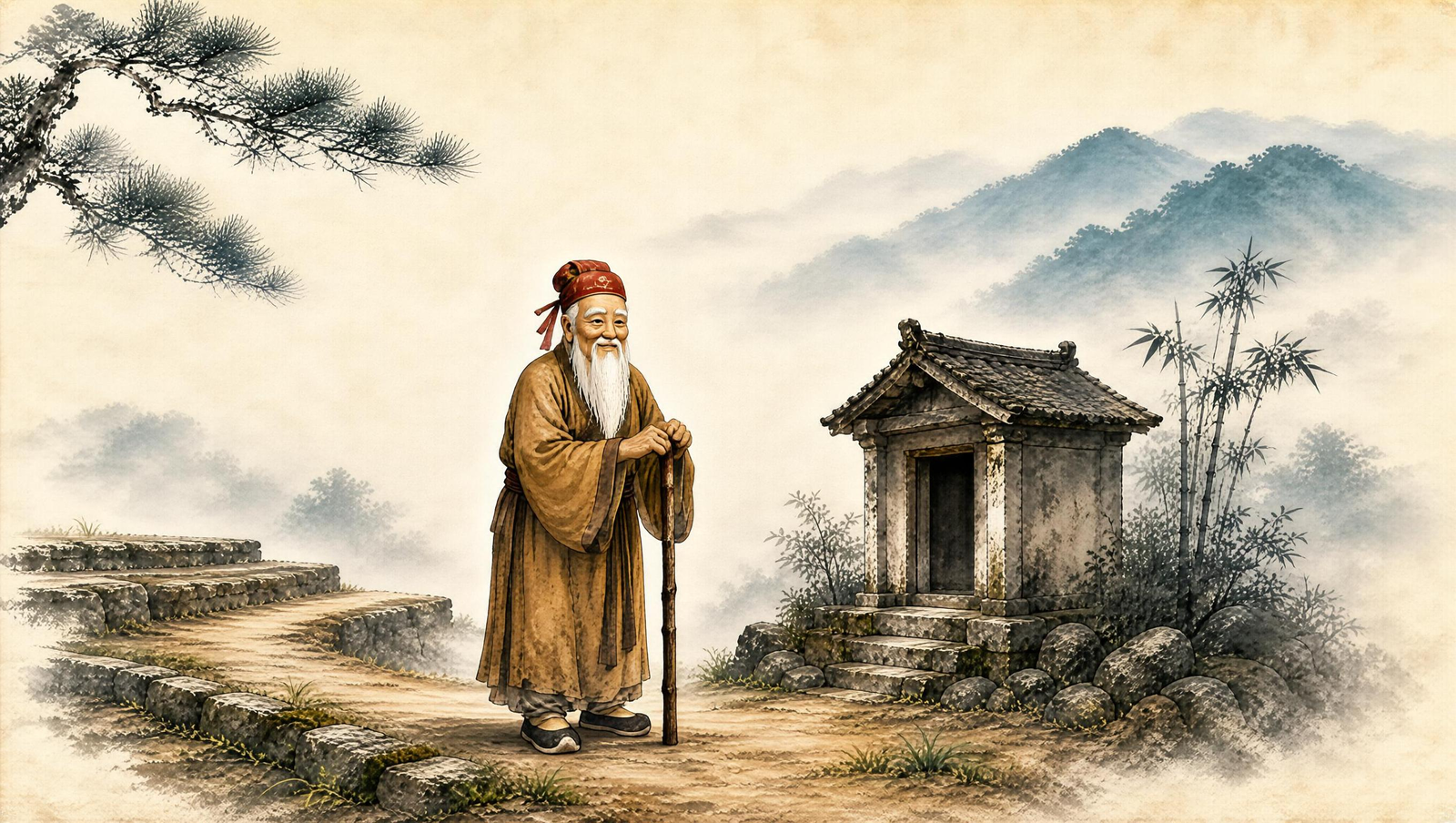
Art shows him as a kindly old man with a white beard, often flanked by a boy and a girl, holding a golden ingot or a walking staff. He records the good and bad of his locality and reports upward at year's end — a grassroots accountant of virtue. Taoist and folk practice treats him as approachable: you do not need a priest to bow to Tudigong, only respect for the place you stand on (Singapore Taoist Federation; Beigang Chaotian Temple; Ching Chung Koon records).
Tudigong and the land
His domain explains why he matters to farmers, merchants, and builders alike. Before breaking ground, many communities make a small offering to "ask the earth's permission." This is Taoism's ecological instinct made local: the land is alive and owed courtesy. It dovetails with what Feng Shui teaches — that arranging space well means respecting the Qi already present in the ground. Farmers bow to him before planting and after harvest; builders pause for him before the first dig. The gesture is small, yet it places human plans inside a larger living order, and it is respect made routine.
How people honor him
A Tudigong shrine is small and everyday: incense, a little rice or fruit, and a bow at dawn or on the second and sixteenth of the lunar month. New shops often install one for steady trade. Larger Taoist temples keep an earth-god niche at their entrance, placing him literally at the threshold between worldly and sacred. Our piece on Taoist temple architecture shows how this humility is built into the plan.
Tudigong beside the greater gods
He is not lonely in the pantheon but low in its hierarchy. The Three Pure Ones embody the Tao; the Jade Emperor governs heaven; the City God (Chenghuang) watches a city. Tudigong is the humblest link — the one who knows your lane by name. That humility is the lesson: greatness in Taoism is not only in peaks and heavens but in faithful care of the small.
Tudigong in stories and festivals
Folk tales give him a human past. One popular legend makes him a humble, just official who, even after death, kept protecting his neighbors — so the people built him a shrine and the title followed. At the Lunar New Year and the earth's birthday (the second day of the second month), communities stage small plays, offer roast pig, and thank him for the harvest past and the one to come. In Singapore and Malaysia, Taoist federations note, his worship travels with the diaspora and anchors community identity far from any ancestral village (Singapore Taoist Federation records). He is, in the end, the deity of belonging — proof that the Tao is present wherever people choose to root. His small shrine in a hawker center or a shop doorway is a quiet claim that this spot, too, is home.
Why it matters
Tudigong is the Tao made local — a reminder that the sacred is not only in peaks and heavens but in the ground you walk. Honor the land, and it shelters you.
每週智慧,直送你的電郵
隨筆、時令指引與能量洞察——每週一信,絕無雜訊。