Who Caishen is
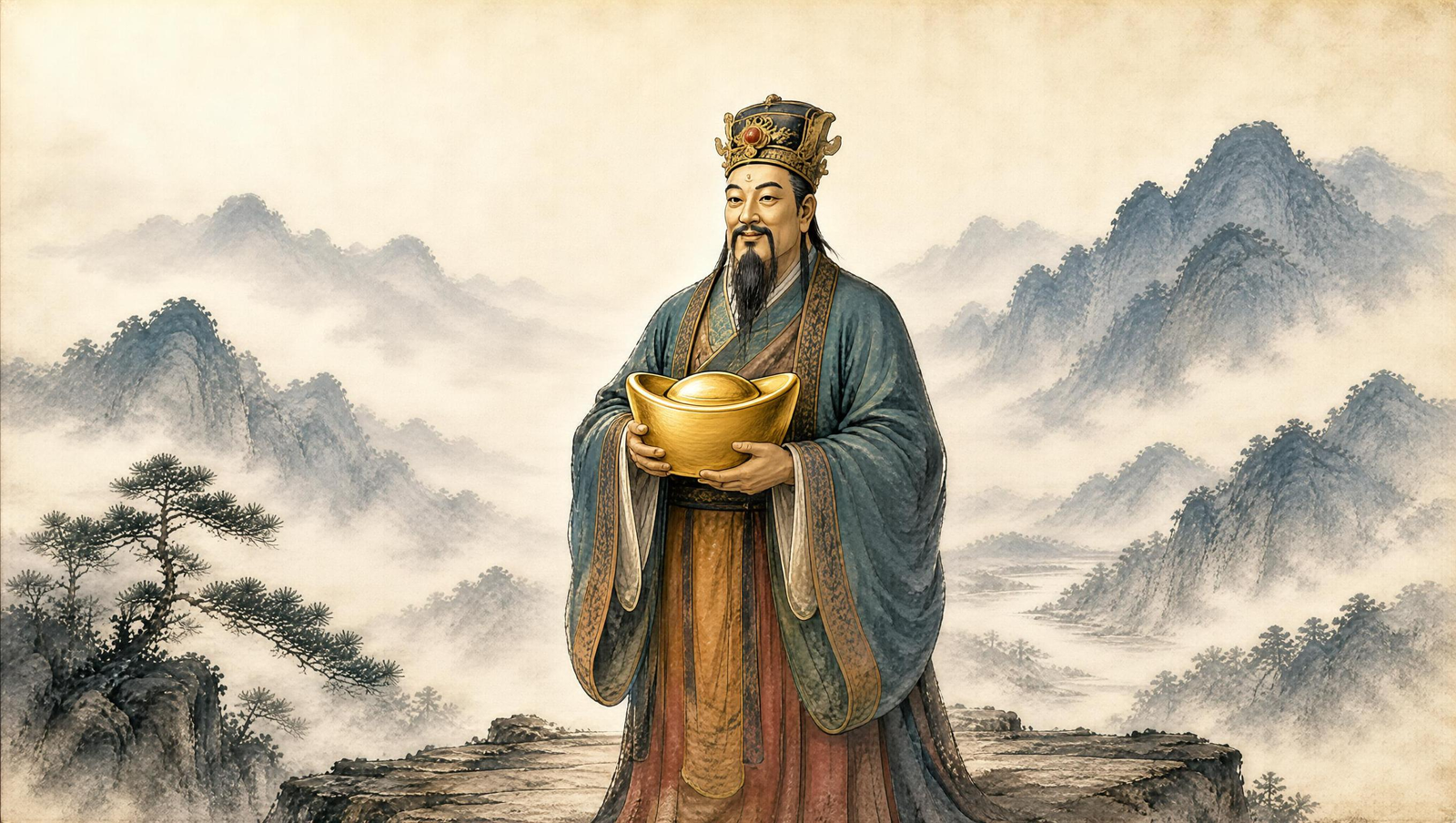
Caishen (財神, the God of Wealth) is the Chinese deity of prosperity, commerce, and good fortune. In Taoist and folk practice he is less a distant banker than a guardian of honest livelihood — invoked at New Year and by merchants who ask that their gain come through fair dealing. The most widely honored figure is Zhao Gongming (趙公明), a martial-looking deity who rides a black tiger and carries a golden ingot.
The many faces of the wealth god
Caishen is not one person but a title held by several figures. Beyond Zhao Gongming stands the "Five Talismans Caishen" and the beloved "Civil Caishen" Bi Gan (比干), a loyal minister revered for incorruptibility. Regional halls add their own patrons — coastal communities venerate Mazu for safe trade, while temple complexes such as Wong Tai Sin in Hong Kong weave wealth blessings into broader fortune rites (Sik Sik Yuen Wong Tai Sin Temple; Beigang Chaotian Temple records). The variety shows a Taoist view of wealth as relational: earned, shared, and kept in balance with virtue.
Caishen in the Taoist pantheon
He sits below the great celestial rulers rather than above them. The Three Pure Ones (Sanqing) embody the Tao itself, and the Jade Emperor governs the divine bureaucracy; Caishen is one of its busy local officers (see who the Jade Emperor is). This ranking matters: Taoism teaches that riches follow aligned living, not mere petition. Offerings at New Year are thanks and intention, not bribes.
How households welcome him
Practice centers on the Lunar New Year. Families sweep clean, hang red, and set out fruit and incense, then welcome Caishen on the fifth day with open doors and lit firecrackers to "receive wealth." Taoist temples mark the season with public blessings. Our three-yuan festivals calendar shows how the ritual year frames these moments. The gesture is less about money than about starting the year deliberate and grateful.
Caishen beyond the New Year
Merchants keep a small altar year-round, lighting incense before opening and at closing. The logic is continuity, not crisis: wealth is tended like a garden. Taoist teaching links this to the broader virtue of fairness — a shop that cheats customers is said to forfeit the deity's favor regardless of offerings. In this sense Caishen is a moral figure as much as a prosperous one.
Reading his image
You will know Caishen by his props. He wears official's robes and holds a golden ingot (yuanbao) or a ru yi scepter of authority; Zhao Gongming also carries an iron whip and rides a black tiger, signaling his martial, protective side. In shops you may see paper effigies burned at year's end to send the old wealth god off and welcome the new — a cycle of renewal, not a one-time charm. Red envelopes, ingot-shaped sweets, and "fu" posters during the New Year all borrow his imagery. These symbols point back to one lesson repeated across Taoist teaching: wealth is welcomed, tended, and returned, never hoarded without gratitude. A business that cheats its customers is said to forfeit his favor no matter how lavish the offering.
Some families keep a "wealth vase" — a covered jar filled with rice, coins, and a written wish — refreshed each spring. The object is symbolic, not magical: it anchors the intention to manage money with care, so prosperity becomes a habit rather than a hope.
Why it matters
Caishen reminds practitioners that prosperity is a relationship — between effort, fairness, and the flow of fortune the Tao provides. Honor him with integrity, and let wealth follow virtue.
每週智慧,直送你的電郵
隨筆、時令指引與能量洞察——每週一信,絕無雜訊。