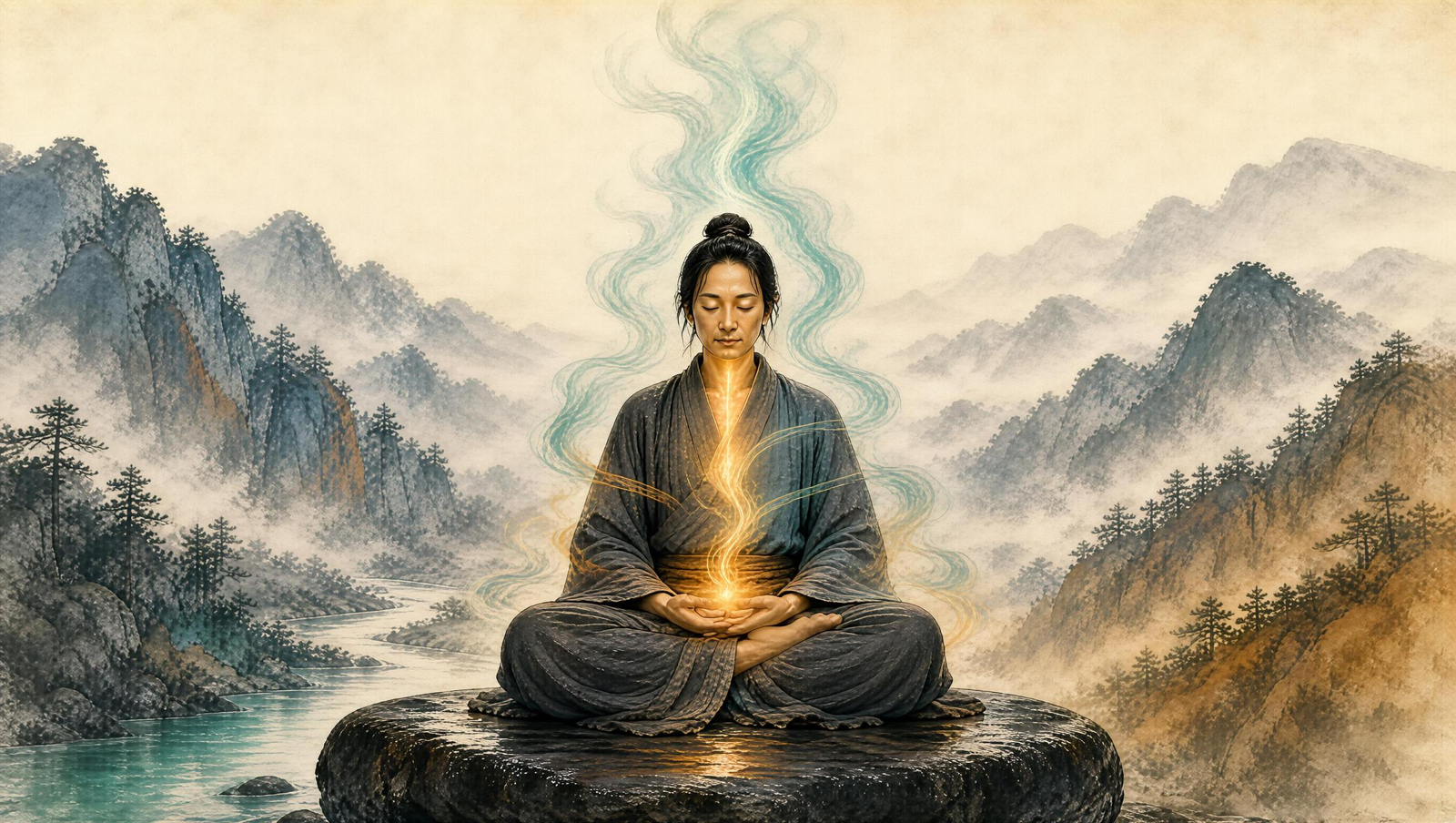
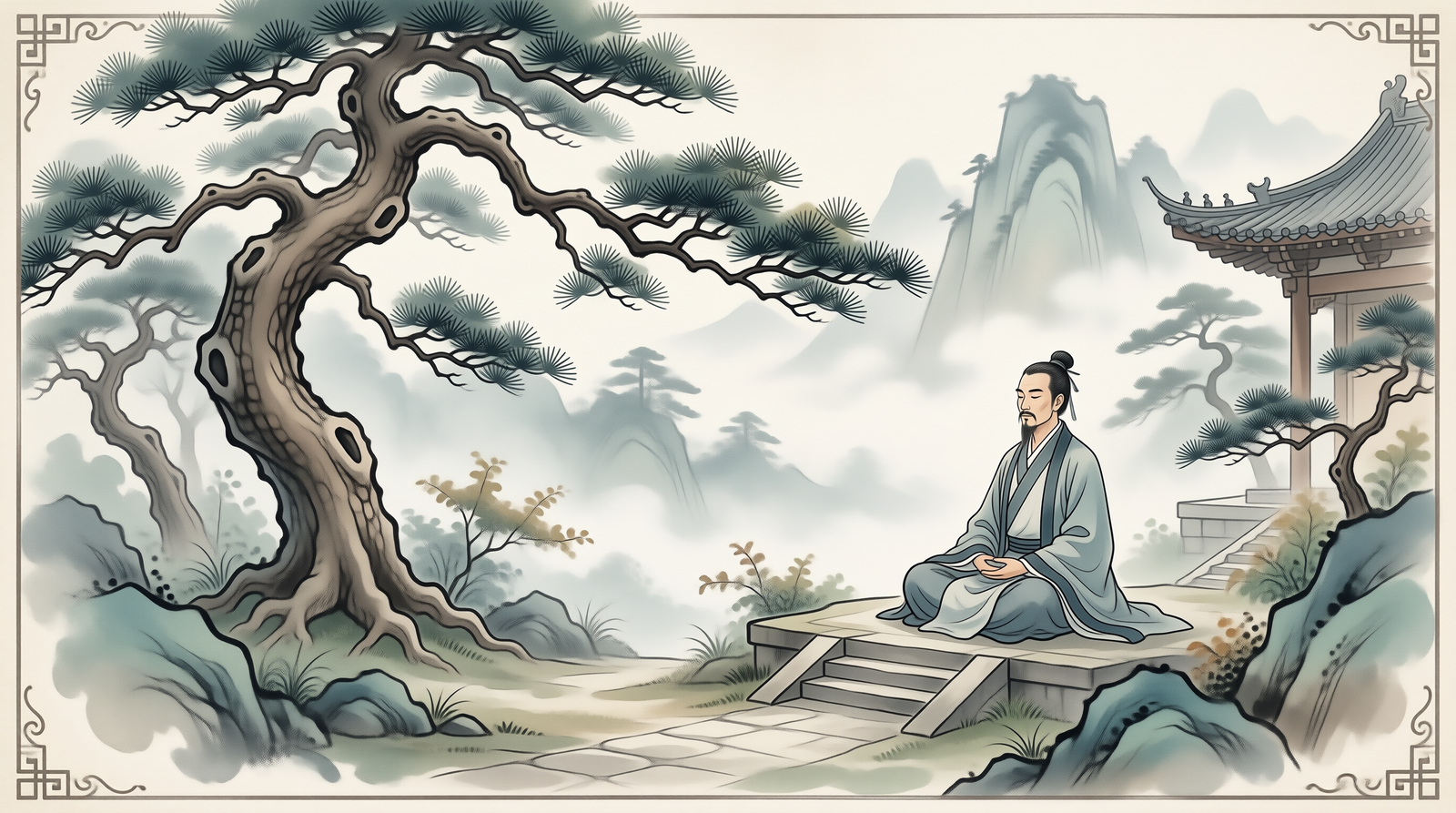
Taoist meditation, often called jìngzuò 靜坐 or "quiet sitting," is the practice of sitting still and letting the mind, breath, and body return to their natural state. Unlike some meditation styles that chase bliss or force concentration, the Taoist approach begins with non-doing: you place the body in a stable posture, soften the breath, and allow thoughts to move through without grabbing them. The goal is not to become a different person but to stop fighting the current of life that is already flowing through you.
The Two Main Forms: Sitting and Standing
The Daoist Foundation, a resource center for traditional practice, offers two primary entry points into Taoist meditation. The first is jìngzuò 靜坐, quiet sitting, where the practitioner sits in a chair or on a cushion and simply watches the breath and bodily sensations (Daoist Foundation Resources). The second is jìngzhàn 靜站, quiet standing, a posture-based practice that builds a grounded, upright frame while the mind remains relaxed (Daoist Foundation Resources). Both forms share the same idea: stillness of the body leads to stillness of the energy, and stillness of the energy gradually calms the mind.
Sitting is usually easier for beginners because the floor supports the body. Standing is more demanding but teaches alignment and connection to the earth. Advanced practitioners often alternate between the two, using sitting to refine awareness and standing to strengthen the body's ability to hold energy without collapsing into tension.
What Actually Happens in the Practice
Taoism.net, a long-running site that translates and explains classical Taoist texts, describes the practice as a return to naturalness rather than an achievement (Taoism.net). The mind is not emptied by force; it is allowed to exhaust itself. When the body stops fidgeting and the breath slows, the endless internal commentary begins to thin out. What remains is a quiet alertness that the tradition calls shen, the clear spirit.
In practical terms, a session usually runs from ten minutes to an hour. The posture matters: spine naturally upright, shoulders dropped, hands resting on the lower abdomen or thighs. The eyes can be closed or half-open. The tongue rests against the roof of the mouth to complete a subtle energy circuit. The breath becomes long, soft, and quiet, as if one were breathing into the belly rather than the chest.
How Taoist Meditation Differs from Other Styles
The BBC's religion coverage places Taoist practice within a broad family of East Asian contemplative methods, yet points out that Taoism has its own center of gravity (BBC Religion). Where Buddhist mindfulness often investigates the impermanence of thoughts, Taoist meditation tends to emphasize alignment with the Tao—the natural flow of things. There is less analysis of mental content and more attention to the felt sense of harmony or disharmony in the body and environment.
This makes Taoist meditation especially useful for people who feel frazzled, overthinking, or physically tense. The practice does not ask you to solve your problems. It asks you to sit down, feel the ground, and let the nervous system remember what calm feels like.
Starting a Daily Practice
You do not need a temple, a teacher, or special equipment. A straight-backed chair, a timer, and a quiet corner are enough. Begin with ten minutes. Keep the spine upright but not rigid. Let the breath find its own pace. When the mind wanders, return to the feeling of the body sitting on the chair. That single movement—wandering and returning—is the entire practice.
If you want to understand the energy that meditation begins to reveal, read what is qi. For a simple daily structure, see a twenty-minute Taoist daily routine. And for the broader principle behind the practice, visit what does wu wei actually mean.
每週智慧,直送你的電郵
隨筆、時令指引與能量洞察——每週一信,絕無雜訊。