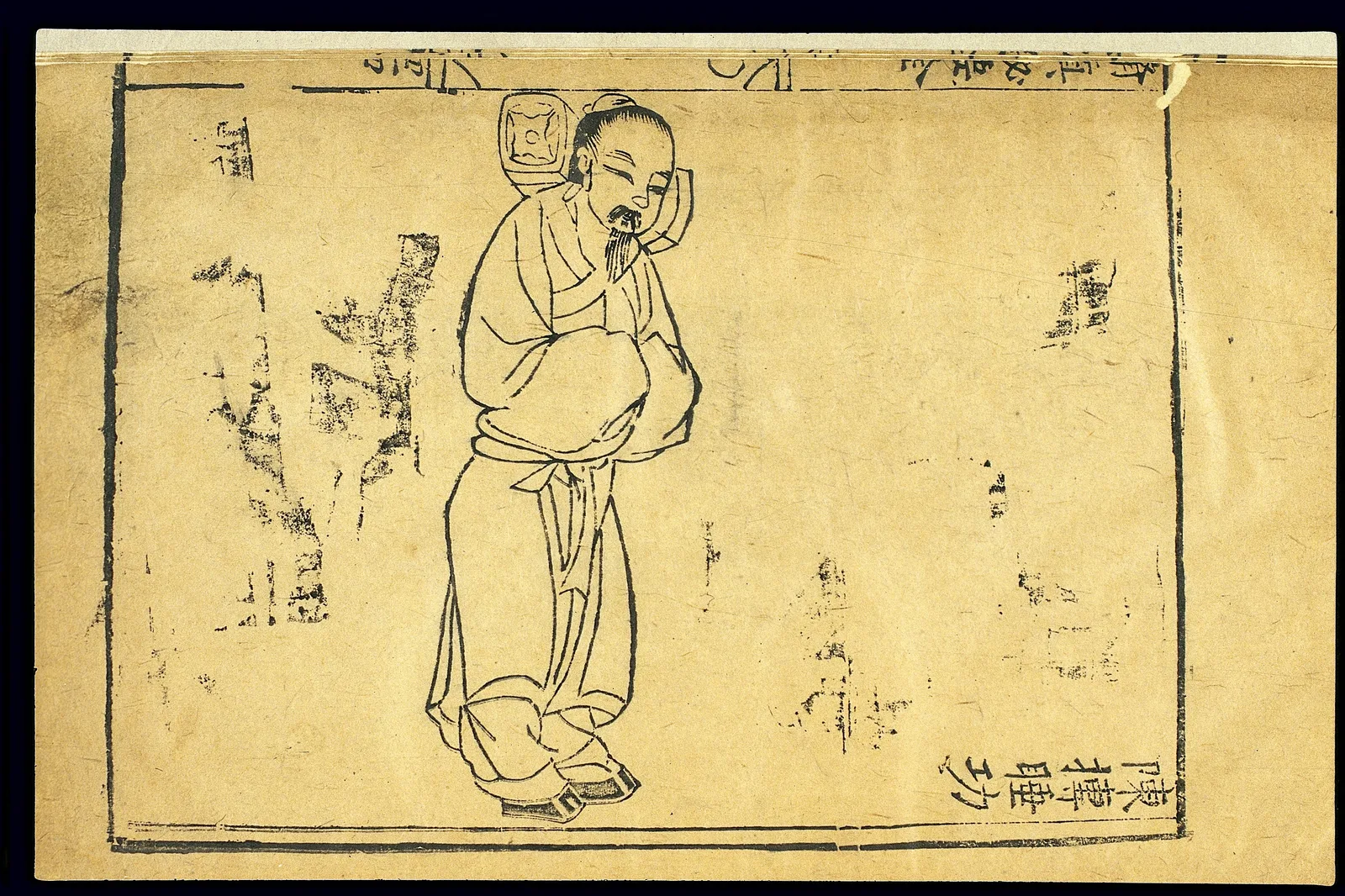
The story is told with a straight face: imperial officials climb Mount Hua carrying a summons, find the recluse they came for fast asleep, and are told to wait. They wait. The accounts differ on how long, and none of them settles the question, because the answer is the point. Chen Tuan was not refusing the emperor. He was asleep, and the sleep was not negotiable.
Who Chen Tuan was
Chen Tuan, styled Tunan and known by the self-chosen name Fuyaozi, lived from the late Tang into the early Song and died in 989. A biography survives in the Song histories, which is more documentation than most Taoist figures of his period receive. He sat the examinations, failed them, and left the career path behind — first for the Nine Chamber Cliff on Wudang Mountain, where accounts place him for more than twenty years, and later for the Cloud Terrace Abbey on Mount Hua, where he spent the rest of his life.
The Song court did not leave him alone. Emperor Taizong granted him the title Master Xiyi, and the summonses that followed became the raw material for the best-known stories about him. Mount Hua still keeps the names: a gorge called Xiyi, a cliff called Biezhao, the refused summons, where he is said to have withdrawn when the envoys came.
The sleeping immortal
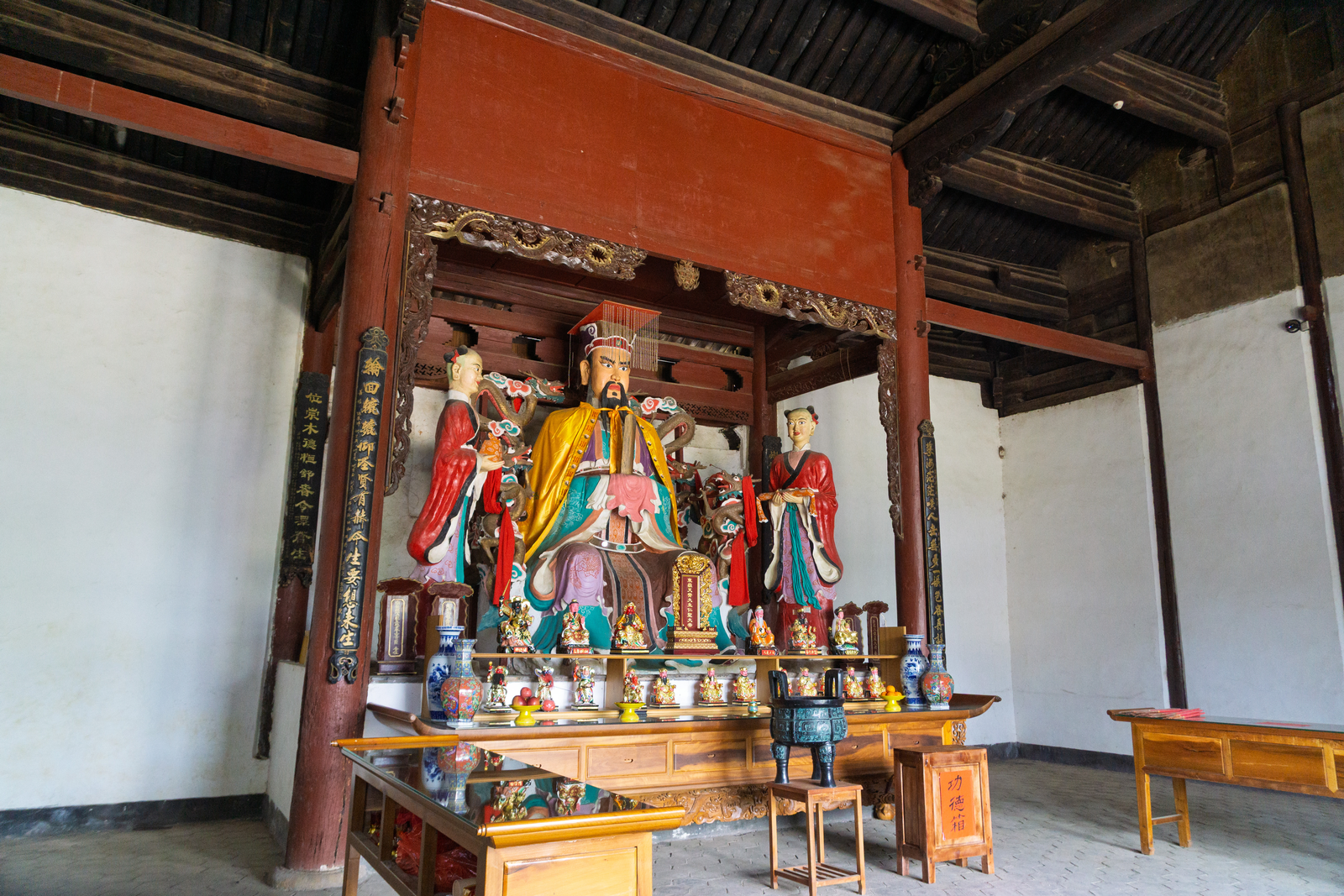
The nickname is blunt — the sleeping immortal — and it comes from reports that he could sleep for a hundred days without waking. A Yuan dynasty drama took the motif and titled itself after him. Devotional art followed, and by the Ming period printed hagiographies were illustrating him asleep, chin on hand, a medicine gourd on his back.
The mistake is to read this as comedy. In Taoist practice, sleep was one of the few states in which the ordinary, calculating mind stops running, and a practitioner who could stay aware inside it had found something worth naming. The phrase used in the lineages is that the form sleeps and the spirit does not. Chen Tuan's sleep was not an absence of practice. It was the practice, taken to its furthest point.
That reframing matters for anyone who has tried to meditate. Sitting still for twenty minutes is difficult because the body is awake and the mind will not settle. Sleep poses the opposite problem: the body settles on its own, and the mind is simply gone. A method that keeps a thread of attention running through that transition is doing real work.
Why rest became a discipline
Taoist longevity practice treats sleep as the base layer rather than the bonus. Breathing methods, dietary rules, and moving exercises are all attempts to regulate a system that resets every night whether or not anyone is paying attention. Getting the base layer right comes first — which is why the Taoist approach to health and longevity starts with sleep and appetite before it discusses anything more elaborate.
The practical instructions that survive under Chen Tuan's name are modest. Lie down before you are exhausted, on your side, with the limbs arranged so nothing presses. Put the day's unfinished argument down deliberately, the way you would set down an object; the phrase that circulates is to sleep the heart first and the eyes afterwards. When sleep does not come, stay lying there without turning it into a fight, because a struggle for sleep is still a struggle, and the whole point of the posture is to stop producing those.
None of that is exotic. It is also the part of Taoist practice most often skipped, because it does not feel like practice. The lineages that preserved sleep techniques, and later folded them into neidan work under names such as the dormant dragon method, treated it as internal alchemy performed in the horizontal position — same principles, different posture.
Chen Tuan and the diagram
The second strand of his reputation is intellectual. Tradition holds that a diagram called the Wuji Tu was carved on a rock face at Mount Hua, and that it passed from Chen Tuan to a chain of scholars who carried it into the Song philosophical mainstream. Whether the transmission happened in the tidy line the stories describe is doubtful; historians treat the genealogy as partly constructed. What is not in doubt is that later writers consistently placed Chen Tuan at the head of the diagram tradition, and that the diagrams which shaped Song cosmology were understood to have come through him.
Attributed works carry the same flavour — writings on the Yijing and on inner cultivation rather than on ritual. He belongs to the strand of Taoism that reasoned with diagrams and numbers, and that strand fed directly into the cosmology later generations took for granted.
Where the traces are
Mount Hua is a working mountain rather than a monument, so the sites attached to him are modest. The Yuquan Abbey at the foot of the mountain holds a shrine to him. Higher up, the gorge and the cliff carry his titles. Visitors who go looking for a birthplace will find the sources disagreeing outright — two different counties claim him — which is itself a decent introduction to how Taoist biographies were written.
A short checklist
- Read the sleep stories as practice, not punchlines.
- Take the practical instruction seriously: lie down early, settle the mind deliberately, do not fight the process.
- Treat the diagram lineage as influential tradition rather than documented history.
- Go to the mountain for the traces; do not expect a single settled biography.
Sleep is the one discipline nobody can skip. Chen Tuan's contribution was to stop treating it as dead time, and to insist that a person who could not stay present while lying down had not yet begun.
Weekly wisdom, straight to your inbox
Essays, seasonal guidance, and energy insights - one letter a week, no noise.
DaoMind Pro
Read your own chart
Generate your full Ba Zi chart and elemental balance - the same data a practitioner opens with.
Open Destiny Atlas →