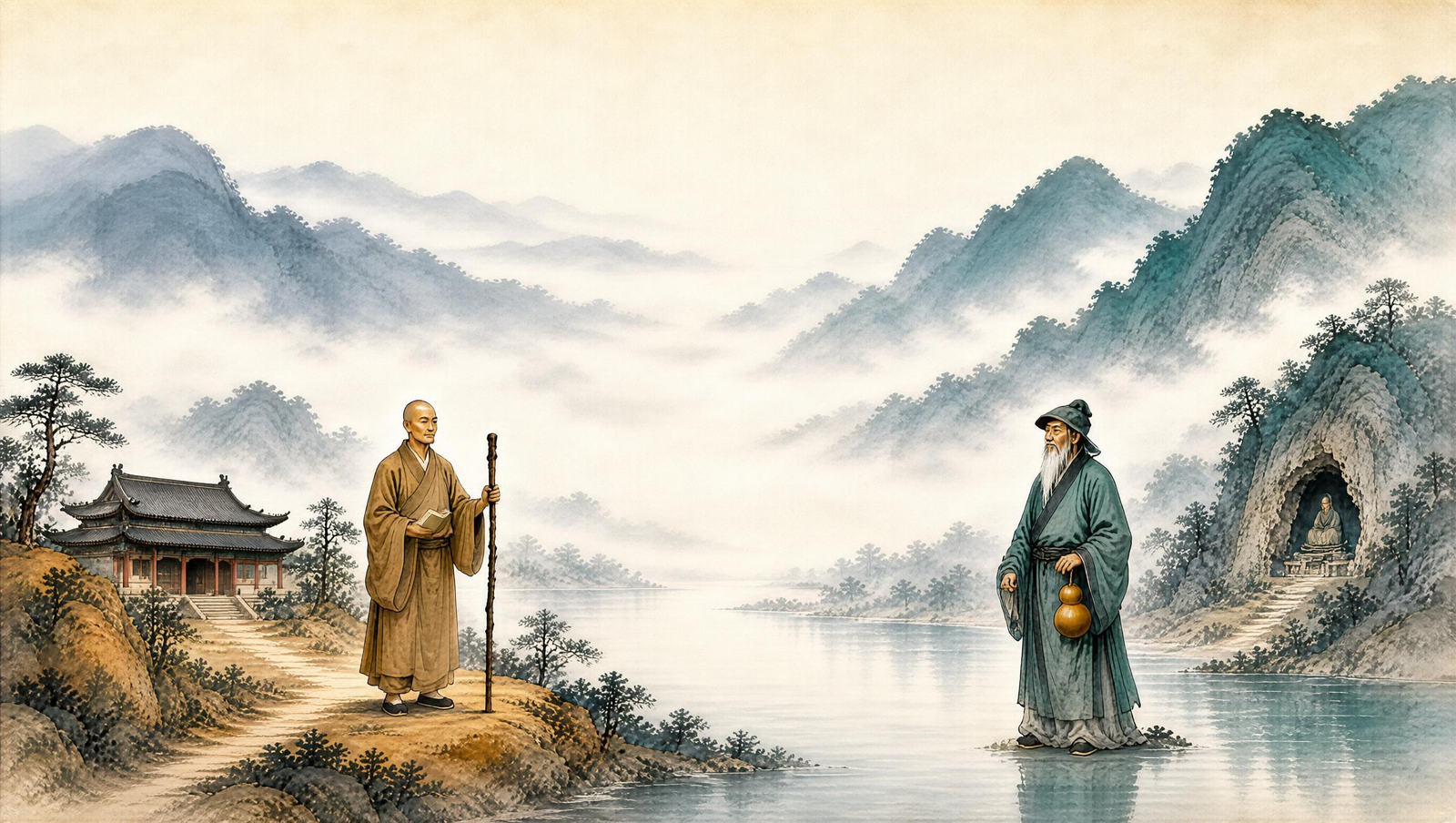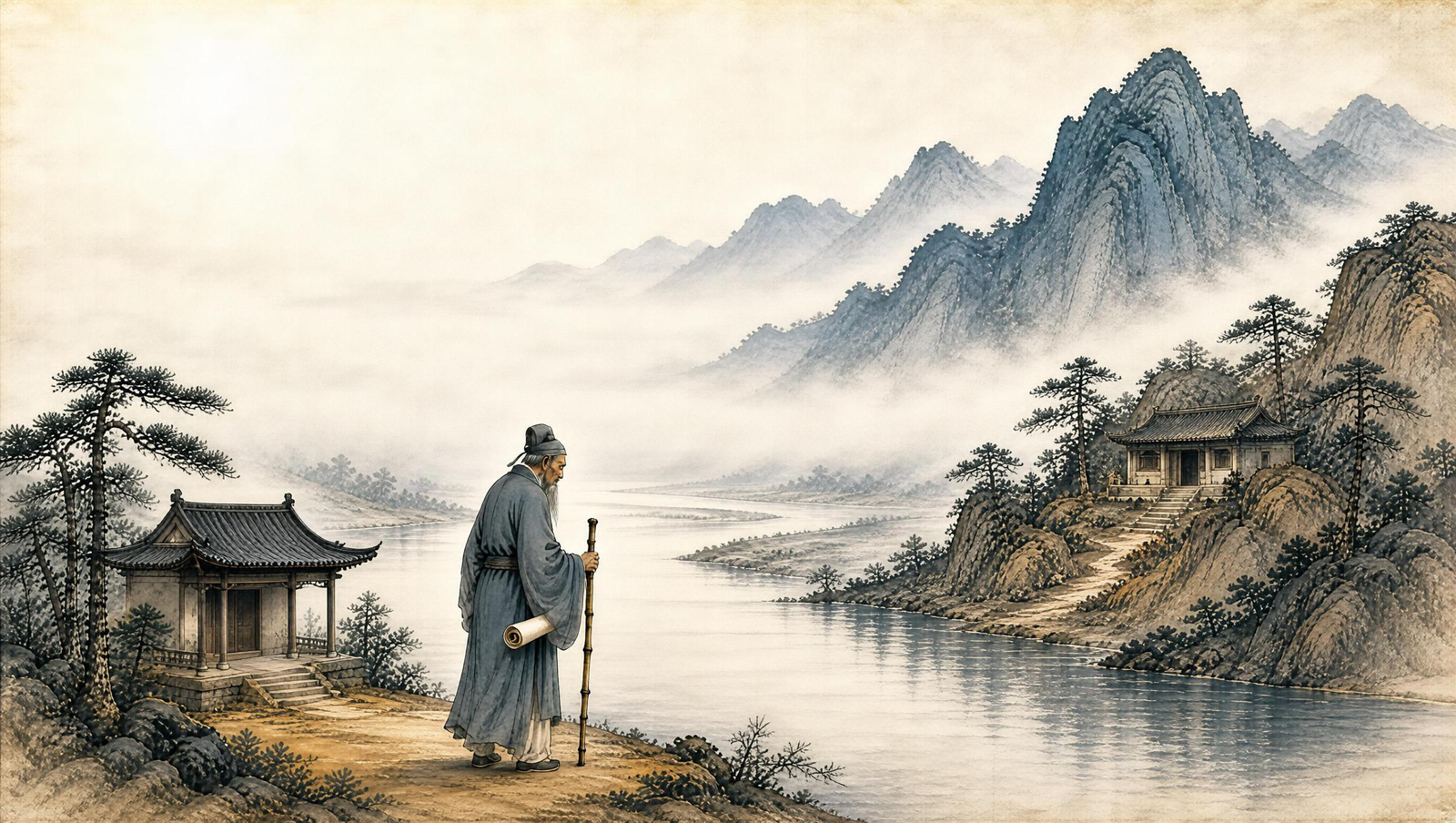
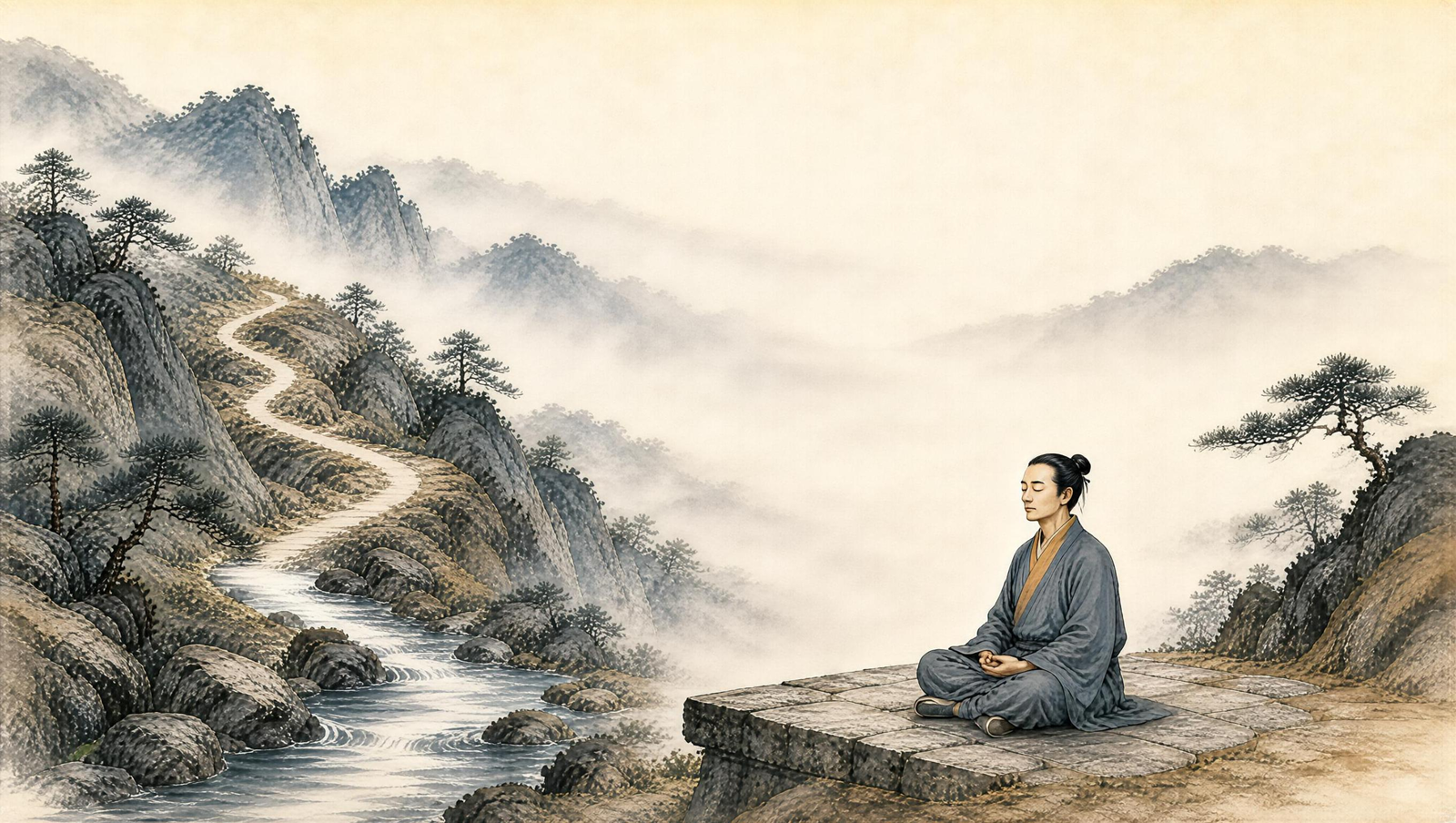
打坐 (sitting meditation) and the Dao - often framed as "dao and meditation" - are easily confused, but they are not the same thing. The Dao is the Way itself - the natural order beneath all things - while 打坐 is one method people use to quiet the body and mind so that order can be felt directly. Practice is the boat; the Dao is the shore.
The Dao is the principle, sitting is the method
The Tao Te Ching opens by saying the Dao that can be named is not the eternal Dao. The Dao is not an object you acquire through sitting; it is the ground you already stand on. 打坐 does not manufacture the Dao - it removes the noise that hides it. In that sense the relation is like polishing a mirror: the clarity was always there.
Where the two overlap
They meet in stillness and observation. Sitting training cultivates the same qualities the Daoist life prizes: loosen the grip of striving (Wu Wei), let breath and attention settle, and watch what arises without clutching it. The FAQ on Wu Wei frames this as acting with circumstances rather than against them (/faq#what-does-wu-wei-actually-mean); sitting is where that lesson becomes bodily.
Both also treat the body as a vessel of energy. Taoist sitting works with Qi - the vital breath moving through channels - much as Neidan (internal alchemy) refines essence, breath, and spirit into stillness (/faq#what-is-neidan-internal-alchemy). The Golden Elixir tradition describes seated practice as the entry to that refinement (goldenelixir.com).
How sitting opens the Way
A simple 打坐 session maps onto the Dao surprisingly well. Settle - find a stable posture; the body stops demanding attention. Follow the breath - attention rides the inhale and exhale instead of chasing thoughts. Non-forcing - when the mind wanders, return without irritation; this is Wu Wei in miniature. Rest in openness - briefly, the separating self relaxes and the Dao is no longer a concept but a felt background.
BBC's religion desk summarizes Taoist meditation as training attention and breath to return to natural ease (bbc.co.uk/religion), which is another way of saying the same thing.
A common mistake: method as goal
The trap is to measure progress by how long you sit or how empty you feel, and to conclude that a still hour is the Dao. It is not. The Encyclopaedia Britannica notes Taoist cultivation aims at harmony with the natural order in this life (britannica.com) - the sitting is instrumental, not the destination.
A useful test: after sitting, ask not "How deep was I?" but "Am I a little more at ease with what is?" If practice makes you tighter, busier, or proud of your stillness, the method has become the idol. The Dao shows up as a relaxed fitting-with-things, not as a special state you guard.
Different houses, same pointing
Taoist schools teach sitting differently. Zhengyi priests often sit briefly before a rite to settle the altar's energy; Quanzhen monks build long seated sessions into daily monastic life. The forms vary, but the pointing is identical - from noise back toward the natural order. The cushion is never the goal; the unlearning is.
How to begin
Start small: five minutes, spine upright, eyes soft, breath natural. Let the aim be less "achieving" and more "uncovering." If you want the broader frame, our guide on what Taoist meditation is walks through postures, breathing, and the place of sitting within a full practice.
The Dao is not reached by effort piled on effort; it is approached by effort laid down. A short daily sit, kept gently and without strain, teaches this more reliably than any argument about it.
Weekly wisdom, straight to your inbox
Essays, seasonal guidance, and energy insights - one letter a week, no noise.
DaoMind Pro
Read your own chart
Generate your full Ba Zi chart and elemental balance - the same data a practitioner opens with.
Open Destiny Atlas →