The delivery rider paused at the threshold, glanced left at the bare wall facing the door, and said the flat felt "sealed shut" before stepping inside. He was not a practitioner. He had simply felt, the way most people do, that something about the entrance was wrong. That instinct is exactly what front door feng shui tries to name in a disciplined way.
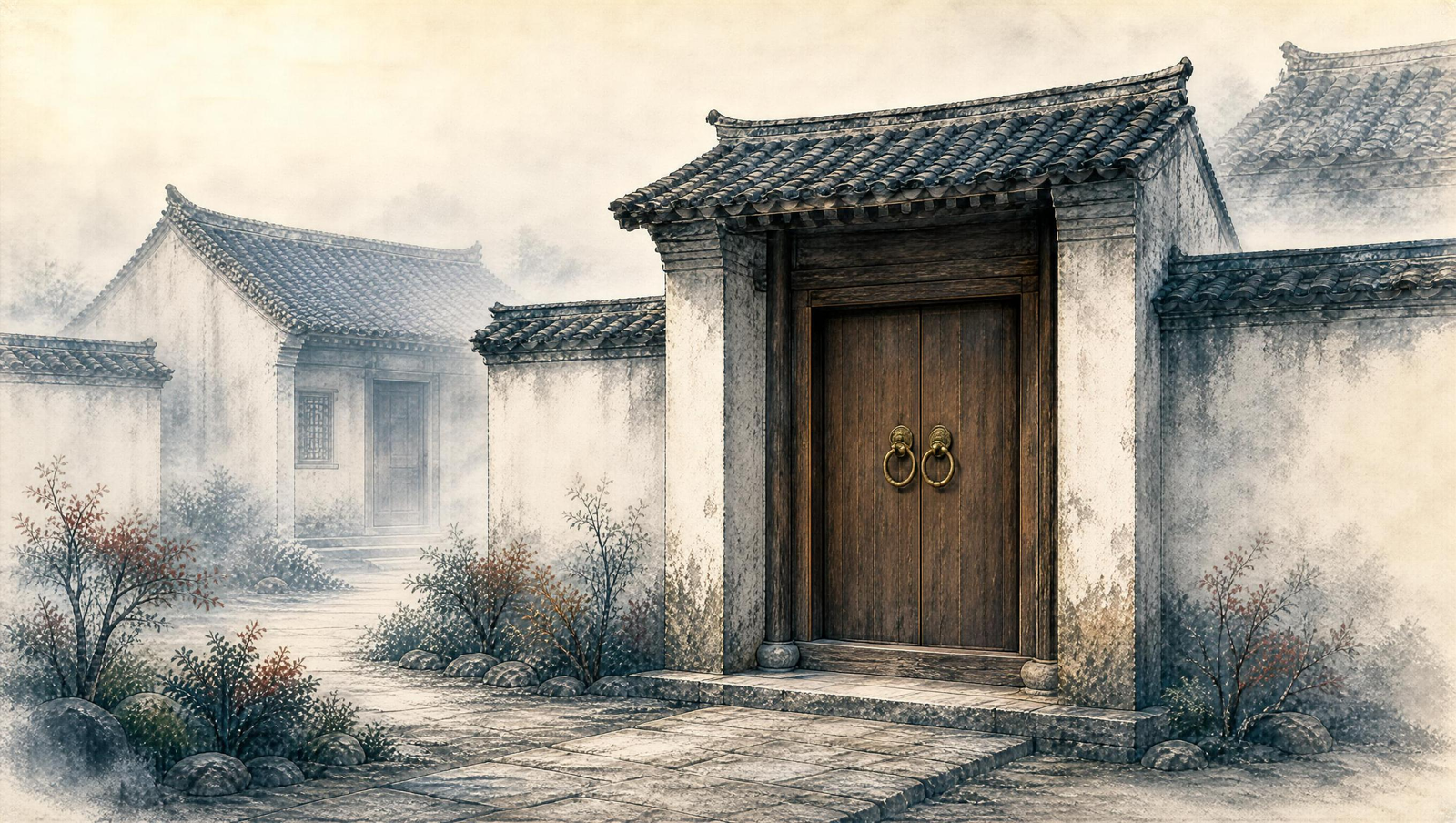
According to the classical view, the main door is the mouth of the house. It is where qi, the living breath of a place, first enters and then distributes itself through every room. If you want to understand what feng shui actually is, start at the threshold, because the rules that govern it are the oldest and most repeated in the tradition.
Why the threshold carries the heaviest weight
A door does two jobs at once. It keeps the outside out, and it lets the right inside in. When those two jobs fight each other, the people living behind the door feel it as fatigue they cannot name. The fix is rarely a object bought online. It is almost always a change in how the entrance reads to a person arriving home tired at the end of a day.
The first principle is that the door should be visible and welcomed. A visitor should not have to hunt, turn twice, or walk past a bathroom to reach it. The path to the door is the first sentence your home speaks; a confused path produces a confused arrival.
Let the door open onto space, not a wall
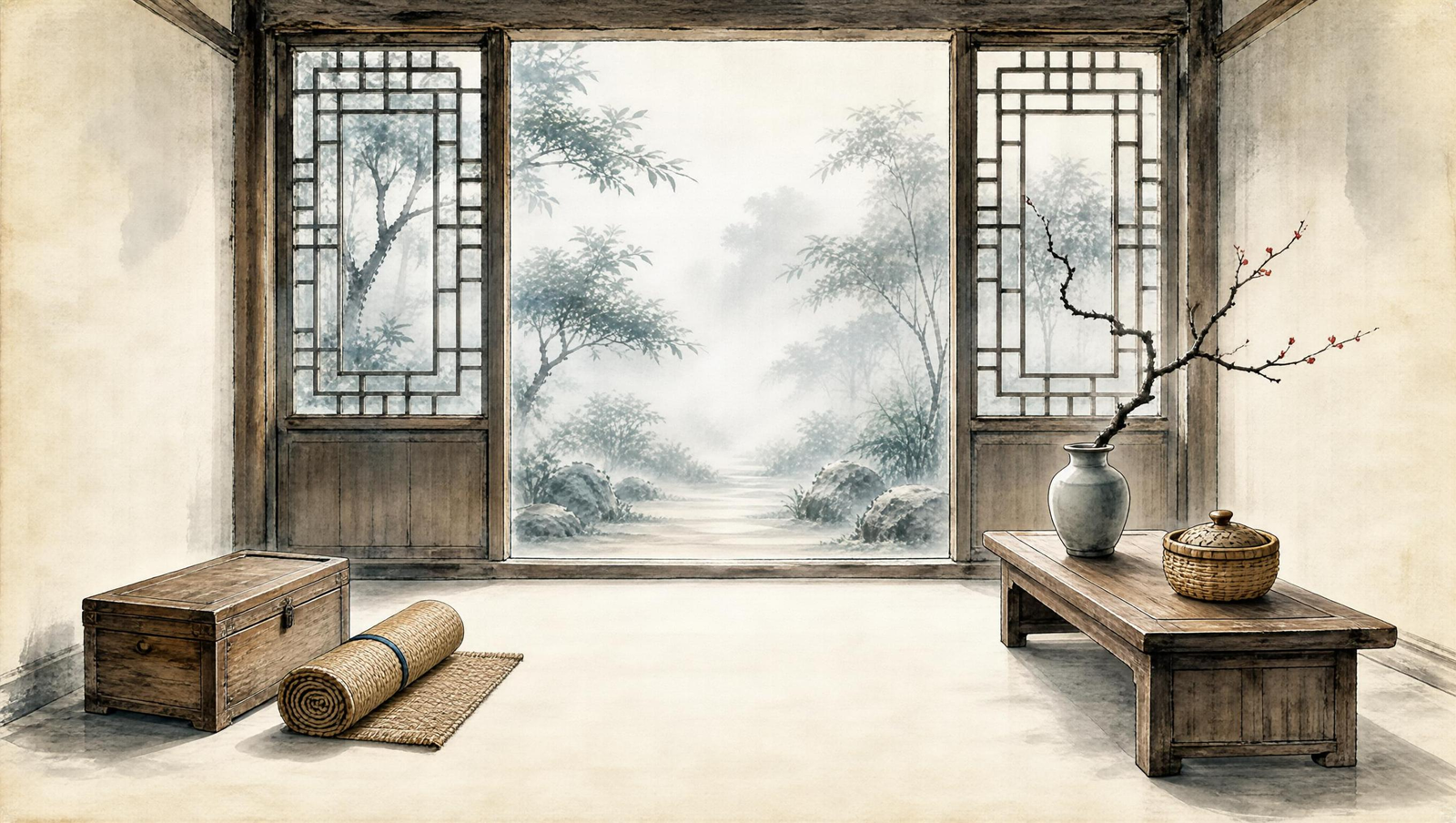
The single most common mistake is a door that swings open directly into a wall two feet away, or onto the back of a sofa. The eye needs somewhere to go. When the first thing you see is a hard surface close up, the qi has nowhere to travel and the room feels cramped even when it is large.
A simple mirror on the facing wall is the textbook remedy, but it is not the only one. A low plant, a soft light, or a piece of art that suggests depth all do the same work: they give the arriving energy a direction. The goal is not decoration for its own sake. It is to let the breath of the house keep moving. You can see how this connects to the role of qi in daily life.
Keep the approach clear and the threshold bright
Clutter at the entrance is clutter at the start of every journey you take. Shoes piled high, a broken bell, a flickering bulb, a jammed lock: each one is a small refusal of welcome. Taoist practice has always treated the mending of what is broken as a form of cultivation. A working door is a working boundary.
Light matters more than most people expect. A dim threshold reads as hesitant; a warm, even light reads as hospitable. This does not mean a spotlight. It means the step, the number plate, and the first meter inside should be easy on the eyes after dark.
Avoid the sharp lines that point at the door
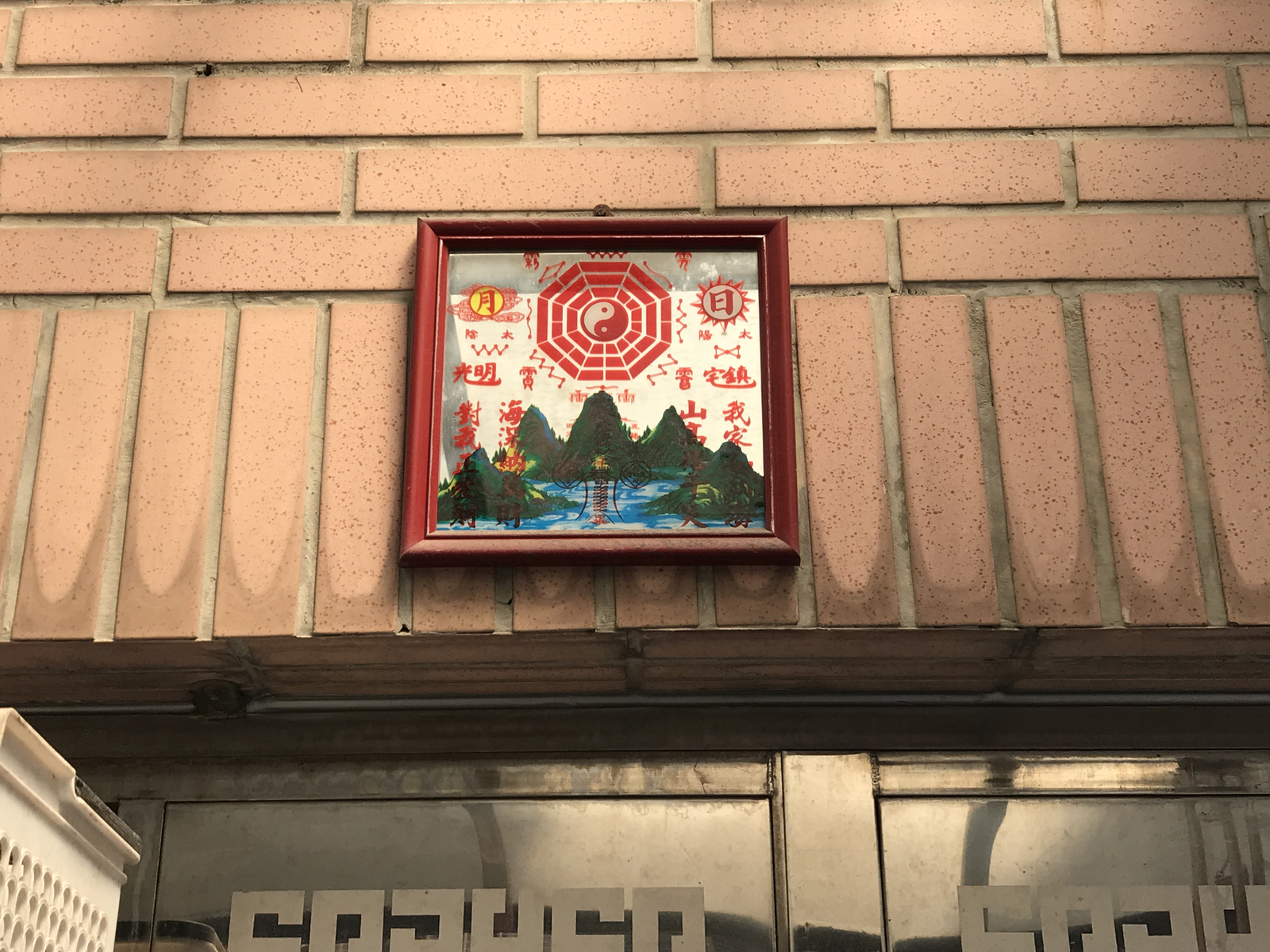
In many older layouts a structural beam, a staircase edge, or a neighbouring wall corner points straight at the entrance. The tradition reads such a line as a cutting influence, something that arrives before the guest does. Softening it with a hanging, a screen, or a change in flooring height is the practical response, not superstition but spatial etiquette.
The same logic applies to what sits opposite the door. A bathroom or kitchen directly facing the entrance lets the household's resources flow out as soon as they come in. A partial screen or a solid door on the inner room restores the sense that the home holds onto what matters.
Where the main entrance meets the rest of the plan
None of this stands alone. The door sets the tone, but the rooms it feeds decide whether that tone is kept. A bright, clear threshold leading into a dark, blocked centre still leaves the household restless. The entrance is the first chord; the rest of the plan has to harmonise.
This is why a reading of the whole layout matters more than any single cure. The front door tells you how energy enters. The kitchen tells you how it is nourished. The bedroom tells you how it is restored. Read together, they describe a household the way a pulse reading describes a body.
Small changes, steady effect
You do not need to renovate. Move the shoe rack. Fix the lock. Add a light. Turn the mirror so it does not bounce the door straight back out. These are small acts, but they are acts, and acts accumulate. A home responds to attention the way a garden responds to water.
If the feeling of "sealed shut" persists after the obvious fixes, that is the moment to look wider, at the year's influences and the household's own timings. The entrance is where we begin, never where we end.
Weekly wisdom, straight to your inbox
Essays, seasonal guidance, and energy insights - one letter a week, no noise.
DaoMind Pro
Read your own chart
Generate your full Ba Zi chart and elemental balance - the same data a practitioner opens with.
Open Destiny Atlas →