Dongyue Dadi is the Taoist emperor of the Eastern Peak, Mount Tai in Shandong, and in popular practice he keeps the records of the dead. His court is a bureaucracy of registers rather than a courtroom of punishment, and his festival falls on the twenty-eighth day of the third lunar month.
Who Dongyue Dadi is
The name translates as Great Emperor of the Eastern Peak. Of the five sacred peaks, the eastern one carried the heaviest weight, because east is where the sun rises and where the year begins — the direction of birth, and therefore of the authority that decides how much life a person is given.
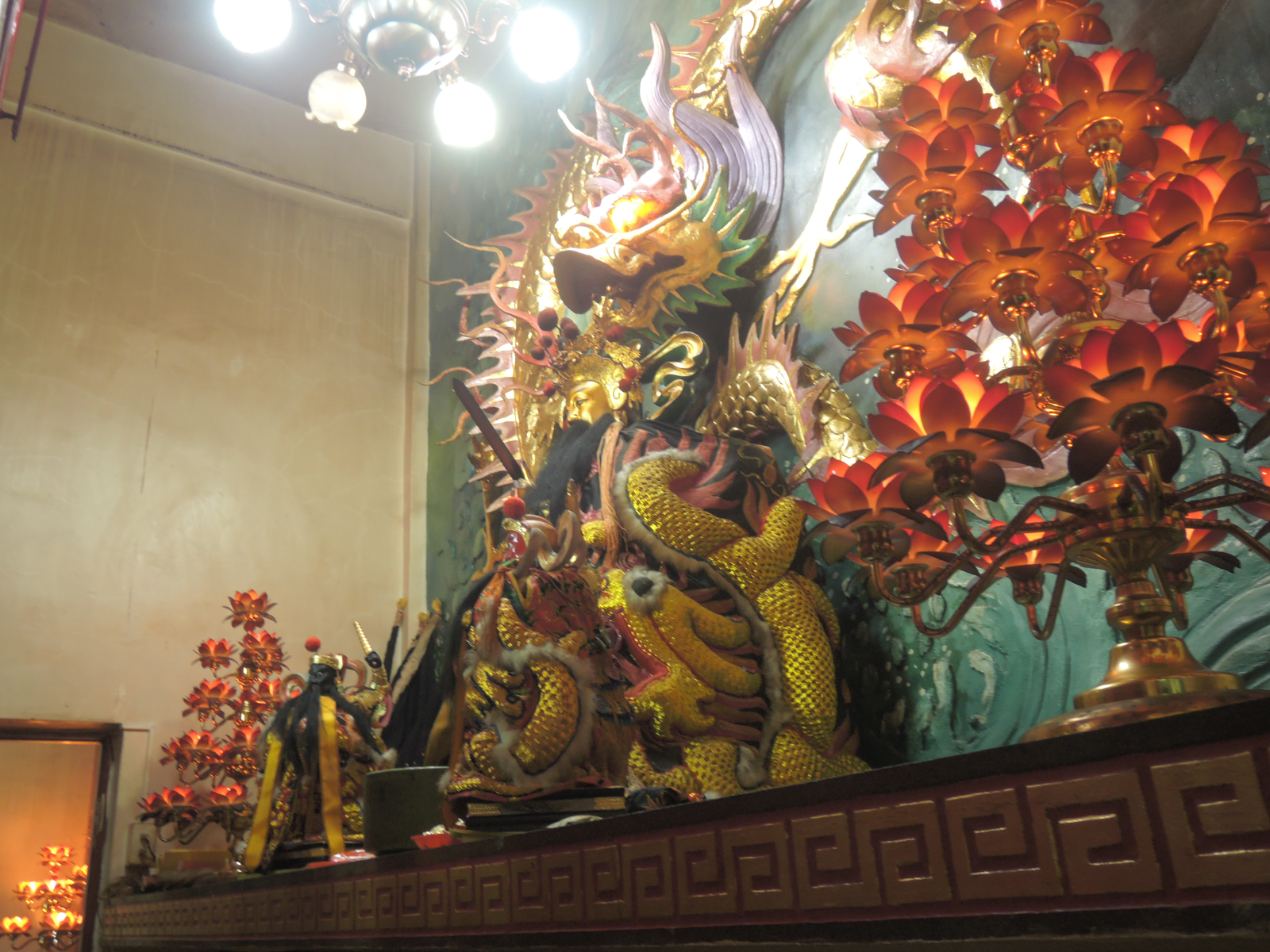
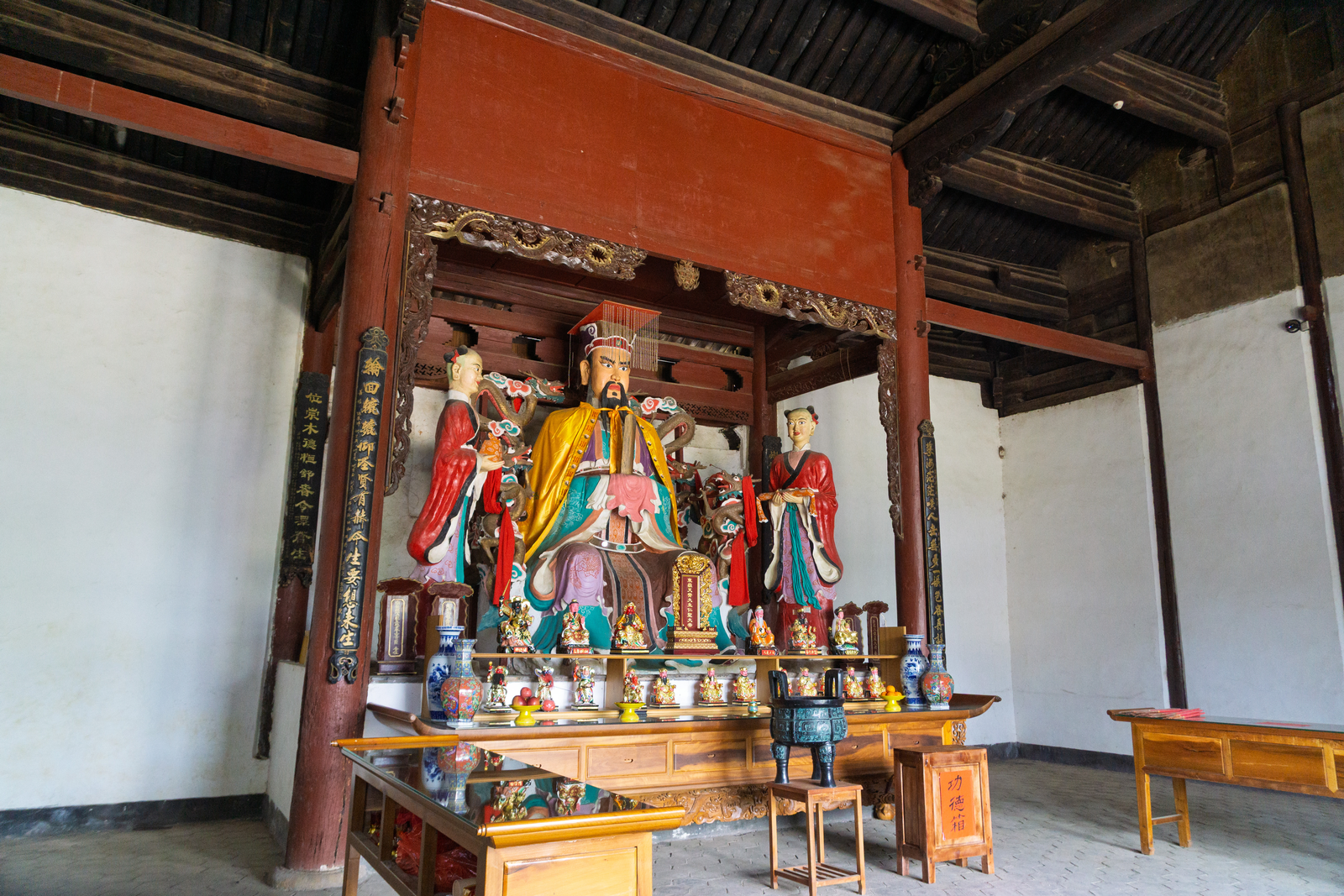
Imperial courts granted him elaborate titles across the Song and Yuan dynasties, and Daoist liturgy still uses the long form 東嶽泰山天齊大生仁聖帝. In temple halls he sits as an emperor: robes, tablet, attendants, and beneath him a whole administration.
The point to hold on to is that Dongyue Dadi is not a god of death in the modern sense. He is an administrator of lifespan. The distinction matters because it explains why people pray to him for recovery and long life, not only for a good end.
Mount Tai as the gate of the dead
The belief that Mount Tai governs the dead is old, older than organized Daoism. Han-era texts already speak of 泰山府君, the Lord of Mount Tai, and of 蒿里 and 梁父 — two ridges near the mountain — as places where the departed were gathered. The phrase 魂歸泰山, "the soul returns to Mount Tai," encodes the same idea in four characters.
Functionally, this made the mountain a border post. Death was not a disappearance but a change of jurisdiction: the person left the register of the living and entered another one, kept elsewhere, checked by someone else. For families, that was more bearable than silence, and it gave ritual something to address.
Later traditions layered a second underworld on top of the first. 酆都, the Fengdu of the southwest, grew into a parallel capital of the dead, and in popular religion the two systems were often described side by side rather than merged.
The registers of lifespan
The core image is a ledger. Every person holds an entry that records birth, the allotted span, and the balance of their actions. Officials under Dongyue Dadi maintain it; the 司命, the masters of destiny, are the best-known of that staff.
This is why the tradition treats certain acts as bookkeeping. Deliberate cruelty, broken oaths, and harm done to people who cannot retaliate all get written down. So do the opposite: releasing living creatures, funding the copying of scriptures, feeding the poor, repairing a road. Merit and demerit are recorded, weighed, and — depending on the case — used to extend or cut the span.
Reading this literally misses the point. The ledger is a way of saying that consequences outlive the moment that produced them, and that nobody keeps the books alone.
Dongyue temples and the third-month festival
Dongyue temples were once standard civic infrastructure. The best known is the Beijing Dongyue Temple, founded in 1319 under the Yuan and served for centuries by Zhengyi priests. Its halls hold the famous 七十六司 — seventy-six departments — each with a name and a jurisdiction, from registering births to auditing the conduct of the living. Walk through them and the metaphor becomes architecture.
His birthday is kept on the twenty-eighth day of the third lunar month. Temple fairs assemble around that date, with incense, offerings, and the ordinary business of a festival: food stalls, opera, and families paying respects on behalf of someone who has died.
Ask what people actually request and the answers are unremarkable. Recovery from illness. A few more years for a parent. A clean record for a relative who died badly. The Jade Emperor outranks him in the heavenly hierarchy, but for matters of lifespan Dongyue Dadi is the office people visit.
How Dongyue Dadi differs from Yanluo Wang
Both are called kings of the dead in English, and the two are frequently confused.
Yanluo Wang, 閻羅王, comes from the Buddhist Yama and arrives with a courtroom: verdicts, sentences, and realms of punishment. Dongyue Dadi is indigenous, imperial, and administrative; he presides over records rather than trials. Under him sits a local tier of city gods, the 城隍, who handle a given county's accounts and are often consulted first, because the nearest office is the one you can reach.
In practice, temples were rarely strict about the theology. The distinctions are worth knowing anyway, because they change what you say when you make an offering. To Yanluo Wang you speak as a defendant. To Dongyue Dadi you speak as someone filing a request, on your own behalf or on someone else's.
If you are approaching a temple for the first time, a consultation request is a reasonable place to ask what a particular hall expects — which incense, which day, what to bring, and what not to promise.
每週智慧,直送你的電郵
隨筆、時令指引與能量洞察——每週一信,絕無雜訊。