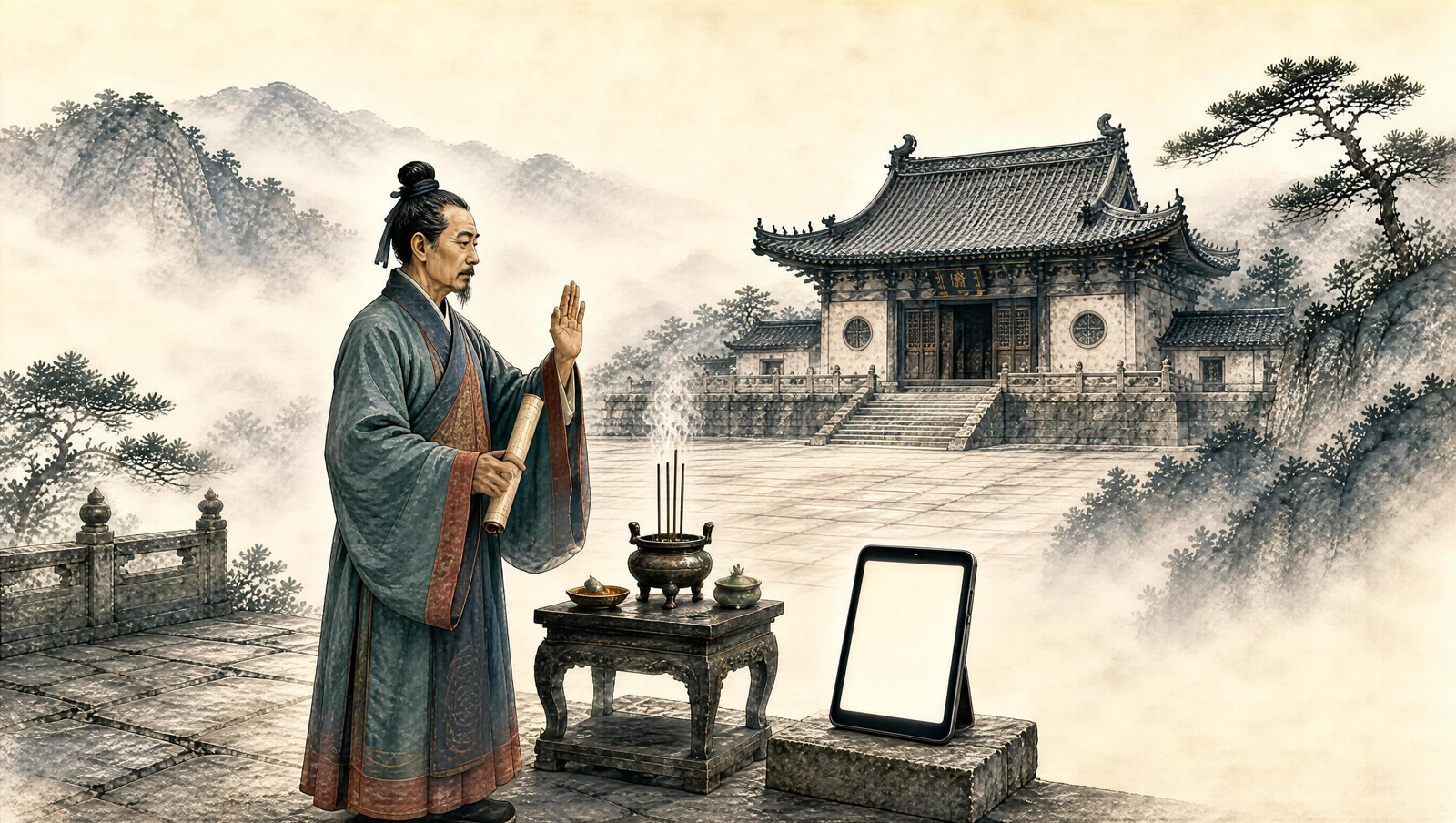
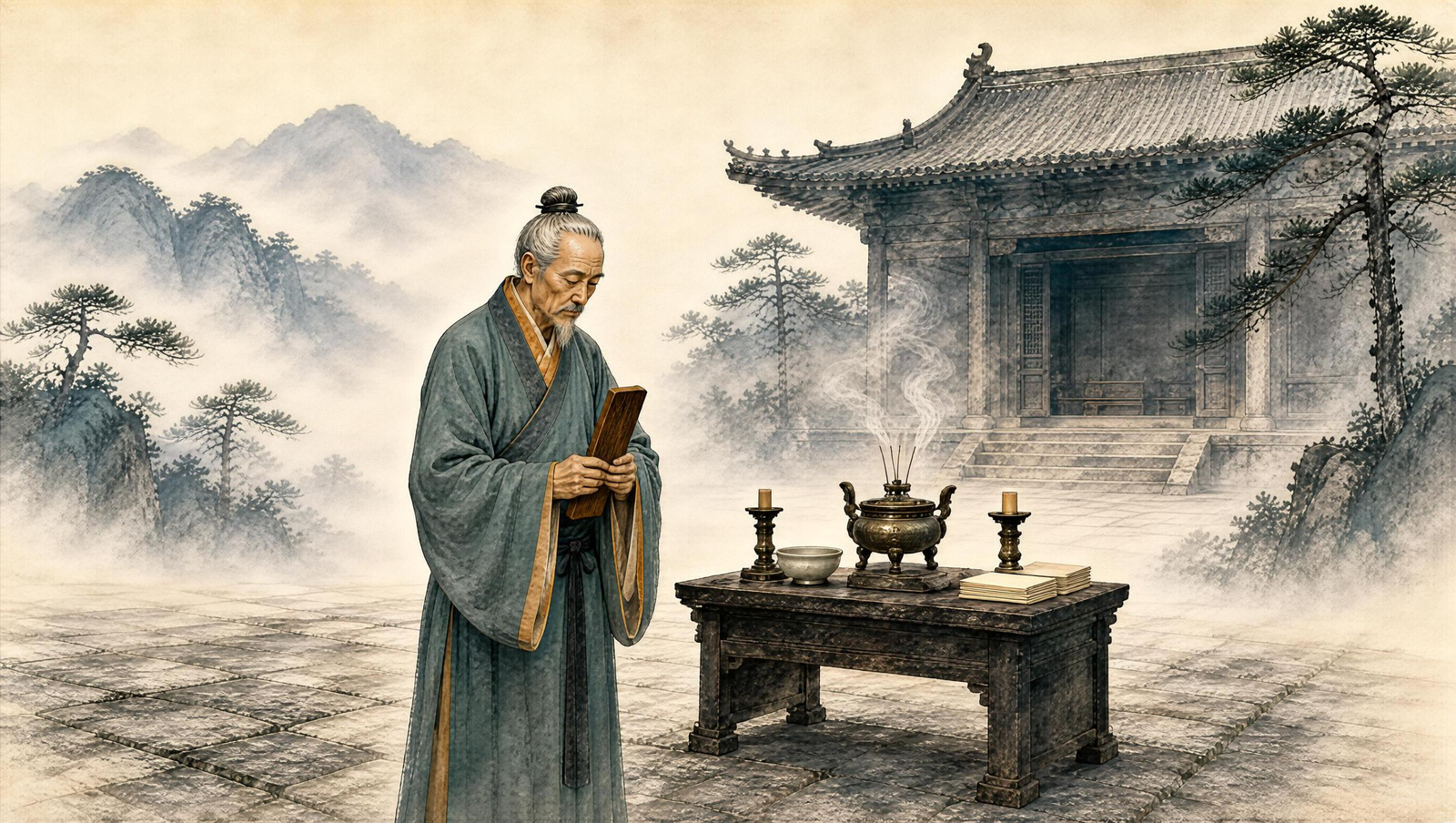
Ke Yi (科儀) is the living liturgy of Taoist ritual - the standardized scripts, chanted scriptures, ritual gestures, and offerings through which ordained priests align heaven, earth, and the human realm. If the Dao is the music, Ke Yi is the score: without it, devotion has no shared form; with it, a ceremony becomes a vehicle that carries prayer from the altar to the unseen.
What "Ke" and "Yi" each mean
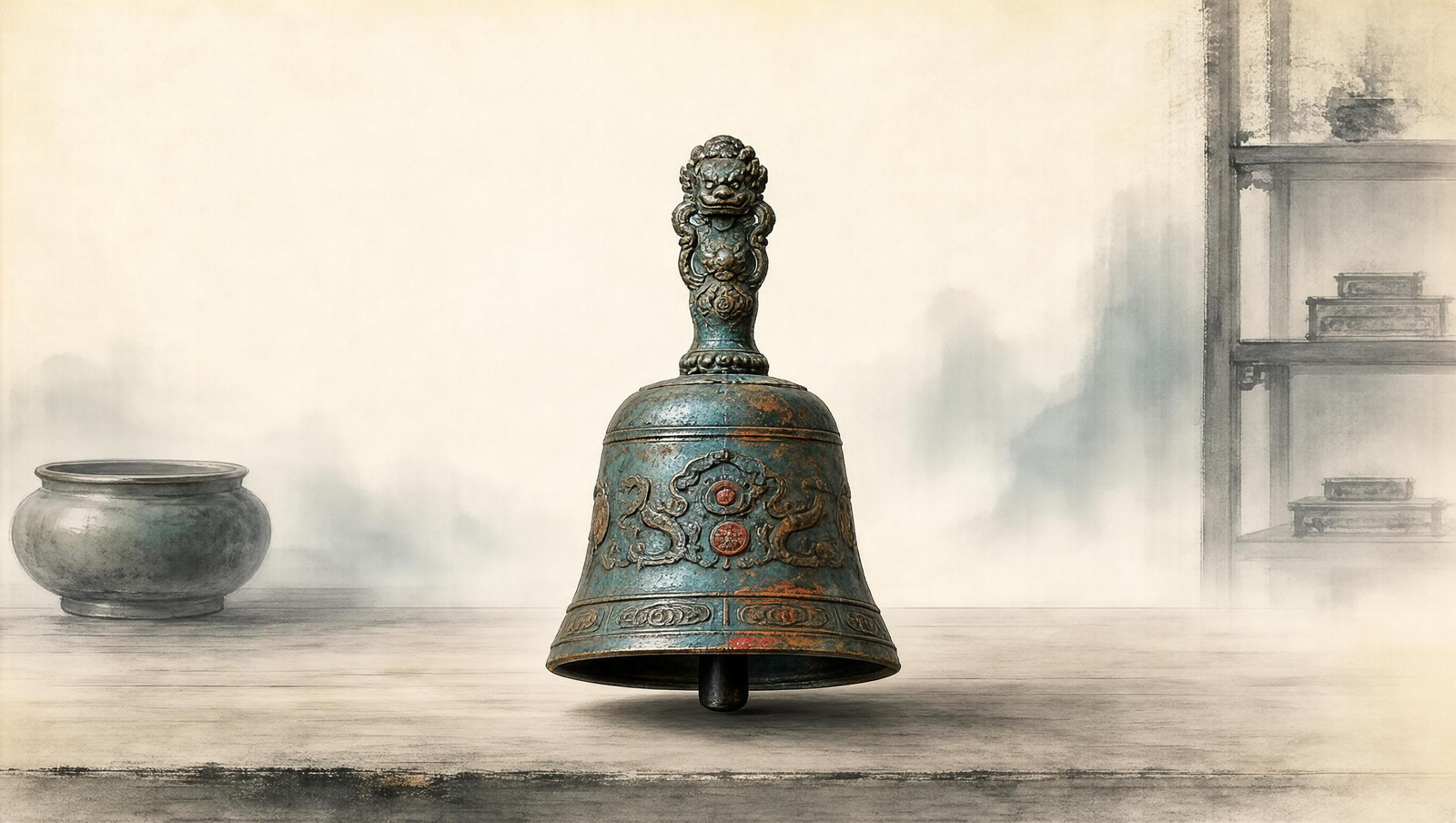
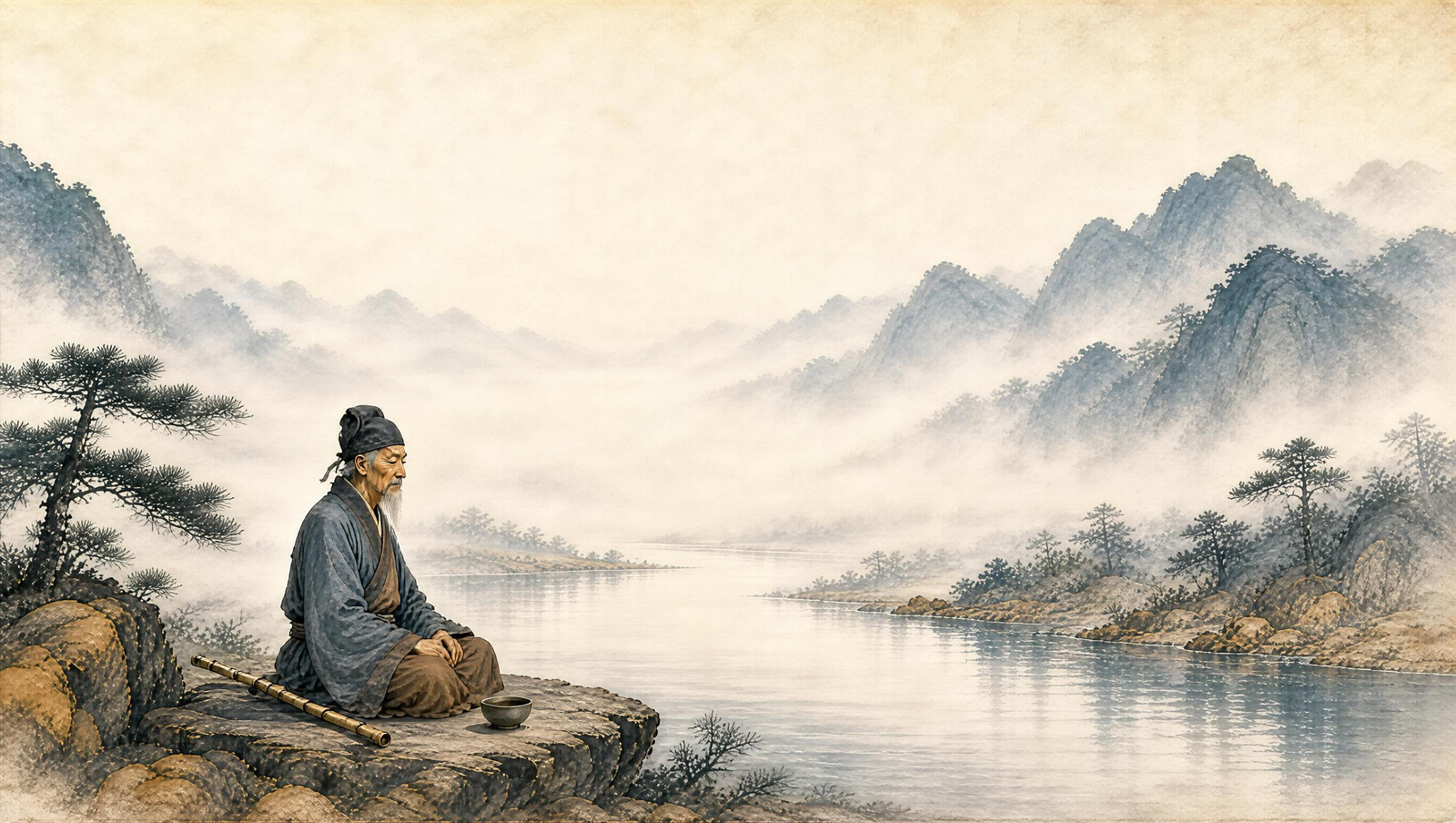
The two characters split the work in half. Ke (科) is the textual corpus - the registered procedures and the words to be spoken, drawn from the Taoist Canon (道藏, Daozang), a vast treasury of nearly 1,500 works preserved today in the Chinese Text Project (ctext.org). Yi (儀) is the performance - the bowing, the incense, the bell and flute, the precise order of movements that gives the words a body.
Together they describe a rite that is at once fixed and alive. The words are inherited; the enactment is renewed each time a priest steps to the altar.
The moving parts of a Ke Yi rite
Most ceremonies share a recognizable architecture. Opening and purification cleanses the space and participants with incense and water so the rite begins in clarity. Invocation chants scriptures to invite the deities - above all the Three Pure Ones (三清) - to descend and witness. Offering and petition presents the stated need, whether peace, longevity, relief of the dead, or blessing of a home, through written petitions and symbolic gifts. Closing and merit returns the merit to the community and respectfully sees the deities off.
The full solemn form is called 齋醮 (zhai jiao) - "fasting rites" paired with "offerings" - a category the Daoist Foundation describes as the heart of communal Taoist worship (daoistfoundation.org).
Where Ke Yi comes from
Historically, Ke Yi took shape under the Celestial Masters (天師道) and was systematized by the Lingbao (靈寶) school, whose liturgies emphasized universal salvation rather than private gain. Over the centuries the two great living lineages - Zhengyi (正一), the tradition our own temple belongs to, and Quanzhen (全真) - each carried their own register of rites, yet all share the same fourfold architecture above. Regional variants flourish across China, Taiwan, Hong Kong, and the diaspora, but the grammar of the rite is constant.
Why liturgy matters in Taoism
A common misunderstanding is that Taoism is only quiet individualism - sitting alone and "going with the flow." In living religious Taoism, Ke Yi - a structured taoist ritual - is how the tradition serves others: a family mourning a parent, a village seeking rain, a shop opening for the first time. Ritual is where the philosophy of harmony (和) becomes something a community can stand inside together.
This is also why the Dao is never far from the rite. As the FAQ on the Tao itself explains, the Dao is the pattern beneath all things (/faq#what-is-the-tao-the-dao); Ke Yi is one of the ways humans consciously re-align with that pattern.
Common Ke Yi ceremonies you may meet
Festival rites mark the Three Yuan (三元) days - see our calendar of the Three Yuan Festivals. Funerary and ancestor rites help the deceased transition peacefully, a practice close to our guide on Taoist talismans and blessing. Personal petitions ask for health, harmony, or a new beginning. Consecration rites imbue a statue or a home with intended blessing.
How to attend or request a rite
You do not need to be a member to witness a Ke Yi; temple festivals are open, and many rites can be requested for a specific intention. If you want the broader frame first, our piece on what Taoist ritual is walks through the roles of priest, altar, and congregation.
Ke Yi is not theater and not magic. It is a disciplined language - words, breath, and gesture trained over years - through which a community remembers that heaven, earth, and human life were never meant to be separate.
每週智慧,直送你的電郵
隨筆、時令指引與能量洞察——每週一信,絕無雜訊。