Laozi and the Tao Te Ching are inseparable in Taoism: Laozi is the traditional author of the Tao Te Ching, the short scripture that became the tradition's philosophical root. Put simply, if Taoism has a founding voice, it is Laozi's — and that voice speaks almost entirely through the Tao Te Ching. This article covers who Laozi was, what the text says, and why the pairing matters, using official Taoist Association materials source.
Who was Laozi?
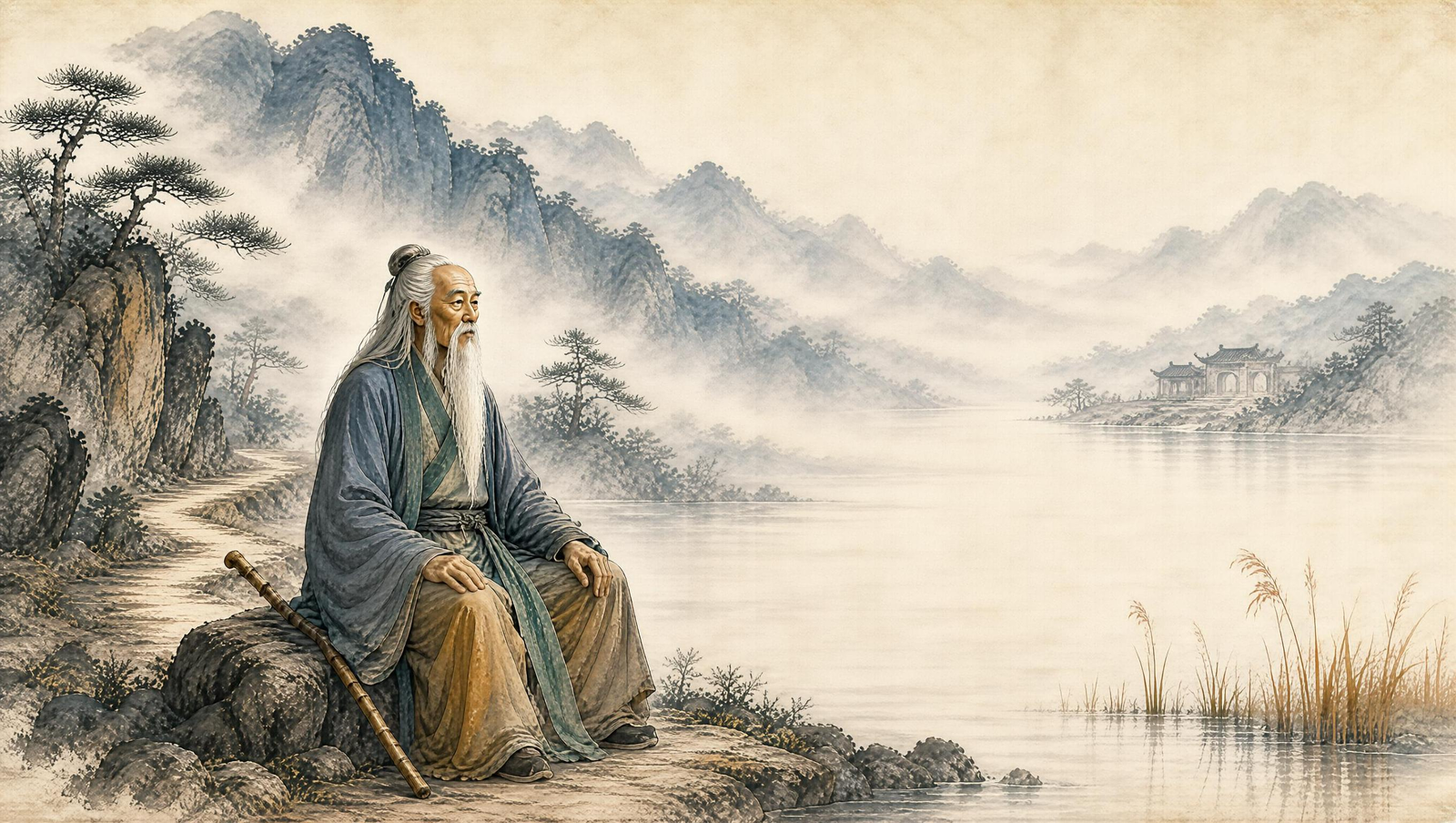
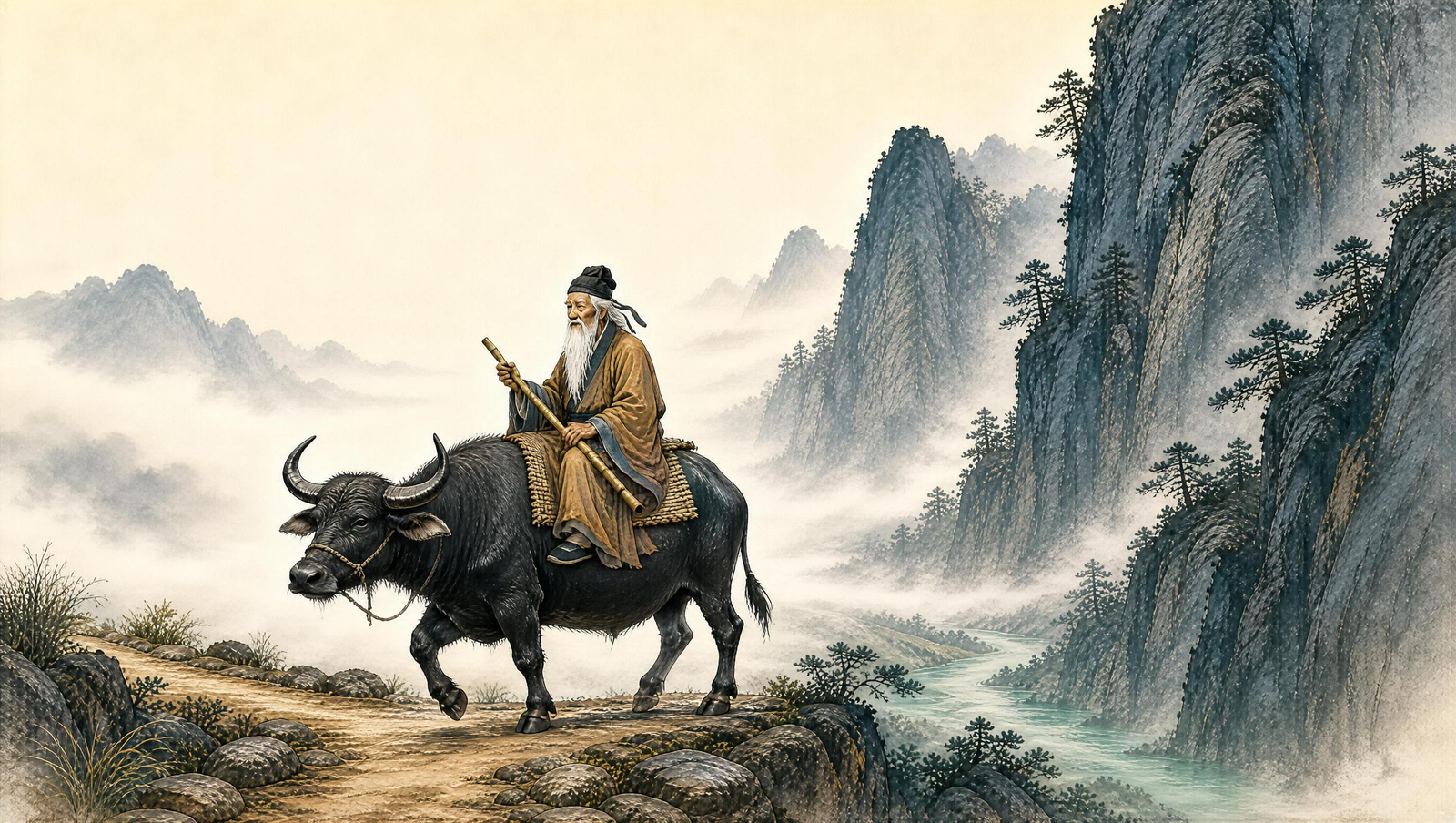
Laozi (老子, "Old Master") is described in legend as a custodian of the royal archives of the Zhou court who, tiring of politics, set out westward riding an ox. At the Hanku Pass, the gatekeeper Yin Xi asked him to leave his teaching behind, and Laozi dictated the 5,000-character Tao Te Ching before vanishing from history. The first historian to record his life, Sima Qian (c. 145–86 BCE), admitted the records were uncertain and offered more than one candidate for who Laozi "really" was. History is uncertain, but the figure endures. The China Taoist Association names Laozi among the tradition's central sages, and he is honored in the FAQ on Taoism's founders as a top reader question.
From sage to deity
The story does not end with the historical man. Taoism gradually deified Laozi as Taishang Laojun (太上老君, "the Supreme Lord Lao"), one of the highest figures in the pantheon — the deified Laozi appears among the Three Pure Ones as Daode Tianzun. The Tang dynasty imperial family claimed descent from him, canonizing the Tao Te Ching and ordering temples in his honor across the empire. So Laozi is simultaneously a probable historical author, a legend, and a worshipped deity — three layers the tradition holds without conflict.
What the Tao Te Ching teaches
The Tao Te Ching is 81 chapters on living with the Dao. Its signature ideas — wu wei (無為, non-forcing action), simplicity, and the soft overcoming the hard — are practical guidance, not metaphysics for its own sake. For a fuller walkthrough, see our Tao Te Ching explained guide. Its core claim is modest and radical at once: the world runs on a pattern that precedes human preference, and wisdom is cooperating with that pattern rather than forcing our own.
Why the pairing matters
The bond between Laozi and his book gave Taoism a portable philosophy anyone could carry: no temple required to start. That portability shows in later developments like the Longmen mind-method and in Taoist health and longevity practice, both of which echo the text's calm, natural tone. A book attributed to a single departing traveler became the shared inheritance of monasteries, temples, and households alike.
A common misunderstanding
A frequent misreading is to treat Laozi as a political theorist or a hermit mystic. In practice the Tao Te Ching stays personal: it advises rulers and readers alike to lead by restraint — "governing a large state is like cooking a small fish." That restraint is why Taoist spiritual diagnosis and energy-blocked signs work from the same root — observe, don't force.
Laozi in the living tradition
The text is still performed, not just remembered. In 2025 the Macao Taoist Association held student contests — essay, calligraphy, and song — built around the Tao Te Ching (macaotaoist.org, 2025), and the China Taoist Association's 2026 scripture-lecture program (玄門講經) keeps Laozi's work at the center of public teaching (taoist.org.cn, 2026). His birthday is still observed in temples, and his image stands in the halls of virtually every major Taoist temple.
Reading them together
Start with what Dao is, then read the Tao Te Ching slowly, then return to Laozi's biography. The loop tightens understanding: the concept explains the book, and the book explains the man.
Key takeaways
- Laozi is the traditional author of the Tao Te Ching; history leaves his biography open.
- The tradition honors him as sage, legend, and deity (Taishang Laojun) at once.
- The text's core is wu wei, simplicity, and naturalness.
- Laozi's voice made Taoism portable and practical.
- The book remains taught and celebrated today.
每週智慧,直送你的電郵
隨筆、時令指引與能量洞察——每週一信,絕無雜訊。