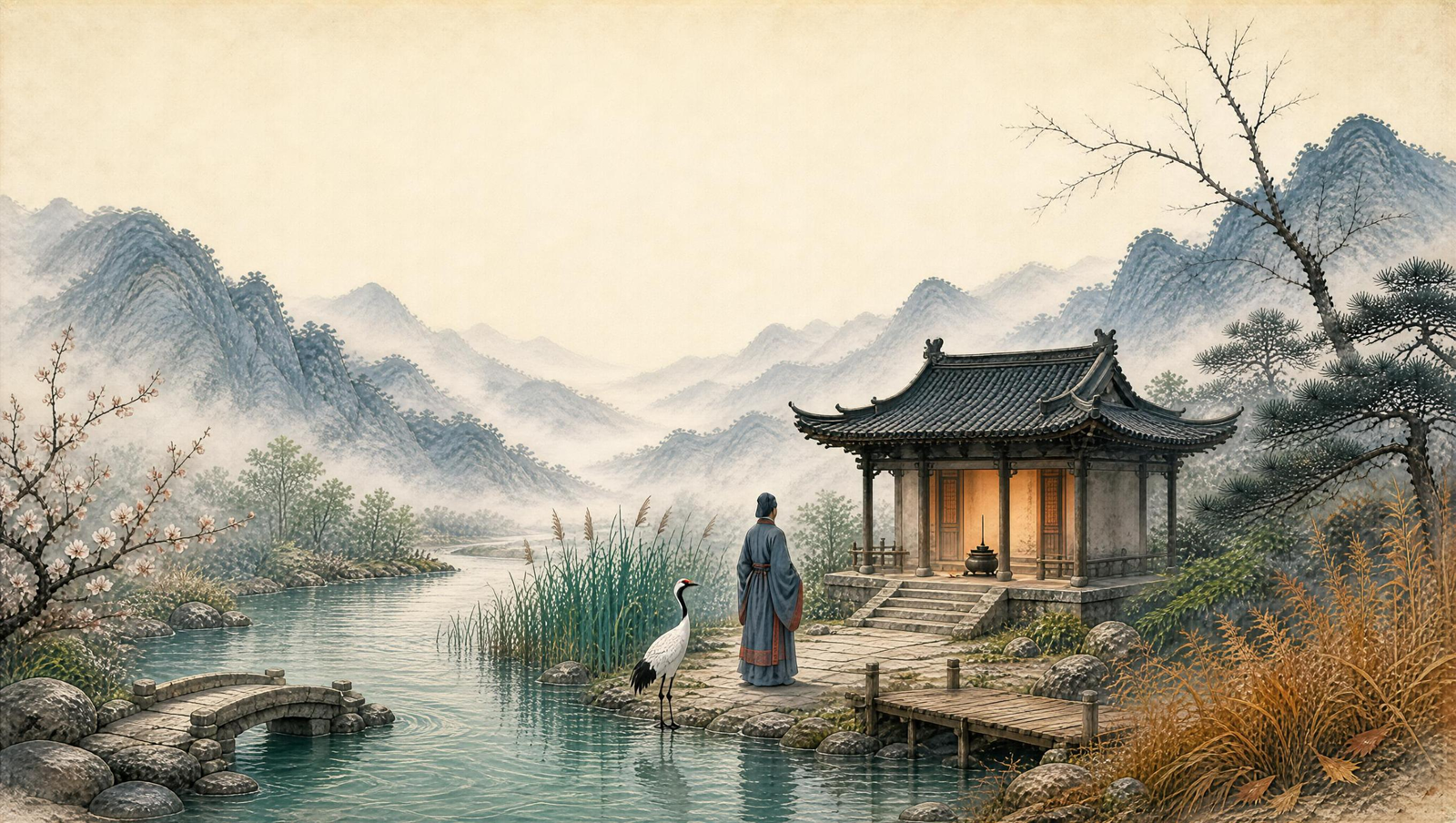
The Taoist festival calendar — the rhythm of taoist festivals through the year — is built around the turning points of the cosmic year. More than a list of holidays, it is a rhythm of offerings, purification, and remembrance that follows the Moon and the movements of the stellar deities. Knowing the key dates helps you understand how a living temple marks time.
Why Taoists keep a festival calendar
Taoist life follows the cycles of heaven and earth rather than the civil clock. The Chinese Intangible Cultural Heritage administration lists major Taoist rites and temple festivals among the living traditions it protects, recognising them as organised community practice rather than private devotion source. Each festival answers a season: clearing at the new year, nurturing in spring, and reconciliation in late summer.
Festivals are also when the boundary between the seen and unseen worlds is thinnest. That is why so many centre on offerings — not bribes to the gods, but a way of keeping reciprocity with the cosmos.
The Three Yuan festivals (三元節)
The three Yuan festivals fall on the fifteenth day of the first, seventh, and tenth lunar months. They honour the Three Officials (三官, Sanguan) — the Official of Heaven, Earth, and Water — who judge, pardon, and record. The Upper Yuan (上元) opens the year with lanterns; the Middle Yuan (中元) is the Ghost Festival; the Lower Yuan (下元) closes the year with thanksgiving and release.
Taoist Mission Singapore describes these as the backbone of the communal ritual year, when devotees gather for communal rites of purification and merit source. They are the dates most temples still observe without fail.
Birthdays of the gods
Several dates honour the manifested gods. The Jade Emperor's birthday is celebrated on the ninth day of the first lunar month, often with the year's grandest rite of greeting the dawn. The birthdays of the Three Pure Ones and of popular deities such as Mazu are kept with processions, chanting, and feasting.
These are not "birthdays" in the ordinary sense. They mark the moment a force became accessible to the human world, and the temple uses them to renew its bond with that force. For the story of one such deity, see our essay on Mazu, the Goddess of the Sea.
The Ghost Month and Zhongyuan
The seventh lunar month is the Ghost Month, when ancestors and hungry ghosts are believed to walk closer. The fifteenth, the Zhongyuan Festival, is the peak: temples and families offer food, chant sutras, and release riverside lamps to guide and comfort the wandering.
This is the clearest expression of Taoist compassion for the unseen. It is also the subject of our deeper piece, What is the Hungry Ghost Festival?, which explains the rites step by step.
How to observe at home
You do not need a temple to keep the rhythm. Lighting a lamp on the first of the month, offering incense with sincere words, or simply pausing to give thanks at the three Yuan dates are all valid. The point is attention, not scale. The National Library Board Singapore's Infopedia notes that these observances travel with the diaspora and are kept in homes as readily as in temples source.
For the practical side of a related annual observance, our FAQ on Tai Sui explains the stellar deity who governs each year's fortune, and our FAQ on Wu Wei shows the mindset that makes observance feel effortless rather than forced.
The calendar is an invitation: to live a year that is not only productive, but in step with the larger order.
每週智慧,直送你的電郵
隨筆、時令指引與能量洞察——每週一信,絕無雜訊。