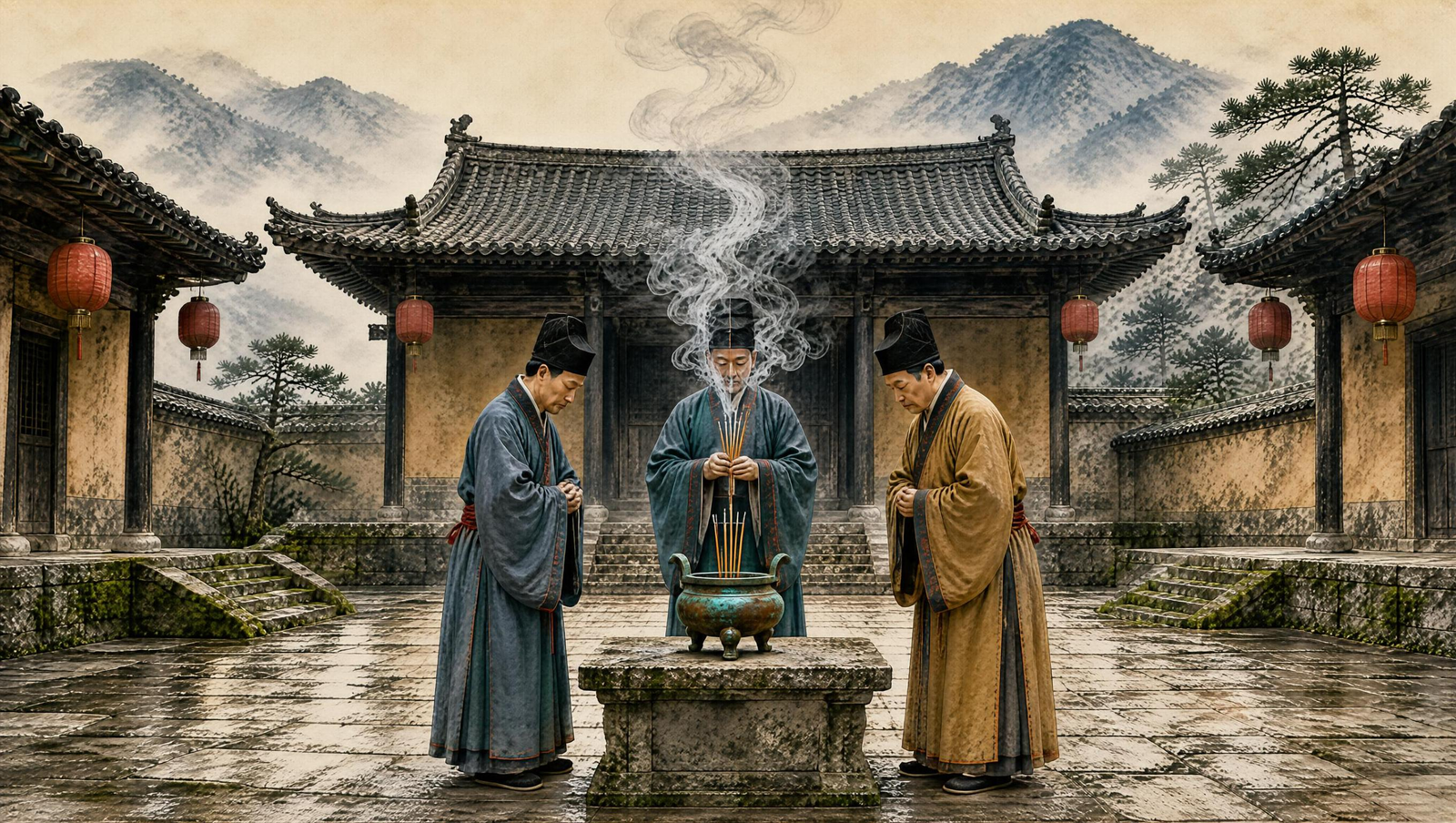
A Taoist ritual, known in Chinese as keyi 科儀, is a structured ceremony that restores or maintains harmony among the living, the dead, and the spirits of heaven. Unlike private meditation, ritual is a public or communal technology: an ordained priest acts as the bridge between the human petitioner and the celestial bureaucracy. The purpose may be to bless a home, pacify ancestors, ask for health, mark a festival, or ordain a new disciple. In every case, the ritual is not symbolic theater; in the Taoist view it is a real transaction of energy, merit, and cosmic order.
The Structure of a Taoist Ritual
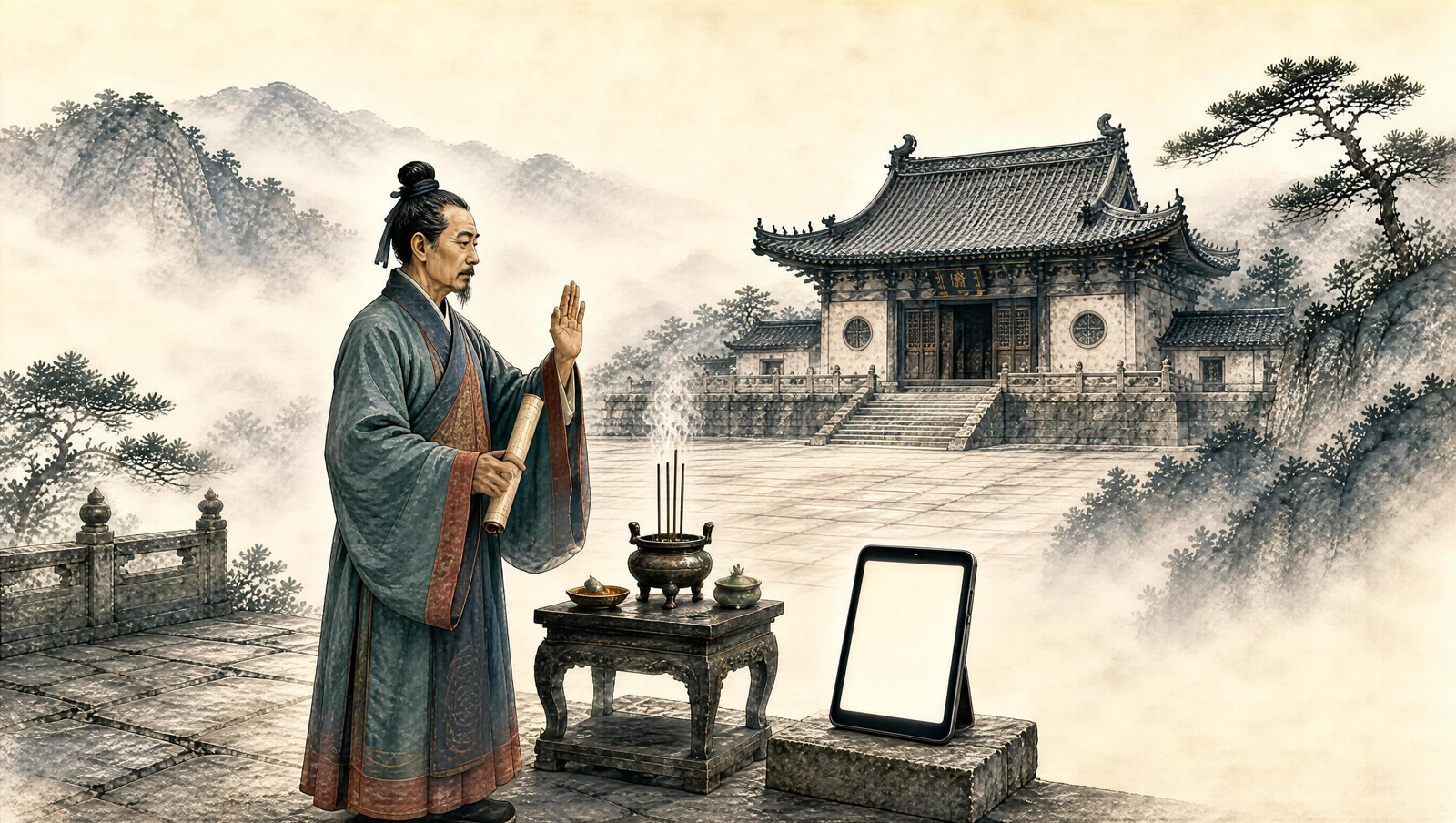
A ritual usually moves through several stages: purification of the space and participants, invocation of the relevant deities, presentation of offerings, recitation of memorials or talismans, and a final closing that sends the spirits back to their proper places. The priest writes a petition, burns incense, and sometimes uses a sword, flag, or seal to direct spiritual authority. Music, bells, and chanting set the rhythm and mark the boundaries between sacred and ordinary time.
The Fung Ying Seen Koon in Hong Kong, a major Taoist temple, regularly holds public rituals such as the Zhongyuan Dharma Assembly for the Hungry Ghost Festival, where the temple extends its opening hours so that devotees can make offerings for departed relatives (Fung Ying Seen Koon). These ceremonies show that ritual is not only about personal benefit; it is also about collective responsibility for the souls of ancestors and the peace of the community.
Ordination, Registers, and Lineage
A key part of Taoist ritual power is transmission. The Taoist Federation Singapore explains that its 2025 ordination ceremony for overseas disciples is a formal ritual in which practitioners receive their ritual registers, or lu 籙, through an authorized lineage (Taoist Federation Singapore). A register is not merely a certificate; it is a cosmic identity that lists the spirits and generals under the priest's command. Without proper ordination and lineage, a person is generally not considered qualified to perform major rituals.
The same organization offers conversion ceremonies for those who wish to formally enter the Taoist tradition (Taoist Federation Singapore). These ceremonies include taking refuge in the Tao, the scriptures, and the teachers, and they mark the beginning of a formal relationship with a recognized temple. This pattern—refuge, instruction, ordination—is common across mainland, Hong Kong, Taiwanese, and Southeast Asian Taoist lineages.
Ritual in Daily and Festival Life
Ritual also appears in smaller, everyday forms. The Beigang Chaotian Temple in Taiwan, one of the most important Mazu temples, organizes annual rituals such as the Zhongyuan Universal Salvation Dharma Assembly for the Hungry Ghost Month, during which devotees register to dedicate merit to wandering spirits (Beigang Chaotian Temple). These events combine religious obligation with community gathering: families come together, food offerings are shared, and priests chant scriptures that guide the dead toward peace.
Other common rituals include the Jade Emperor's birthday on the ninth day of the first lunar month, the Three Pure Ones rites, and personal ceremonies for Tai Sui, the year-governing deity. Each follows the same basic logic: identify the spiritual agent involved, present respectful offerings, ask for specific assistance or forgiveness, and close the exchange properly.
Can You Benefit Without Participating in a Full Ritual?
Yes. Many Taoist practices—meditation, Feng Shui, dietary discipline, and Qigong—can be done individually. However, when a situation involves ancestors, legal trouble, serious illness, or the need for a major life change, tradition says a trained priest and a formal ritual are appropriate. The ritual is not a replacement for medical or practical action; it is an additional layer of intervention that addresses the spiritual pattern behind the visible problem.
To understand the worldview behind these ceremonies, read who founded Taoism and what are the Three Pure Ones. For the energy that rituals are believed to move, see what is qi.
每週智慧,直送你的電郵
隨筆、時令指引與能量洞察——每週一信,絕無雜訊。