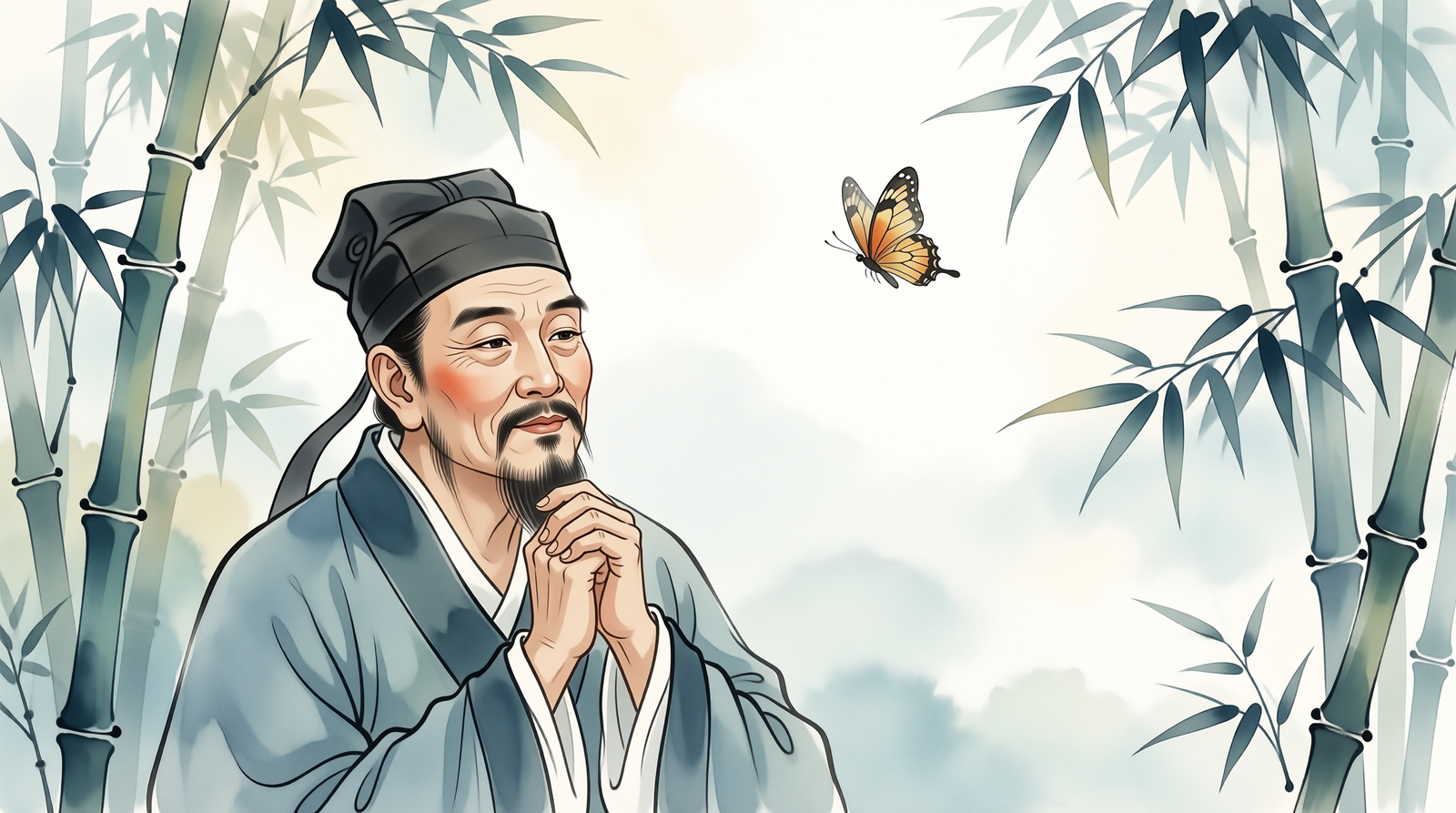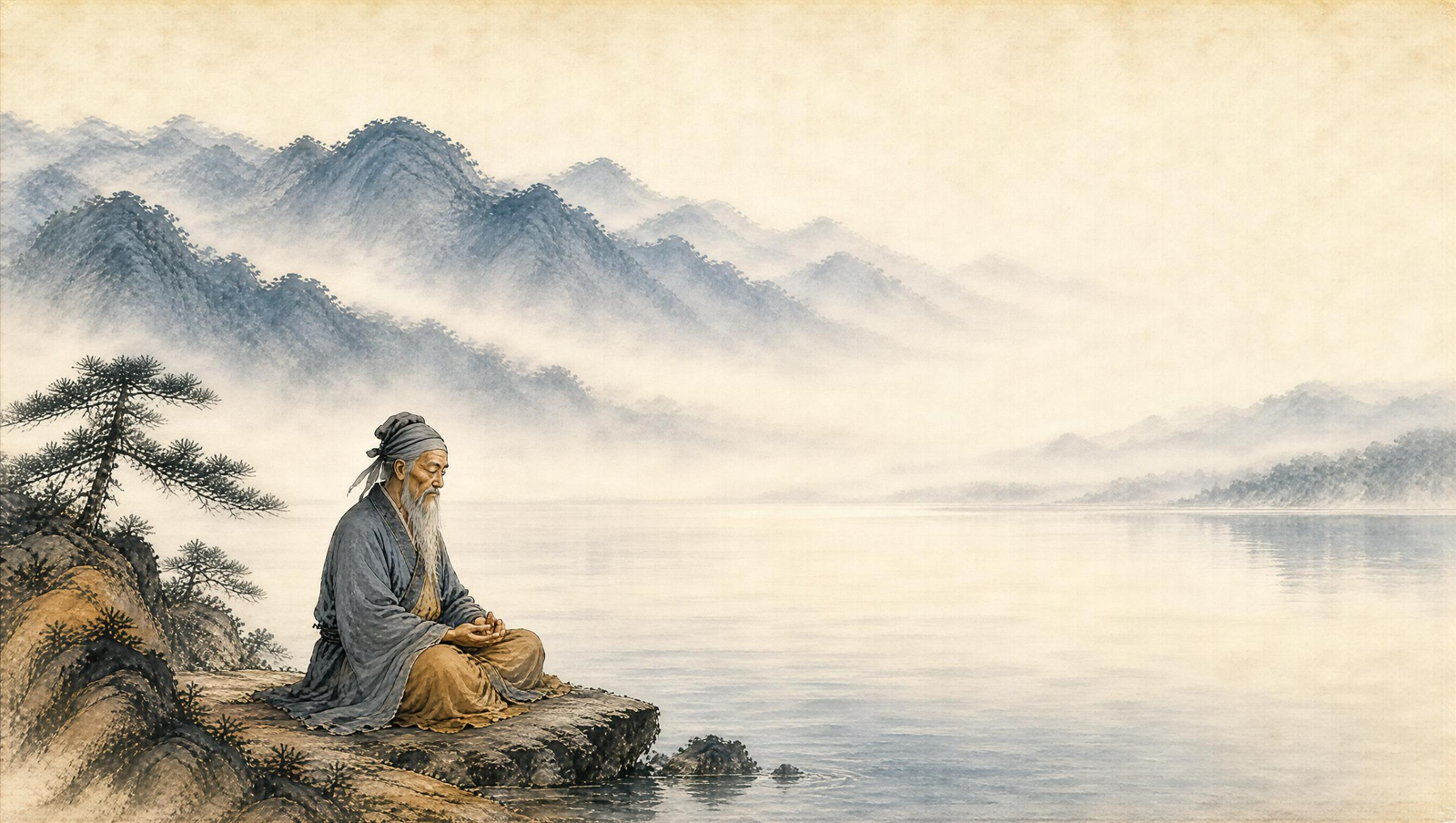
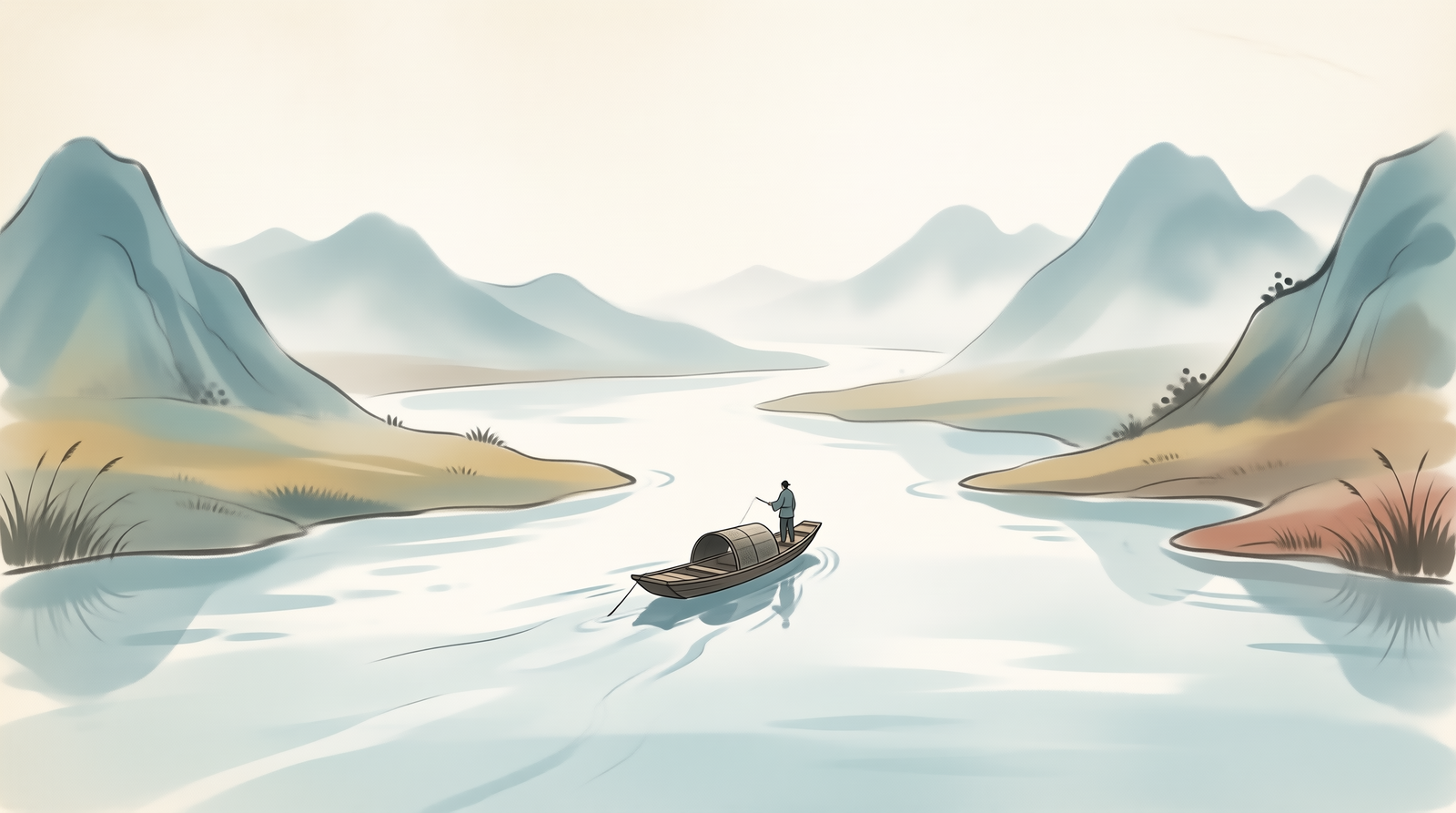
Wu wei 無為 is one of the most famous and most misunderstood ideas in Taoism. It is usually translated as "non-action" or "effortless action," but the better everyday phrase is "non-forcing action." Wu wei means acting in harmony with the situation rather than against it. It is the skill of the sailor who trims the sail to the wind instead of rowing harder; of the negotiator who waits for the right moment instead of pushing every point; of the cook who finds the space between the joints instead of hacking at the bone.
Wu Wei in the Tao Te Ching and Chuang Tzu
The Tao Te Ching returns to this idea again and again. Laozi contrasts the sage who governs by wu wei with the ruler who tries to control everything and ends up exhausting both himself and the people. The sage does less, and because he does not interfere at the wrong moment, things naturally fall into place. Taoism.net, which provides translations and commentary on the classical texts, treats wu wei as a practical attitude toward life rather than a doctrine of passivity (Taoism.net).
Chuang Tzu gives the idea its most memorable image: the butcher Ting, whose knife never dulls because he never cuts against the grain. After nineteen years of practice, he knows exactly where the spaces are. His action looks effortless, but it rests on deep familiarity. This is wu wei in a single picture—skill that has become so natural it no longer feels like effort.
Why Wu Wei Is Not Laziness
The BBC's religion coverage distinguishes Taoist non-forcing from mere inactivity. Wu wei does not mean doing nothing; it means doing only what the situation actually requires (BBC Religion). A doctor practicing wu wei does not refuse to treat a patient; she waits until the diagnosis is clear before acting. A parent practicing wu wei does not ignore a child; she steps in when guidance is needed and steps back when the child can learn on her own.
The point is timing. Force applied too early is wasted; force applied too late is useless. Wu wei is the discipline of sensing the moment when a small action produces a large effect. That sensitivity is trained through meditation, observation, and repeated failure.
Wu Wei in Modern Life
Modern productivity culture often celebrates doing more, faster, with less rest. Taoism sees this as a recipe for burnout. The Daoist Foundation teaches quiet sitting and standing precisely because stillness restores the ability to sense the natural rhythm of things (Daoist Foundation Resources). When the mind is noisy, every problem looks urgent. When the mind is calm, the real priorities become obvious, and the right action often turns out to be much smaller than expected.
Practicing wu wei today can begin with simple experiments. Instead of arguing the same point three times, state it once and wait. Instead of pushing a project forward when every sign says resistance, pause and ask what obstacle is actually in the way. Instead of adding more effort, try removing friction. Often the path of least resistance is not avoidance; it is intelligence.
Wu Wei and the Taoist View of Power
In political philosophy, wu wei is the opposite of micromanagement. The best ruler, Laozi says, is one the people barely notice. The worst is the one who interferes constantly and creates resentment wherever he goes. This idea scales down to everyday life: the most effective people are often those who create conditions for others to flourish, not those who force every detail.
This does not mean abdicating responsibility. It means taking responsibility for the whole situation, including the parts you cannot control, and choosing action that respects that whole. Wu wei is not weakness. It is strength that knows when to hold back.
For a direct answer to the principle, see what does wu wei actually mean. To explore the meditation that develops this sensitivity, read what is Taoist meditation. And for the energy that flows when action becomes effortless, see what is qi.
Weekly wisdom, straight to your inbox
Essays, seasonal guidance, and energy insights - one letter a week, no noise.
DaoMind Pro
Read your own chart
Generate your full Ba Zi chart and elemental balance - the same data a practitioner opens with.
Open Destiny Atlas →