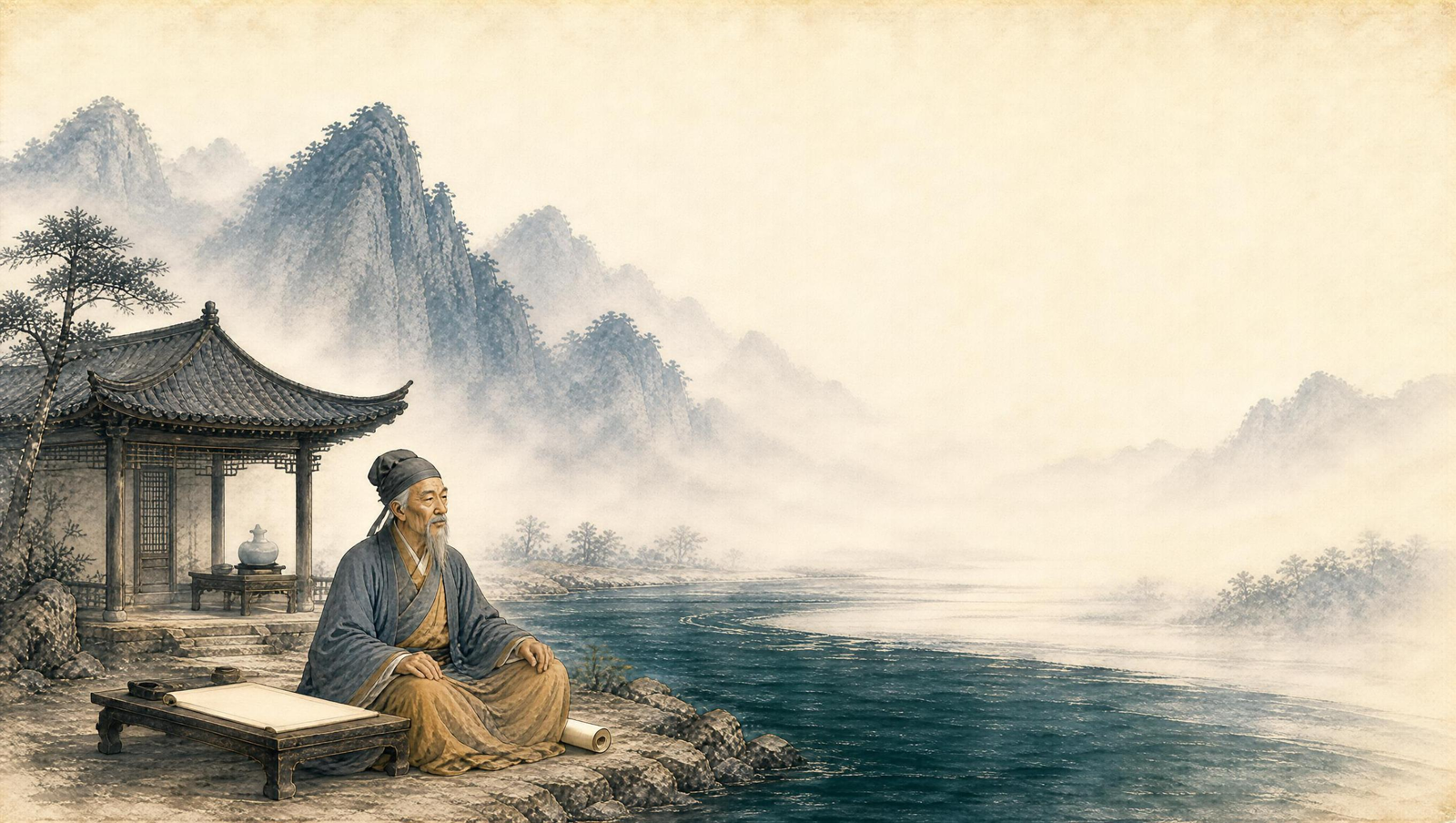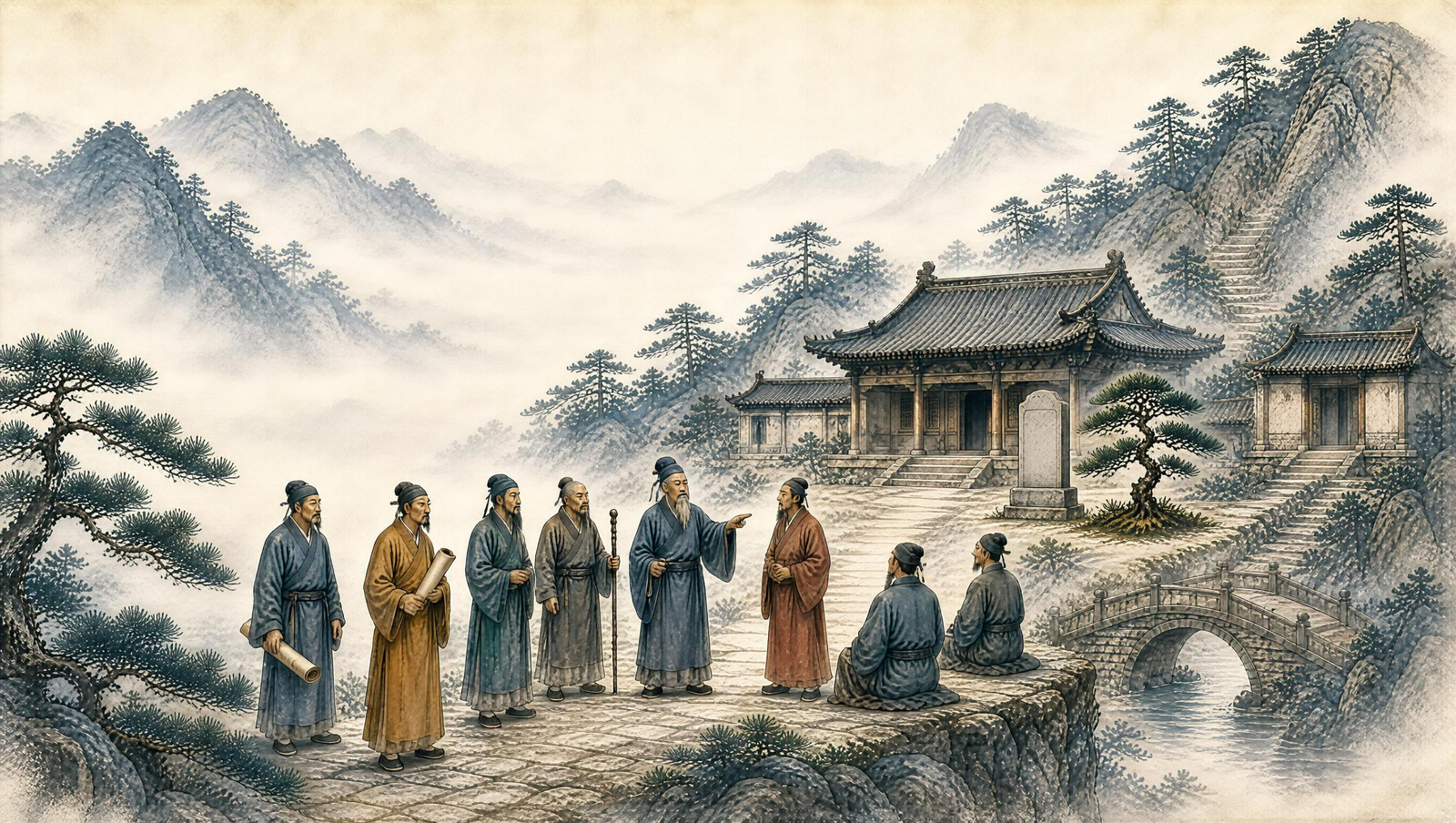
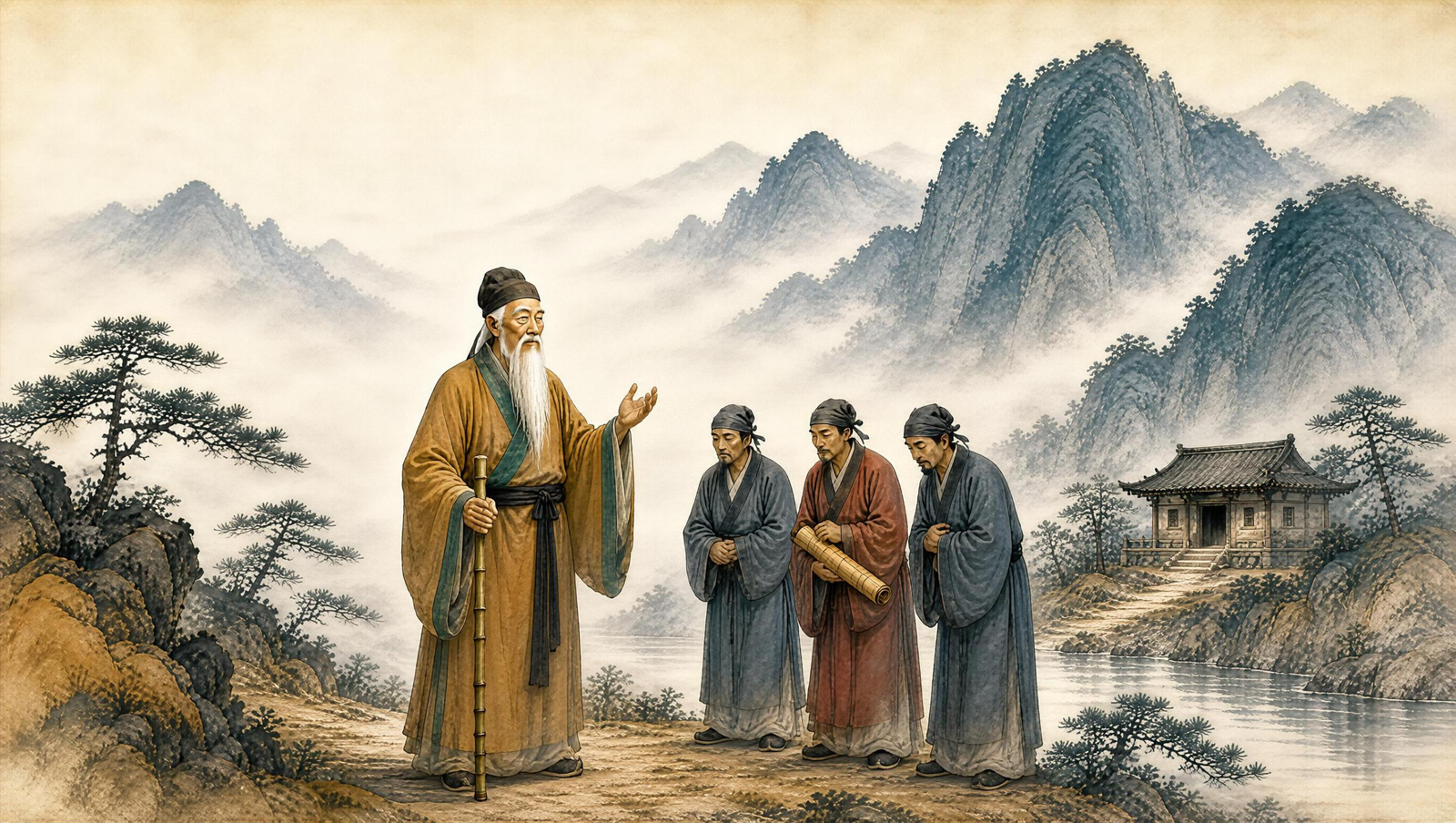
The story opens on a mountain. In the second century CE, a man named Zhang Daoling — Zhang the Daoist — was deep in practice on Heming Mountain in Sichuan when, the records say, he received a covenant from the Celestial Worthy. What followed was not a philosophy written in a book, but a living order: the Way of the Celestial Masters, the first organized church of Taoism on Chinese soil.
That order is the direct root of the Zhengyi tradition DaoMind belongs to. To know Zhang Daoling is to know where the temple in your browser actually comes from.
Who Zhang Daoling was
Zhang Daoling (張道陵, variously styled Zhang Ling) lived across the first and second centuries CE. Later devotion would call him the Celestial Master, but he began as a practitioner of the arts already circulating in Han China — meditation,alchemy, and the search for longevity. The turning point was the covenant: a commission to teach the Way, heal the sick, and organize a community bound not by blood but by initiation.
He is not the founder of Taoist thought. That honor is given to Laozi, who centuries earlier was said to have set down the Tao Te Ching. Zhang Daoling is the founder of Taoist religion — the step from teaching to institution. The two threads meet in the figure of Laozi, whom the tradition would later deify as Daode Tianzun, one of the Three Pure Ones.
The Way of the Celestial Masters
The new order had a structure that surprised no one who had seen how Han society ran: it mirrored the imperial bureaucracy, but upside down. Instead of taxing grain, the masters asked for a small offering of rice and a pledge of sincerity. Instead of courts, they kept registers of the spirits sworn to protect the faithful.
Three features defined it:
- Merit through healing. Illness was read as disharmony; the cure combined confession, breathing, and right living rather than only medicine.
- Registration of spirits. Each initiate received a register naming the spirits assigned to them, a contract more than a charm.
- Communities, not hermitages. The Way spread through households and villages, making Taoism a religion of the many, not the few.
This is why the movement could outlast dynasties. It lived in people, not in a single mountain.
From Heming Mountain to Longhu Mountain
Zhang Daoling's line passed from master to descendant. The seat of the tradition moved over centuries to Longhu Mountain (龍虎山, Dragon-Tiger Mountain) in Jiangxi, which became the ancestral home of the Celestial Masters and remains a name every Zhengyi priest knows. The family kept the title — Celestial Master — as a hereditary office, a rare thing in a tradition full of schools that rose and fell.
DaoMind's own dharma root is Wuliang Guan on Longhu Mountain, and the temple serves worldwide online today. The lineage is the guarantee that what is offered is transmitted practice, not borrowed theory. See which lineage DaoMind belongs to.
Why the Celestial Masters matter now
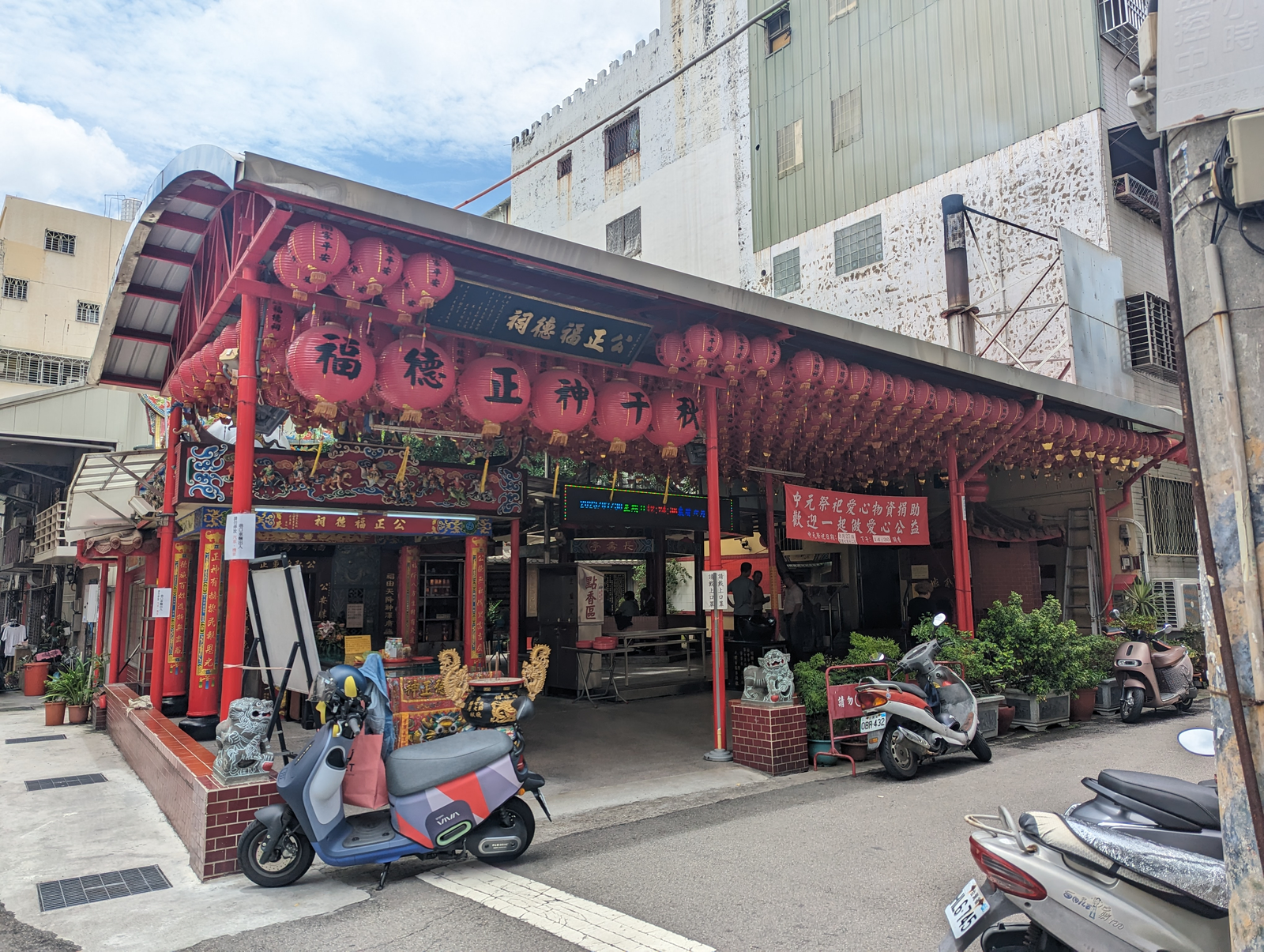
A reader meeting Taoism online meets a tradition that is at once very old and very particular. The Celestial Masters gave Taoism three things still visible today: a clergy, a ritual system, and a way for ordinary people to take part without leaving their lives. You do not withdraw to a mountain to be Taoist. You receive the teaching, adjust your home and your breath, and continue.
The ritual muscle built then is the same muscle behind a modern rite. Read what a Taoist ritual is and how the ke-yi liturgy works to see the lineage in motion.
Taoism beside Buddhism
The Celestial Masters rose in a China where Buddhism was already arriving from the west. The two grew side by side for two thousand years and still get confused. Buddhism centers on mind, suffering, and release from rebirth; the Celestial Masters centered on harmony with the Tao in this life, through body, community, and rite. In China they long coexisted, and many draw from both. Our piece on how Taoism differs from Buddhism goes deeper.
The founder and the philosopher
It helps to keep two men distinct. Laozi gave the words; Zhang Daoling built the house. One authored a slim book of paradoxes; the other organized a people's church. DaoMind honors both, and the daily work — consultations, blessings, rituals — descends from the second through an unbroken line.
For the philosophical source, begin with what the Tao Te Ching teaches and who Laozi was. For the institutional root, the answer is always the same mountain, the same covenant, the same name: Zhang Daoling.
A living inheritance
None of this is museum dust. When a practitioner on your screen performs a rite, the gesture reaches back to a second-century commission on a Sichuan peak. The Celestial Masters turned a philosophy into a practice that ordinary people could hold, and that practice is the reason a temple can exist online at all.
See who founded Taoism for the one-line answer, then return to the longer story above. The founder is not a footnote; he is the door you walked through.
繁體版:張道陵與天師道:道教如何開始.
Weekly wisdom, straight to your inbox
Essays, seasonal guidance, and energy insights - one letter a week, no noise.
DaoMind Pro
Read your own chart
Generate your full Ba Zi chart and elemental balance - the same data a practitioner opens with.
Open Destiny Atlas →